A Good Walk Home

Both my partner and I like walking but, more often than not, we walk alone.  Somehow it just works out like that and there is no doubt about it, that when you walk without company you do see and hear so much more.  It isn’t that we chatter away non-stop – we’ve been together for  far too long for that!!  It’s just that with no-one to speak to, or alongside, one becomes far more aware of all that’s around you.  And with only the sound from one pair of walking boots the wild creatures are less aware or concerned of your presence.

Walking quietly it’s possible to get quite close to wildlife

Usually, from necessity, our walks are circular – either back to the car or back to the house if we’ve started from home.  Recently I cadged a lift to Duns Tew, just outside the Cotswolds but still in Oxfordshire and not that far from home and the secret valley.  The village is an interesting mix of houses and makes use of their local ironstone as well as the Cotswold limestone.  I find it fascinating knowing that I live on the edge of two quite different rock formations, 0ne literally as hard as iron and the other, soft and easily worked.  The photo below shows the pretty church built of yellow ironstone and banded with paler limestone – a familiar pattern in the locality.

The thousand year-old Church of St Mary Magdalen, Duns Tew

The houses vary in style and age as well as building materials.  Some have thatched roofs; others slate and some stone tiles.  The traditional village pub has a stone tile roof made from Cotswold stone split into thin tiles.  Just to confuse the unknowing, these tiles are known locally as slates even though they are not made of slate!  The craft of making these roof tiles is centuries old – they have even been found by archaeologists when excavating Roman villas (of which there are quite a few in the Cotswolds) which means the manufacture of them has remained unchanged for the best part of two thousand years.  The pub also has a drystone garden wall, also made from Cotswold stone for which it is so ideal and makes such a memorable feature of the Cotswold Hills.

Village houses: contrasting style and stonework. The thatched house was built in the early 1600s. There are a number of these old signposts still standing locally
The village pub: this dates from the late 1600s. Note the stone ‘slate’ roof

One of the great things about walking in England is that we have a huge network of public footpaths, many of which date back to pre-history.  Now that I realise (thanks to my overseas readers) that being able to walk across privately-owned land by right is almost unique I intend to write specifically about them at a later date.  Suffice to say here, is that it is possible to walk from one end of the country to the other over thousands of miles of paths that must not, by ancient law, be obstructed.  This path is beautifully maintained by the owner. Just outside the village, partly hidden in undergrowth, were the remains of old pony carts.

A well-maintained public right of way that is also a driveway to the owner’s house
Half-hidden at the back of a semi-derelict shed

The path opened onto cornfields, the wheat harvested and the remaining stubble giving a real autumnal look to the countryside.  The hedgerow is also offering its autumnal fruits for the picking – crab apples, elderberries and blackberries; the sloes although looking good won’t be ready to collect until after the first frosts.  The squirrels have taken all the hazelnuts (you have to be quick to get them before they do – but already the embryo catkins, the male flowers, are beginning to appear.  It will be early February before they show the familiar ‘lamb’s tails’ that release clouds of yellow pollen with the slightest breeze.

The path is now gras covered passes ‘twixt hedgerow and cornfield
Crab apples, blackberries, elderberries. Tiny catkins are just forming amongst the blackberries

Although the path, now a wider track, looks obstructed here, the farmer/landowner has to leave the gate unlocked so that people on foot or on horseback can pass.  Crossing the lane it returns to being a path, this time skirting a large wood.  Now hidden by high hedgerows in the spring when the leaves are all bare, the woodland floor is carpeted with bluebells.  In the centre of the field is a stand of mature oaks.  Why were they left there?  For me, they always have a mystical look about them; stepping into their midst the atmosphere changes as if its centuries old story is being told to those that might listen.  Perhaps it’s just my imagination but the fancy is palpable.

As this is a public right of way, one of the gates must be kept unlocked by law
The copse in the middle of the fieldwas it once a sacred site?

Once again the path changes character.  Now a track crossing a small stream, the movement of a young coot searching for food catches my eye and we watch one another for a while before it decides that food is far more important than me.  At such close range I see it snatch a small water beetle before it disappears into the undergrowth.  For a while the path becomes woodland again and then opens up onto a concrete track.  The concrete is all that remains of a WW2 airfield, far inland to be out of the range of German bombers.  I stop to listen and am met with silence.  How different the scene would have been eighty years ago.

The baby coot carried on about its business…
The old wartime concrete paths make easy walking

Finally back home.  Being an Englishman through and through (if you ignore the foreign bits of me!) I sit on the old stone bench in the garden with a refreshing cup of tea and lean back against the walls of our own stone-built house built 170 years ago.  Looking out beyond the garden I can’t help feeling how privileged I am to be seeing the best views of the whole walk!

Not too bad a view from home!

.

.

.

Thirty Years On – Sadness & Celebration (part one)

How time flies by.  I know that’s a bit of a cliché to open with but, even so, it hardly seems possible that thirty years could have passed since that early spring day in 1994 when I locked the door of Shortlands clothing and footwear store for the very last time, and wondering where my career would go to next.  I was in my early forties and knew that I would have to do something to earn my keep and pay the mortgage but what?  It was a time of great sadness, not just for me and my family but also for our loyal staff some of whom had been with us for many years.  Thirty years on it seems time to write the shop’s story to celebrate it having been at the centre of community life for the best part of a hundred years.

Shortlands in the 1990s

The shop that was to become Shortlands began with my great-grandfather, William Bradby Langston, who had already established shops in Marlow High Street and in nearby Lane End. He was quite entrepreneurial, something he and his brothers inherited from their mother.  Poor Sophia, widowed in 1863 at the age of 34 with five children under the age of 13 and a baby due at any time needed to provide for herself and her family.  She set up a shop in her front living room which later expanded to become Langstons Department Store in Reading, Berkshire.  As well as those already mentioned, she and her sons between them also had shops in Boscombe (Hampshire) and Ilford (Essex).  Unsurprisingly, she is remembered as being rather a force to be reckoned with – you can read her life story, Rebel in the Family, by clicking here.

The first generations of retailers
l to r: My great-great grandmother Sophia Langston (nee Bradby); my great-grandfather William Bradby Langston; my grandfather Arthur Shortland

William opened his ‘Boot and Shoe Warehouse’ in Marlow in 1884 at the age of 22.  Seven years later he opened another, opposite the first, specialising in boating and tennis shoes as well as other sporting footwear.  When a newly built parade of shops became available in Bourne End in 1899 he established what was to become Shortlands.  At first the shop was tiny but by 1904 he had expanded to sell not just shoes but also mens and boys clothing.   Four years later William’s daughter, Nellie, married Arthur Shortland who had come to Marlow to work for William a few years earlier.  The newly married couple came to Bourne End and by 1915 Arthur was listed as the owner in Kelly’s Directory.

Langstons – the Bourne End branch c1910

The shop continued to prosper and during the 1920s the adjoining shop was purchased and ladies clothing and footwear as well as carpets, haberdashery, dress fabrics and knitting wools, soft furnishings, household linens and luggage were added to create Bourne End’s own department store.  The 1920s photo below shows my grandfather Arthur using the steam (clothes) press although it was a (much hated!) task given to my father Hedley as soon as he returned from school.

Langstons, now expanded and with my grandfather’s name on the fascia 1920s

My grandfather, Arthur Shortland using the steam press,1920s

With the outset of WW2 my father joined the army and it was left to the older generation, including my great-aunt Edith Shortland, to run the business.  Both the Langstons and the Shortlands were deeply religious and scrupulous in the way they behaved towards others.  My mother would tell the story of how when some silk stockings arrived (which were rationed and in short supply) she rather assumed that she would have a pair. She was told quite firmly that her name would go on the bottom of the list like anyone else – she never did get her stockings.  Aunt Edie was quite diminutive but with a voice that belied her stature.  One day she spotted a lady conceal some goods inside her coat.  “Jesus saw you do that” came a thundering voice from nowhere; the woman screamed, dropped the goods and her shopping and was last seen running down the street fearing the wrath of God was upon her!  After the war, my father returned to the business along with his brother Jack, later to be joined by their cousin Maurice Phipps.

A retailing family : four generations

During the 1960s the shop expanded again.  The garden and old shoe repair workshops at the rear of the property were built over and a new shopfront installed.  Made of aluminium, it was considerably ahead of its time and was featured in several design magazines both here and on the Continent.  By the late 1970s both my father and my uncle Jack had died and soon after the shop was due for another major refit.  The interior, as well as the fascia, was modernised and the displays became more open and accessible to customers.  Until that time stock was kept hidden away in drawers and boxes – if you wanted to buy something it was necessary to ask and an assistant would show what was available.  Personal service, nowadays a rarity, was the norm back then.  How times have changed!  To make space for the improved selection of clothing, all of the other departments closed and the shop concentrated on mens and womens fashions and footwear for all the family.  The toiletries and gift department was retained; the soaps and potpourri helping to make the shop always smell rather nice!

The ‘new and modern’ shopfront in 1969 featured in design magazines of the timeby the 1990s it was looking tired and old-fashioned
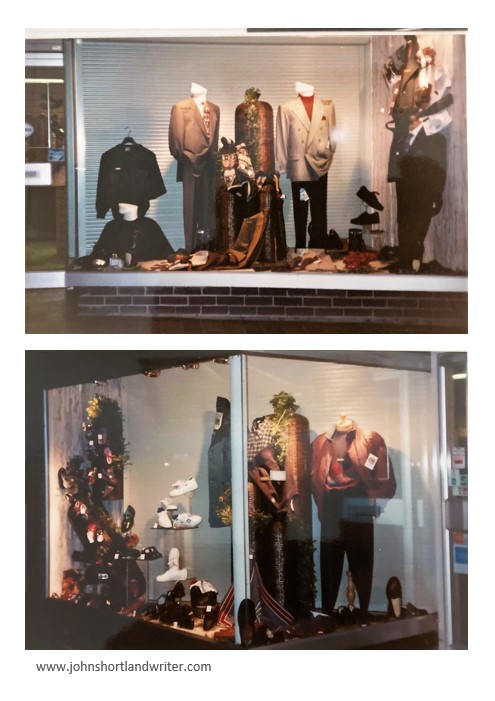
By the 1990s the displays were brighter and (to use 2020s speak) more ‘on trend’

I suppose it was because the shop was ‘always there’ that we have no photographs of the shop interior through the decades which is rather sad.  Fortunately, I did take a few in the early 1990s and these will probably trigger some memories for local people.  The 1990s brought new challenges for the business with recession and changing shopping habits sounding the death knell for businesses like ours.  I had joined the firm in 1971 and my business partner, John Pheby had begun even earlier, as a lad, working for the family.  It was a hard but inevitable decision that we decided to close and were fortunate to find a buyer almost immediately.  They converted the property to three shops and the accommodation and stockrooms above to flats.  Since that time Bourne End has changed quite considerably and most of the old shop names (and several of the buildings too) have disappeared.   I believe that there must be photos of the interior held by local people somewhere – it would be wonderful to see them.  I seem to recall Jean Peasley taking photos during our last few days…

Menswear Department, 1990
a small section of the Ladies Fashions Department 1990

So, what happened to our employees?  In the early days of my tenure there was Ivy Taplin (Akela to us cubs of the late 50s!), Yvonne Ludgate, June Charlton (later to become June Billinghurst), Cissy Hyde, Mrs Faulkner, Liz Hill and Diana Spokes.  Later, Pauline Harvey, Marjorie Kane, Wendy Manley, David and Marian Bratter, Diane Douneen, Kath Bowdrey, Iris Halstead and Cissy Vickers. I’m afraid I can’t remember the names of them all but some of those listed will be familiar to Bourne End locals – please don’t be offended if I have left you out, you were all valued!  The younger generation I purposely have not named but they aren’t forgotten either – I still keep in touch with several of them thanks to social media.  It was thanks to a succession of great staff through the years that the business was so successful.  It seems appropriate to thank our loyal customers too – I can still picture many of them and the frequent kind comments that I still receive on social media shows that they haven’t forgotten Shortlands either which, after all this time, is rather humbling as well as very special.

Ladies Shoe Department display 1990

And what have I been doing the past thirty years?  Retailing had been a passion for my family for generations but I decided to follow another of the Shortland passions and forge a new and very different career – you’ll have to wait a short while for part two to find out what but the photo below may give a clue!


Part Two of this blog focussing on the last thirty years is now published and can be found by clicking on the link here

Here, Take It, and Don’t Cry [Nadir Un Vayn Nisht]

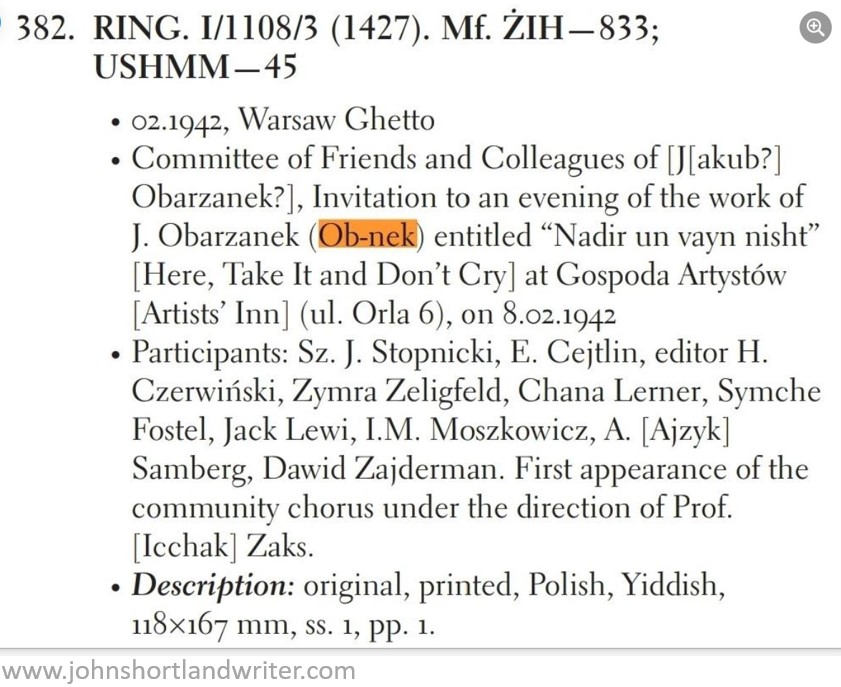
The evening of Sunday 8th February 1942 saw an elite group of actors, writers and singers come together to celebrate the work of their friend and colleague, Jakub Obarzanek, then at the height of his fame as an editor, comic writer and satirist.  Within months all of them would be dead, shot or gassed in the concentration camps of Poland, executed because of their Jewish heritage or political comment, or both.

Invitation for the evening performance celebrating the work of Jakub Obarzanek, 1942

Jakub was born on 15th January 1891, probably in the city of Lodz where he lived for much of his life.   The first son born to Samuel & Gitla, and into a comfortably off family, he would have been expected to follow in his father’s footsteps and work in the family business as a wholesale cloth merchant.  However, Jakub had always wanted to write and in 1918 he published his first pieces of work – humorous songs and verses in the Lodzier Togblat, one of the premier Polish Jewish newspapers.

Jakub Obarzanek standing left with three workmates, 1930s

Writing always in Yiddish, and under the pen name ‘Ob-nek’, Jakub very quickly developed a following amongst his readers and soon joined the permanent staff, editing and writing for the Friday edition.  As his talent develops, he begins writing sketches satirising everyday Jewish Street life which, again is eagerly read by a public wanting more.  During this time, he also begins collaborating with various revue theatres writing witty sketches, songs and monologues. All was going well until 1939 when the Germans invaded Poland, arriving in Lodz on September 8th.

Najer Folksblat newspaper, one of the publications Josef wrote for

One of the first moves the Gestapo made was to arrest Jewish writers and intelligentsia and Jakub along with others was taken to Radogoszcz, a factory now being used as a prison.  It had no baths or kitchens.  Almost immediately the killings began with the intelligentsia taken into nearby woods and shot.  For reasons unknown, Jakub was freed in early 1940, possibly because a ransom of 150 marks would permit prisoners to be relocated to the Lodz Ghetto. However, sometime during 1940 he had made his way – or perhaps been taken – to Warsaw.  Here, confined in the Ghetto he continues with his writing, helps to create a new revue theatre and providing them with material.  The last we hear of Jakub is the evening performance celebrating his work.

The Radogoszcz factory where Jakub was imprisoned and now a museum [Wikipedia]

It is not known whether Jakub was present for the performance.  My feeling is probably not.  What we do know is that he was once again arrested and was finally executed during April 1943. Married to Mala, Jakub had a daughter, name sadly unknown, and two sons, Moshe and Simon.  Mala and the girl perished in the death camps.  Whether they died alongside Jakub is also unknown, or even if they were with him after he moved to Warsaw.  Both Moshe and Simon survived the concentration camps but were very badly traumatised by their childhood suffering.  They ended their days in Israel but I have little knowledge of whether they were able to lead a full and fulfilling life. 

Translated description of the invitation, 1942

The performers at the celebration of Jakub’s work were, as mentioned celebrated artists of their day.

Zymra Zeligfeld – a famous singer of Yiddish folk songs – murdered in Treblinka Death Camp, 1942   
Chana Lerner – actress and wife of Dawid Zajderman, tenor – murdered together 3rd November 1943, Majdanek Death Camp
Symche Fostel – comic actor of International renown – murdered in Pontiatowa Death Camp, 1943     
Jack Lewi – actor of International renown & close friend of Franz Kafka – murdered in Treblinka Death Camp, 1942                                            

A(jzyk)  Samberg – famous Jewish actor – murdered in Poniatowa Death Camp 1943    Prof (Icchak) Zaks – founded the Internationally renowned, 120-strong Icchak Zaks Chorus; researcher and translator of opera into Yiddish, and music teacher – murdered in Treblinka Death Camp, 1942   

l-r: Zymra Zeligfeld, Chana Lerner, Symche Fostel (centre), Icchak Zaks
all had been executed by the end of 1943 [Wikipedia]

Jakub, as has been shown, was a popular man, much admired by his friends and colleagues; he must have been a brave man too and not only with his satirical writing and working knowing that he was unlikely to survive the war.  Earlier, just prior to WW1, my grandfather, Harry Obarzanek, Jakub’s younger brother had been living in England when he was conscripted into the Russian army (Poland at that time was part-under Russian control).  Now in army camp in Ukraine, he wrote to Jakub telling of his anxiety of being away from his wife for three years.  Jakub arrived bringing false papers, civilian clothes and a ticket to England and helped Harry abscond whilst on duty.  If they had been caught both would have been shot.  If it hadn’t been for my great-uncle Jakub’s help, perhaps my own family would have suffered the same terrible fate as Jakub’s. A humbling thought. I hope that with my writing, I have given Jakub the voice that was so very nearly lost, and that it is an adequate tribute to our brave and witty family hero. 

Brothers: my grandfather, Harry (left) & my great-uncle Jakub Obarzanek

How appropriate it seems that I am able to write about Jakub’s life and publish it on the 80th anniversary of his death. A very special thanks to Chaya Bercovici who saw my initial Facebook plea for information relating to Jakub and, by some miracle, remembered hearing of my grandfather’s escape from Poland. Is it too fanciful that Jakub, knowing of this, might have said, “Nadir un vayn nisht”, “Here, take it, and don’t cry”, the words used as the title to his tribute evening?

.
Three Very Special Cotswold Reasons – revisited

Back in 2009 – which seems a lifetime ago now – I responded to a question posed by The Guardian newspaper and the English tourist authority: select three things that make a place very special. Naturally, I chose the Cotswolds and to my delight, my blog was just one of ten chosen and published by them to promote visits to this country. After fourteen years, I thought it time to take another look. Although the reasons still stand up well I’ve updated the photos and some of the text.
You’ll know when you arrive…

1. Space and Peace. I know this is technically two reasons but they are so interlinked that, in my mind, they only count as one. Besides, that way I can cram in an extra reason without appearing to cheat too much. The flat topped, rolling limestone hills that make up the Cotswolds offer far reaching views to the vales beyond. They free the mind and let the spirit wander – a rare occurrence in the busy world we all inhabit. This view looks north over glorious country to the Vale of Evesham and just invites you to start walking towards a distant goal.

Hidden in deep valleys, crystal clear streams create more secretive places to explore or to sit quietly by their banks to watch the water flow, sometimes gently, sometimes more noisily, by.

The River Evenlode

The King’s Men stone circle forms part of the Rollright Stones and have been a meeting place since they were set here 4,500 years ago. In early morning light they appear mysterious and brooding but when the sun strikes them their colours and markings are awe inspiring. Rest here a while, at a time when you can be alone, for the feeling of peace is palpable.

And give back to the soil an offering, (when we have taken so much away), as others have done from the beginnings of time and continue to do so. Single flowers placed at the centre of the circle have a calm simplicity…


2. Nature. It is impossible not to be aware of nature in the Cotswolds, whether it is the magnificence of old trees, the deer crossing roads in front of you or the cloud formations of our large skyscapes. This ancient ash tree has watched centuries of agricultural change take place and, despite modern farming practice, still stands proud in a hedgerow dividing wheatfields. In 2009 the fungal disease Ash Dieback was unknown. It is now thought that the majority of ash trees will succumb to it robbing the English landscape of their beauty. At present, the old pollard seems unaffected but whether it will survive only time will tell.

Since 2009 we have all become so much more aware of the value of dark skies. With so few big towns, the Cotswolds is a place where the nights are darker and the stars shine more brightly.

Deer are common throughout the Cotswolds. Roe and the introduced Muntjac are frequently seen but perhaps the prettiest, when in their spotted summer coats, are the Fallow.

In our rivers and streams, otters, although rarely seen, are now becoming evermore common – something else that has happened since 2009.

There are some exotic surprises too! A macaw outside a garage in Charlbury and alpaca seem to be everywhere, I wrote in 2009. The macaw has gone and even alpaca seem less common now but not far from the secret valley it is possible to see wolves and bear. I don’t think the two facts are connected!

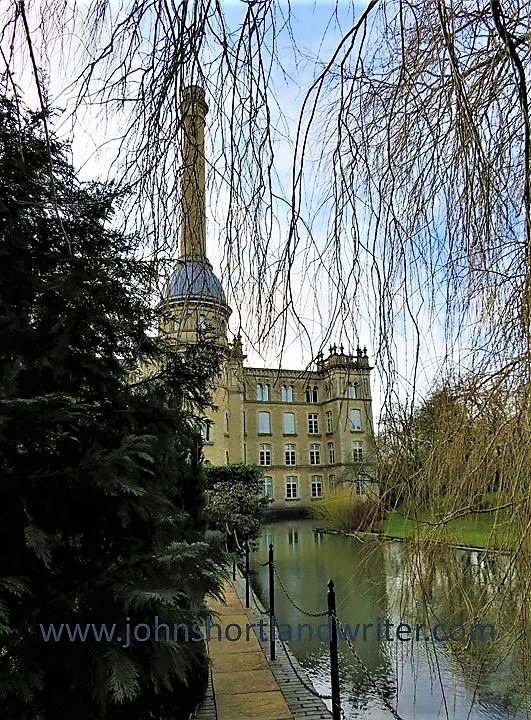
3. History. The Cotswolds are steeped in history and it is the history of wealth and the power it brings. Sheep – or more accurately, their wool – were the originators of this wealth and the region still has a higher population of sheep to humans. But how to illustrate this when there is so much scope to choose from? Bliss Mill, in Chipping Norton, is now converted to luxury apartments but, for most of its time, produced some of the finest tweeds in Britain. I have since written in more detail of the history of the mill, the fire that engulfed it and the strike by the workers that brought poverty and starvation to the town (link here).

The churches of the Cotswolds were also a by-product of wool – the wealth it created is often shown by their huge size in proportion to the numbers of the local population. The photos I originally published were of St Mary’s, Chipping Norton. The ones below are of St Mary’s, Swinbrook; the village was the home of the famous (or, perhaps, infamous), Mitford sisters.

In 1940 the church suffered damage by a stray German bomb during WW2
…the vicar collected the ancient shattered glass which was incorporated into this memorial window

So, come and visit the Cotswolds and decide for yourself. And, in the meantime, select three things that make your special place, special.

Mother’s Hero: Arthur Rainsford Mowlem

When I published my article on ‘The Man Who Never Was’, the story of Operation Mincemeat, a year ago, I hadn’t realised that a film was to be released in May 2022.  Perhaps, if I had I would have delayed the publication by a few months!  In it, I described the rather tenuous connection with my father’s cousin, HAL Fisher.  The interest and comments I received made me explore deception used as a weapon during World War II.  It was this that led me to learn about the use of plastic surgery to change people’s appearance for the purpose of espionage. 

Arthur Rainsford Mowlem 1902-1986

Although surgery to alter appearance has been carried out to a limited extent throughout history it was during the Second World War that it began to be developed in earnest.   A popular reason given for this was the desire to treat badly injured pilots who had survived their aircraft being shot down.  However, there was a far more secret purpose being carried out too – to assist the SOE (the UK’s Special Operations Executive) in their missions behind enemy lines.  In released official documents, the procedures – known euphemistically as ‘permanent make-up’ – are listed as casually as one might write a shopping list: ‘plastic operations to forehead’, ‘surgical operations to ears’, and so on.  Once war was over some of the recipients began to talk about their treatment which, although disapproved of by the Government, were not silenced.

“An excellent agent and a dependable officer” – before and after surgery

Arthur Rainsford Mowlem, born in New Zealand in 1902, came to England in the late ‘20s to further his development as a medic.  In 1936 he joined the practice of Sir Harold Gillies, also a New Zealander and described as ‘the father of modern plastic surgery’.  Here they worked alongside pioneering new methods of treatment.  It is unknown when or how Mowlem and other surgeons were enlisted to help the SOE and Mowlem never spoke of it during his lifetime.  However, in correspondence between him and the SOE he discusses the prospect of surgery to alter the appearance of a French agent.  How Mowlem felt about operating on these healthy men is unknown but an un-named surgeon tells of how the work now required of them “was a mockery of all that they had trained for”.

My mother, Rachel Oberzanek: 21st birthday portrait

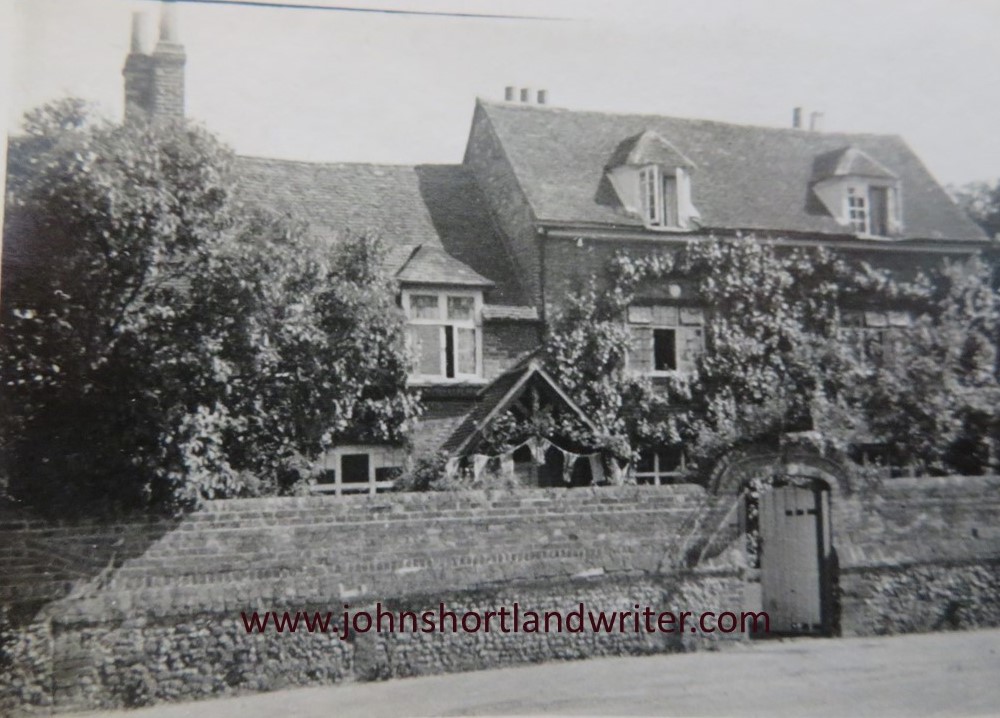
My mother’s career with Odeon Cinemas had progressed rapidly throughout the war and by 1944 she was heading the Licencing Department with a team of assistants.  Odeon had, by then, evacuated their offices from London to the small, riverside town of Marlow in Buckinghamshire.  She was accommodated in a lovely and old country house in the nearby village of Well End.  Living at the Old Malt House must have seemed a different world from the London’s West End where she had been brought up and she would tell of how she would lean out of her bedroom window to pick fruit from the grapevine that grew on the house walls.  With extensive grounds, a cook and a housekeeper and the use of a chauffeured car it must have been a life of relative luxury that she would have been unused to.  It was here that she also met her future husband – my father – so a very happy and untroubled time for her.  All that changed in an instance when, on the first day of December 1945 during the black-out, her car was involved in a head-on accident. 

The Old Malt House, Well End – grapevines cover the front of the building – c1943

In those days of cars with no seat belts, my mother had taken the full force of the crash and had been catapulted through the windscreen.  Unconscious, she was taken by ambulance to Wycombe Hospital and with multiple facial and head injuries unexpected to survive the night. Fortunately, Odeon proved to be excellent and supportive employers, driving her parents down from London and accommodating them so that they were able to visit her regularly.  On Christmas Day she came out of the coma unaware of what had happened over the past month.  She would tell of how she had first heard singing and, opening her eyes, saw a blurred vision of people dressed in white that she though must be angels.  They were, of course, her nurses singing a carol!  Badly scarred and with broken nose and cheekbones she was finally released from hospital unable to work and embarrassed about being seen in public.  In her memoir, she described the first day she had to enter a crowded room and how it fell silent when she appeared, a humiliating and distressing moment. 

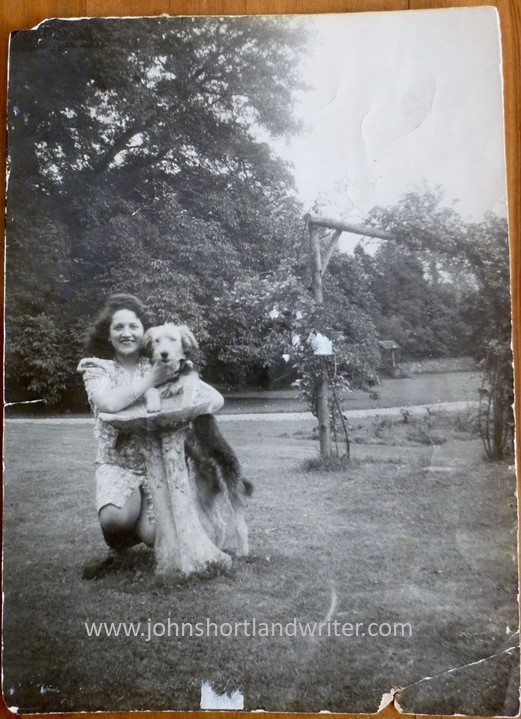
My mother, in the grounds of The Old Malt House, and looking so happy, just before the accident that changed her life – and her appearance

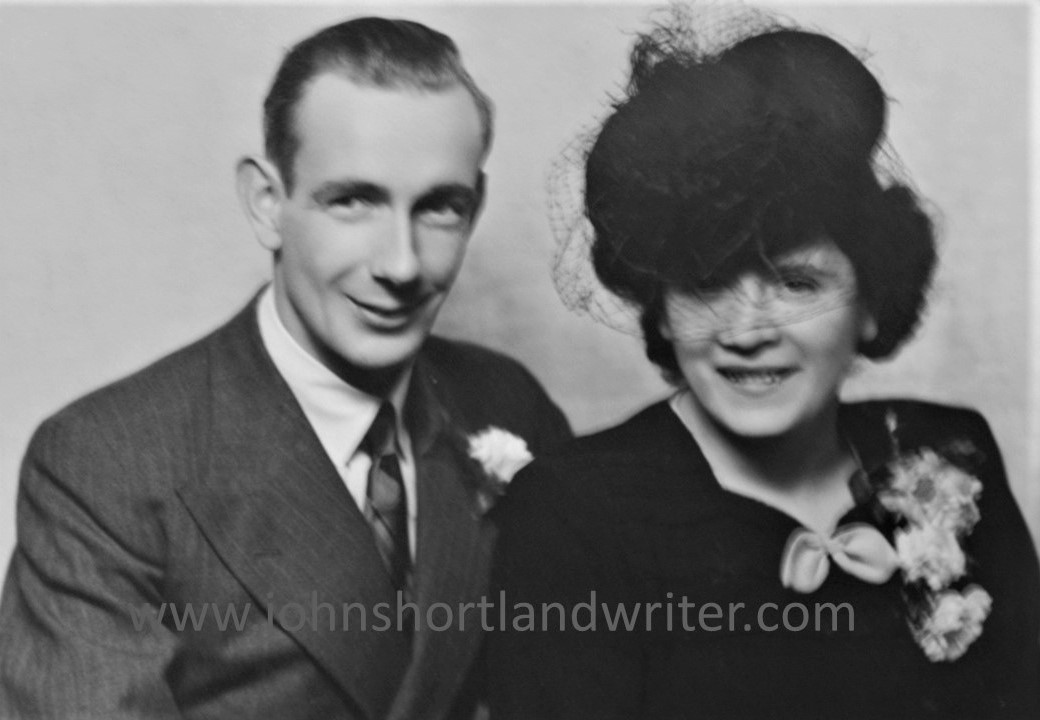
Six months after her accident, Odeon who had been caring for her as well as paying her salary all this time arranged for her to be taken to London to see a doctor at The London Clinic in Harley Street.  The doctor was surgeon Arthur Rainsford Mowlem; in mother’s words, “a charming man who promised me he would do all he could.”   There followed a series of operations over many weeks where he reconstructed the badly damaged side of her face, repaired the cheekbones, and rebuilt her badly broken nose using part of her hipbone.   Looking at her wedding photograph, taken such a short time after in the autumn of 1946, his skilful work is quite extraordinary although my mother kept the picture hidden away; all she could see was a face that didn’t quite belong to her.  Nowadays, I imagine, she would have received some sort of counselling but then it was just a case of ‘getting on with it’.

My parents on their wedding day – just weeks after her face had been reconstructed

Living well into her 90s, mother’s issues with discomfort in her neck and head waned over time only to be replaced by a later source of (bemused) irritation.  When visiting hospitals there would be a succession of doctors and nurses wanting to look at her facial surgery for none had seen such early reconstruction and to see how it had fared over seventy years.  She had been told that she was the first civilian to receive plastic surgery and for the remainder of her long life she was eternally grateful to Odeon Cinemas who had cared for her and paid for her treatment.  Most of all, she was grateful to Rainsford Mowlem, without whom she would have had a lifetime of disfigurement; to her he was, indeed a hero.

Mum on her 90th birthday – and seventy years after the facial reconstruction

To read the story of Operation Mincemeat and The Man Who Never Was click here

References:
Wikipedia   Arthur Rainsford Mowlem

Amin, Kavit   Rainsford Mowlem: An unsung father of reconstructive surgery

Bailey, Roderick.   Special Operations: a hidden chapter in the histories of facial surgery and human enhancement    (CC BY 4.0) 

EDIT: Today, 21st June, I was delighted to receive this lovely email in response to this blog post from The London Clinic where my mother received her revolutionary treatment 70 years ago. They are happy for me to share it with you – you may need to click on the image of the email to make the typeface clearer

2021: A Year in Review – part 2

Three weeks into the new year and Christmas and 2021 already seems the distant past. A new year brings new hopes and plans, not least of all a Covid-free one where holidays and meeting up with friends and family can be carried out without the fear of cancellation. The past couple of years have been challenging and difficult for many people and blogging topics sometimes reflected this as well as the importance of family. Few people can be as tough and courageous as one of my ancestral cousins nor as unfortunate for another to be remembered because of his underwear. There were trials and tribulations for the people of Chipping Norton too, the nearest town to my secret valley and, elsewhere in the Cotswolds, the building of a great country estate to provide training in endangered skills for local people. These stories are a reminder that however large the challenge or the struggle, the end result is more often, very worthwhile.

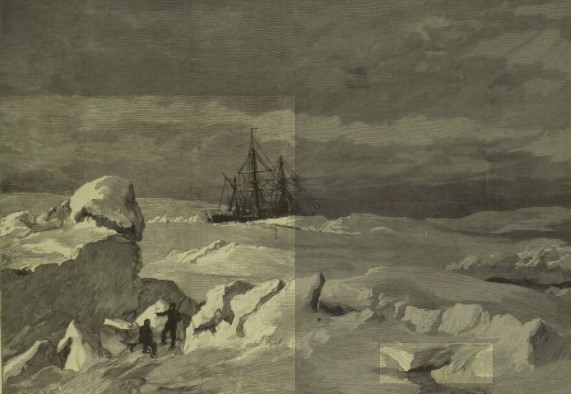
1876: HMS Alert – with my cousin aboard – icebound as well as homeward bound

In July I wrote about the extraordinary story of Welsh vagrant Glyndwr Michael who famously became known as ‘The Man Who Never Was’. His body was used in an elaborate hoax to fool the Germans during WW2. The ruse worked, saving many lives, partly thanks to the use of my cousin’s underwear. Sounds intriguing? Well, if you want to discover why and also how my Polish grandmother fits into the plot you will need to click on the link here to read all about it.

False papers of Major William Martin, RM [Source: Wikipedia]

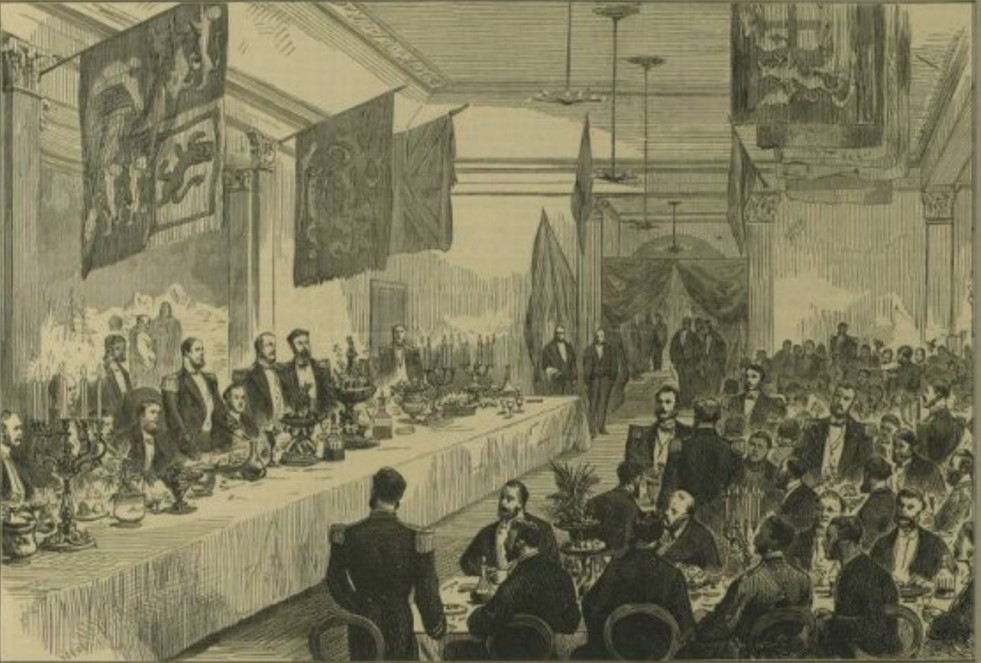
August and September was also a tale of an ancestral cousin who in the May of 1875 set sail for the Arctic. As bizarre as it seems now, the expedition was searching for a ‘lost Eden’. for there was a popular belief that beyond the ice, at the North Pole, they would find a sub-tropical paradise. The expedition created worldwide interest and excitement and was widely reported in the newspapers. When the Royal Family began to take an interest, huge crowds descended on Portsmouth eager to see not just the Queen but ordinary members of the crew. My cousin, John Langston Saggers, a young man aged just 23, could have experienced nothing like it before as they were wined and dined and with no expense spared. To read about the preparation for the voyage and to discover the personal gift from a Royalty concerned that the men may suffer from cold ears click on the link here.

The dinner for the Officers given by the Mayor of Portsmouth the week before departure [Source: BNA]
Sitting out the Arctic winter

When the ships became icebound, they had to sit out the Arctic winter in total darkness. That, however, did not stop the men from making the most of what they had. Aboard ship they had a full-size theatre where they produced plays and outside on the ice, despite the freezing temperatures and inadequate clothing they created a skating rink and played hockey. Their heroism – and despite (unsurprisingly) not finding a warm paradise – the men returned home to a hero’s welcome. However, the star of the expedition wasn’t human at all. To find out about Nellie and how she very nearly became a coat for an Eskimo chief’s wife click on the link here.

Mid-day, Thursday, 9th November 1876: HMS Alert & HMS Discovery enter Portsmouth Harbour
Nellie, who almost became a coat

Next month will be the 150th anniversary of the Great Fire at Chipping Norton, one of the gateway towns of the Cotswolds. Although not as popular with tourists as some of the ‘chocolate box’ villages and towns in the region, it boasts one of the Cotswolds most iconic images – that of Bliss Tweed Mill. The mill, that has become so well-known now, rose like a phoenix out of the ashes of the earlier mill which was razed to the ground early one February morning. The story of the fire and how the mill was rebuilt to exacting standards in less than two years is told in October’s blog post. Built to resemble a great house with the most modern technology of the day, it was the pride of the town. The jubilation wasn’t to last and a strike was called which took eighteen months to break. You can read all about the mill and see through numerous photographs how it has been transformed into luxurious apartments; a haven of peace and tranquillity within the town centre by clicking on the link here.

For November, we remained in the Cotswolds to explore the creation of another outstanding property and its gardens. In 1906, Claud Biddulph commissioned the building of a house with “the feel of a cottage in the country”. In so doing, he created one of the finest Arts & Crafts house in Britain, albeit one with seventy-four rooms, so hardly a cottage! Every item used in its creation and furnishing had to be of the best quality and hand-made; one of the reasons why the house took so many years to complete and why it is so exceptional today. Part of the house was dedicated to teaching local people the dying skills required and, more than an hundred years later, craft workshops and exhibitions are still held there. Open regularly to the public so why not take a tour of the house and garden? If you can’t visit physically, you can do so digitally by clicking on this link here.

Rodmarton Manor seen from one of the ‘garden rooms’

And so we come to December, the year end and the start of this review – you can read what happened during the months of January to June by clicking the link here. I hope that your 2021 hasn’t been too troublesome – now the year is past we can look forward to this one with renewed hopes and aspirations. No doubt there will be challenges ahead but as we know from our own experiences, as well as hearing of those of our ancestors, life continues apace regardless. Sending all my readers, wherever you are in the world (and, my goodness, you’re a scattered bunch!) best wishes for 2022 and with the hope that it will be a happy and healthy one.