Mentors – part 2

In my earlier post on mentors, I asked the question “what makes someone a mentor” and do they realise they have actually become one. Of course, the answer will vary for there are many reasons why people do it, and equally a number of reasons why someone needs it.  My experience is that it is only with hindsight that I realise I had four mentors in my life and all would be amused at my describing them as such. 

Lorna Dick French, Cyril Pamela Heber Percy

In part one I told of how I met, quite by chance, Dick and Lorna French who had a remote hill farm on Exmoor, a National Park in England’s West Country.  I was aged sixteen and, despite our age differences (essential for mentoring) a close friendship developed that lasted until their deaths many years later. [Their story can be found here] Fifteen years after that first meeting, I met another couple, Cyril and Pamela Heber Percy, and although of a very different background from Lorna and Dick, they too took on the role of mentor.

Woodlands Cottage, the Heber Percy’s home

In 1983 I had moved house to a small village in the Chilterns.  Although I consider myself a ‘Chilterns man’ I had always lived at their foot, first by the River Thames and, later, by the steep escarpment to the west.  Now I was living in one of the highest villages, surrounded by wonderful bluebell woods and prone to quite different weather than seemingly, everywhere else.  Like many hilltop villages it was a straggly affair, a mile long but with the houses scattered first one side of the road and then the other.   Our house sat opposite the common – a wide, open piece of land although by us it had been invaded by bracken and hazel scrub where Dormice could be seen climbing amongst the branches.   Wild cherries and raspberries also grew there and with a small pond that had once been the village’s only source of drinking water, it was very quiet and very lovely.     

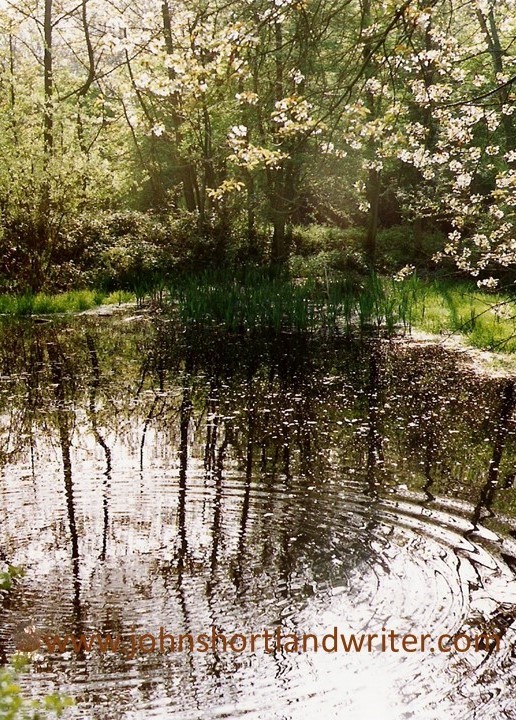
There was a small pond amongst the cherry trees, once the village water supply
The village was surrounded by wonderful beechwoods awash with bluebells each spring

Soon after our arrival, there had been a knock on the door. Standing on the doorstep was an elderly gentleman, very upright and with a clipped moustache he looked every part the retired army colonel which he was.  With no introduction he barked, “what religion are you?”   Before I could answer, he continued, “Of no matter, we need bell ringers.  I’ll see you at practice tomorrow, 7pm.”  Of course, I didn’t go!  Our next meeting was one evening when out walking.    Hearing a lot of shouting and cursing I could see a man of similar age to me having difficulty with ‘boxing’ (loading) his horse to transport it back home.  No matter how he tried the horse refused to walk up the ramp and into the lorry.  As I drew level, the Colonel holding a whisky in his hand also appeared ready to give advice. The young man looked very dismissive at his suggestions but that changed after the Colonel took hold of the reins, jumped onto the horse’s back with an agility that belied his years and cantered away before turning and riding it straight into the lorry.  “Don’t stand any nonsense in future” was all he said as he tied the horse securely.  Turning to me, he said, “must be time for another whisky.”    Both the rider and I had learnt a valuable lesson that evening – never judge someone’s abilities by their age.

Boxing – or in this case, unboxing – a horse

The Colonel and I spent the rest of that evening in his home drinking whisky and discussing all manner of things, Pamela, his wife, joining us.  Sitting back in a comfortable armchair, I took in my surroundings, my eyes landing on a small photograph sitting on a shelf.  It was of two army officers on duty outside Buckingham Palace.   Cyril noticed my interest immediately – another thing I was to discover: he was exceptionally alert and noticed everything.  He explained that the photo had been taken many years earlier and featured in the national newspapers.  It was of him and his brother, one in the Welsh Guards the other in the Grenadier Guards acting as Colour Bearers at the Changing of Guards ceremony, the first time that two brothers had had that honour.

Changing of the Guard at Buckingham Palace 1927 [copyright British Newspaper Archive]

Over the years that followed, Cyril would tell me of his military career, of his escorting Queen Wilhelmina of the Netherlands under enemy fire during her evacuation, of dinners in England at the Palace with the King. (Pamela complained of how tedious all the formalities were!).  Of even greater interest was to learn of his Edwardian upbringing for he had been raised at Hodnet Hall, a large country estate in Shropshire.  He lived on the top floor in the nursery and each evening Nanny would bring him down to say goodnight to his parents where he would recite a poem and dutifully kiss his mother and shake his father’s hand.  Surrounded by liveried footman and other house staff, he preferred the informal company of the gardeners and gamekeepers.  Through them he developed a deep love for the natural world and keen observational skills which he passed onto me.  Walking together, he would point to a barely visible gap in a hedge and ask me if a hare, fox, badger or deer had made it.  Of course, I got it wrong but he persevered until I was able to tell the difference.

Hodnet Hall, Cyril Heber Percy’s childhood home
The Colonel taught me to recognise the different paths wild animals make (in this case, a badger)

During this time I was still working indoors in the retail fashions business but he taught me a lot about gardening too for the gardens at Hodnet were considered one of the finest in Europe.  You have to think big, he would say, immediately followed by “and you have to think small”.  To prove the point he would get me to lie down staring up at the undersides of large leaved plants, and then, on my knees, examine the different shades of green that could be found in the tiny leaves of wild thyme.  To get me to understand the wonders of the natural world he would say, “think like a child but always act like an adult”.  Years later, in my present career, I remember this advice and concentrate on elements of surprise as well as leaf texture when designing gardens.

When you look up at a plant you see a quite different world….

Pamela, also would tell me stories of her life.  Born into Irish aristocracy she had a very different upbringing to her husbands for there was the insecurity that the fight for Irish independence would bring.  There were stories of hiding in secret passageways within the house ready to escape if a violent attack took place, Fortunately, this never happened, perhaps because her mother took her social duties very seriously and would visit the poor and the sick to make sure that they never went hungry.  Pamela would accompany her mother on these visits and so from an early age saw how frugally ‘ordinary’ people lived.  It also gave her the ability to empathise with people from all walks of life and to treat them as equals.

Pamela Heber Percy

Over the years, the Heber Percy’s taught me many things, one of which was to cast a fly.  Both the Colonel and Pamela were expert salmon and trout fishers.  When I mentioned how much I enjoyed spinning for pike, Cyril had shaken his head and joked that it was very poor sport.  Venturing out onto the lawn he pointed to a fallen leaf – “that is your trout” – and he patiently watched and corrected me as I tried to get the line to drop close-by,  After I had mastered that he made life more difficult by pointing to leaves under low hanging branches and from there, to leaves floating on the surface of the swimming pool.  Unaware at the time, they gave me lessons in accuracy and perseverance as well as a useful fishing skill.

The Colonel: Cyril Heber Percy

It was a sad day when I heard that the Colonel had died.  He was buried, with full military honours at Hodnet, his childhood home.  We had always planned to visit the house and gardens together one day and now we were, although not in the way we had planned.  I felt surprise, pride and honour when I was ushered to the front of the church to sit with the family.  As the Last Post was being played from the top of the church tower I felt my lower lip tremble only for it to be controlled by hearing the Colonel’s voice whispering, “not very British!”.  Soon after his death, Pamela moved house and although not too far away, I saw less of her, and not many years after she also died.  I had lost two very dear and good friends.

Stained glass window at St Luke, Hodnet

And one final thought – I did learn how to ring the church bells!

Have you had a mentor or mentored someone?  What does it take for someone to become a mentor?  Our parents have probably the greatest influence on our lives so why does a mentor s role take on such importance? Let’s hear your story either in the comments below or, if you prefer, by using the Get in Touch tab at the top of this page.  Thanks to Diane Highton for posing the question that triggered this blog!

In Praise of Bluebells

Can there be a more delightful spot to linger than a bluebell wood in spring?  The intensity of their colour when seen growing in their tens of thousands would hurt the eyes if not offset by the citrus green of the beech trees they favour growing under.  With early morning sunlight filtering through the branches to strike the woodland floor below, both leaves of beech and ‘bell shimmer and sparkle in the clear light.  As the forest warms the bluebells release their scent but not the heavy, redolent perfume that one might expect. Instead, a fragrance so soft and gentle that for a moment it seems to come from elsewhere; all too quickly it melts away, dispersed by the increasing heat.

Bluebells are one of the key indicator plants of ancient woodland, a term that refers to woodland that pre-dates AD1600, for their bulbs prefer to remain undisturbed where they can slowly establish huge colonies.   Here, in the secret valley where they grow in hedge banks, they can be used to trace the line of an equally ancient drove road for it is thought that the hedgerows and trees that line it are remnants of Wychwood Forest.  Over centuries, the boundaries of the Forest have shrunk as fields were created and the trees cleared for arable land or pasture.  By leaving the field edges untouched the early farmers saved themselves both time and labour and in doing so preserved the bluebells that give me so much pleasure each spring.  The drove road – primarily used for herding livestock long distances to market – passes our little stone-built cottage before diverting across open country.  It is still used as a public right of way.

Bluebells line the old drove road that passes my house

Unsurprisingly for a plant that has been around from time immemorial, the bluebell has numerous regional names – Common Bluebell, English Bluebell, Fairy Bell, Wild Hyacinth to name a few.  Perhaps the best has to be Granfer Giggles.  In Scotland they are known as harebells although to an Englishman harebell would be a completely different plant that grows later in the summer when the bluebells have long ended.  Even the Latin name which is supposed to prevent confusion has changed over time – it is now known as Hyacinthoides non-scripta.  I much prefer the earlier name of Endymion non-sciptus, it sounds more attractive as well as having a romantic Greek legend attached to it.  Illegal to dig up plants from the wild, bluebells are sometimes offered for sale from cultivated stock under either of these names.

Occasionally you may find a white, or even a pink bluebell

For such a well-loved plant – it has been voted England’s unofficial national flower – bluebells do not seem to feature much in poetry.  They are frequently mentioned by name but no-one, as far as I can tell, seems to have written poems specifically about the plant.  Perhaps it is because they are such a common sight and have none of the delicacy of the wild rose, the scent of the honeysuckle or the diminuity of wild thyme. Shakespeare, who seems to have written about absolutely everything (including thyme), only mentions it once: “the azur’d harebell” in Cymbeline.  The Brontë sisters both wrote of bluebells but I’m not sure they weren’t describing later flowering harebells. Emily’s description “waves in summer air”, and Ann talks of a single flower and of its trembling.  Bluebells are quite a stiff flower that don’t wave or tremble that readily whereas Campanula harebells fit the description nicely. I can’t recall even my beloved Richard Jefferies, the Victorian naturalist, waxing lyrical over them as he did over so many other things.  I may be wrong about this for I can hardly call myself a Jefferies’ scholar, more an enthusiast. However, Cicely Mary Baker created a delightful illustration of the flower in her set of Flower Fairies published in 1923 where she describes the bluebell as the king of flowers.

The less-common Harebell – Campanula rotundifolia
It flowers later in the summer and in more open places

It is to the Georgians that I have turned to illustrate our love of bluebells for I have found frequent references to them in old newspapers and periodicals not just in published poetry but also in their fashions.  This description of the sumptuous gown worn by the Princess of Wales when attending the King’s Birthday in 1795 is worth reproducing here: “A gown of superb, embroidered crepe imitating the rays of the sun and intertwined with embroidered white lilies.  Over which a cape of Venetian net embroidered with laurels and Diana’s (presumably the Goddess) crescent”.  Finally, there was another over-cape “embroidered with bluebells (yes!) and held in place by rich cords and tassels”.  As if this wasn’t splendid enough there was “a long train of silver gauze bordered in purple and silver”.  Having spent twenty years in the world of fashion (before I switched careers to horticulture) this has sent me into overdrive!  Sadly, I haven’t found any illustrations for this ensemble but I do have photos of the ‘draft’ for equally exquisite embroidery designed by Norman Hartnell for a robe for Queen Elizabeth II.
Embroidery design by Norman Hartnell for Queen Elizabeth II

Even earlier, in 1786, Mrs Charlotte Smith was publishing her sonnets.  A remarkable woman for the age, she left an unhappy and violent marriage and campaigned for women’s rights and the abolition of slavery.  She wrote fiction and poetry to financially support herself and her children.  This sonnet reminds me so much of my youth where I roamed the bluebell beechwoods of the Chiltern Hills, for which they are renowned.

“Ah, Hills belov’d!  where once a happy child,
Your beechen shades, your turf, your flowers among,
I wove your bluebells into garlands wild,
And woke your echoes with my artless song.
Ah! Hills, belov’d! your turf, your flowers remain;
But can they peace to this fad’ breast restore?
For one poor moment soothe the sense of pain,
And teach a breaking heart to throb no more?

I’m glad to say that my heart is no longer breaking so perhaps the bluebells worked their magic!

A very old photo (hence the strange colour!) of me and my two deerhounds in a Chilterns beechwood at bluebell time

.
.
.

2024: A Year in Review – part 2

In Part 1 of my review I began by saying words to the effect of life is for living – and when you become older there’s even less time to waste! The result of following my own advice is that part 2 of the review is a couple of weeks late in being published. than I would have liked

Keeping active was also part of the theme of a couple of my blog posts last year, specifically about England’s network of public footpaths. Although we Brits just accept them as part of our historic right to walk across privately-owned land, it seems that for a great part of the world, this would not be an option. My American friends and readers in particular find it hard to comprehend that we can walk across someone else’s property at will (assuming a public footpath crosses it) without confrontation. Many of our footpaths link villages and farms and so, on occasion, you may find yourself walking through someone’s garden or farmyard. The history behind the right to walk and what you can and can’t do was discussed in November’s post which can be found by clicking the link here.

Walking on designated footpaths across privately-owned land is a basic right in England and Wales

A few month’s earlier in August, I wrote of a walk that I had taken across fields, through woods and down country lanes back to my home in the secret valley. It was a lovely walk with the first signs of autumn colouring the trees and hedgerows which were laden with wild fruits and berries. After the noise and bustle of harvest, the fields were quiet and I met no-one for much of the walk. I prefer it that way for it is then, walking in silence, that you are likely to come across the wild birds and animals that also share this space, To follow the route that I took and to see the beautiful creatures I encountered click here.

When walking quietly you come across the wild creatures that live there

I have lived in the country all my life and my father was very much the epitome of the ‘English country gent’. My mother remained a ‘townie’ all her life (she had been brought up in the West End of London) and we both teased her mercilessly about her lack of knowledge of country ways. When she met and married my father it must have come as quite a culture shock to find herself living in a small, close-knit community where everyone knew one another and one another’s business. Neither of my parents were walkers but as a child they would drive my sister and I out to Turville Heath. Over time the heath became my place of refuge whenever I was in need of comfort or in need of re-charging the batteries. It would also be the place for summer walks, playing cricket and picnics. Of equal importance as the heath itself was the car journey out to it – past miniature farm and other magic moments that we children couldn’t get enough of. Click October’s link here to find out more.

My father, very much the country gent despite not liking guns!

Looking back even further in time, I explored the lives of ancestral aunts, uncles and cousins. They had been born, married and died in a village very close to the where I had been raised for our family have lived in the area for at least five hundred years. Discovering their stories had been quite a revelation – for my 3rd great-grandaunt had been about to marry in the local church when she gave birth to a child. The repercussion of this – for the child was obviously not that of the grooms – was far-reaching. Devastated Thomas cancelled the wedding and did something rather surprising shortly afterward, as told in September’s blog post. What happened to disgraced Ann? And what happened to poor Henry, the baby boy, who lived with the stigma of his birth? Was it this that took him down the path of self-destruction and a young death many thousands of miles from home in ….. – well, you’ll need to click on the link to find out what, when and where!

The village church where Thomas & Ann were to wed in 1809


So, what will 2025 bring, I wonder? World politics seems to be on the news with constant and often seemingly bizarre twists and turns unsettling many of us. I’m quite good at not getting too worked up about things that I have no control over. Fortunately, I live and work in stunningly beautiful countryside and my interest in family history has taught me that life carries on regardless of turmoil all around us. I shall continue to write about my adventures (if that isn’t too strong a word to describe them). I also have a couple of writing projects to see to, and of course, there are my garden projects too. In dues course, they may appear on these pages. As with all my blogs, there are lots of photos to view so why not take a look and please do comment as appropriate.

A Hurricane in a Teacup

With much of Britain recovering from the effects of three storms – Dudley, Eunice and Franklin – within ten days and Storm Gladys about to arrive, it seems appropriate to have some up-to-date thoughts on the time when we England experienced a hurricane. Or did we experience one? After the ridicule that poor Michael Fish, the weatherman, had to endure after he proclaimed in 1987 that “Britain doesn’t have hurricanes” only for the nation to wake up to find itself flattened, the forecasters have avoided using the ‘H’ word. Instead we have storms that are now named in the same way as hurricanes. Even more recently still, we are told we have ‘red alert’ storms. So, were these latest storms hurricanes or in reality were they, as my late father would have said, “just a bit of a blow?”

I wrote the thoughts below many years ago when pondering on the English Hurricane and the later 1990 storm. That wasn’t officially a hurricane either but did far more damage – hurricane-like damage, in fact. The only thing that this and these latest storms prove is that the debate hasn’t moved on very much over the intervening years…

The dangerous work of reconnecting electricity continues through the night

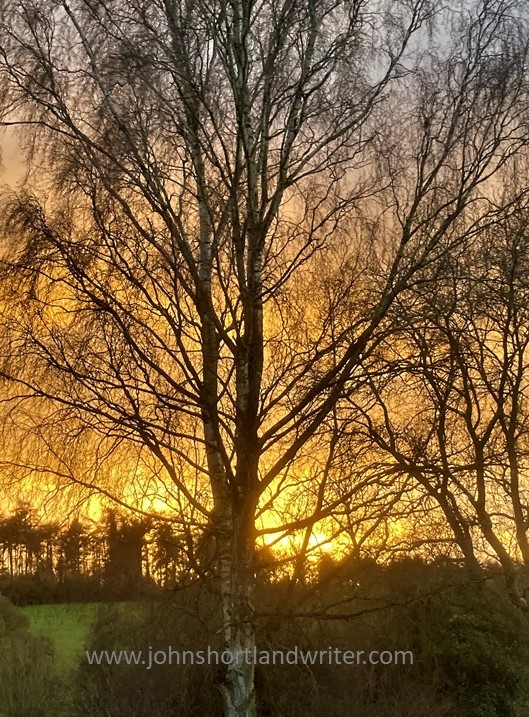
English people constantly talk about weather. It’s in our makeup, our genes – we can’t possibly walk past someone, even a total stranger, without saying something about it. We can’t help it, no matter how much we realise that the person isn’t that interested (or, for that matter, even if they don’t speak English, when we madly gesticulate skywards). We rattle on about too much rain, too little rain, too much sun, no sun, cold for the time of year, how warm it is. So, in the spirit of being a true Englishman, despite my part-Polish ancestry, I’m just going to mention that we had a fantastic sunset in the secret valley a couple of days ago.

I think the reason we may behave like this is because English weather is nearly always gentle. The landscape that makes up England is beautiful and can be dramatic but not in the way of so many other countries. Take the USA, for example. Where’s our Grand Canyon, our towering redwoods, our Rocky Mountains, our Great Plains and our Niagara Falls? We have them in miniature and, perhaps, that is just as well as we are such a small country. And likewise, our weather: we have heatwaves, we have floods, we have blizzards. But they are rarely anything truly spectacular (except to those poor people affected by them, of course). And so when we were told by the weather men in 1987 that reports of a hurricane were completely exaggerated, we believed them totally. And despite the fact that much of the country was hit hard by it when it arrived, my part of the Chiltern Hills where I lived at the time was not much affected, even though it is one of the most wooded parts of the country.

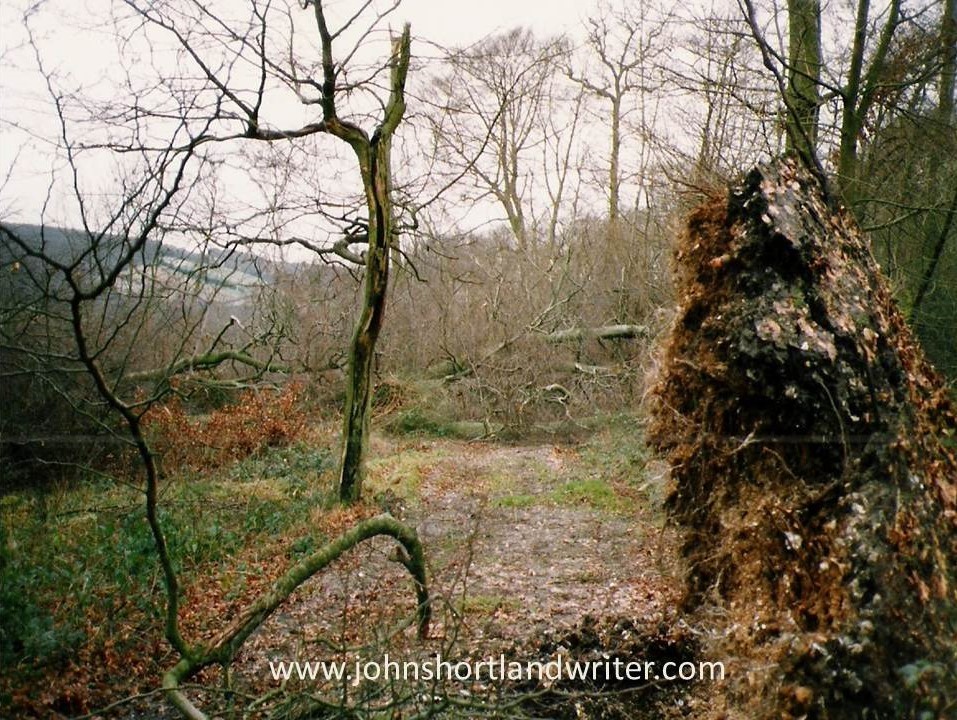
The night in January 1990 was different. This time we had winds, whilst not as severe as three years earlier, which created total havoc with the already weakened root systems of the trees. Great swathes of the magnificent beech woods that are the very heart and soul of the Chilterns were flattened in a couple of hours. I lived at that time in the middle of one of these woodlands and am frequently reminded that, as the rest of the world cowered in their beds and the trees came crashing down all around our house, I woke up to say “a bit windy out there” before falling asleep again. As dawn broke the true damage to the landscape (but fortunately not our home) could be seen.

It is now over thirty years since that storm and the woodands have been transformed. Those of us that remember the 200 year old beech know that the majority are gone and, in their place, are new trees of mixed species. It will be many years before the magnificence of the woods return but they are healing. This photo below is taken from the same spot as the one above. Some of the biggest old stumps have been left, too difficult to move – time has hardly changed their appearance apart from their ‘roof’ of mosses.

One of the unforeseen benefits of the hurricane is the increased amount of light reaching the woodland floor, for beech trees cast a dense shade where little can grow, other than where the canopy is lightest. Apart from the view to the valley below, which was unseen before, many wild flowers are better now than ever. Roll on April when we can see the blue carpet of tens of thousands of bluebells disappearing into the distance.

Oh! And I nearly forgot to say, the weather today is a mix of sunshine, cold winds, rain and sleet. Don’t forget to tell the next person you meet!

.

.

The Boy from London

I am a hills person.  I love walking – or even better – cross-country skiing in the mountains. I can also admire the huge skies and vistas of flat country.  However, it is with hills that I have always strongly identified with.  So, when I’m asked “where was home for you?” it isn’t the county of Buckinghamshire, or even the village I was brought up in that I respond with, it is the hills and the Chiltern Hills in particular.

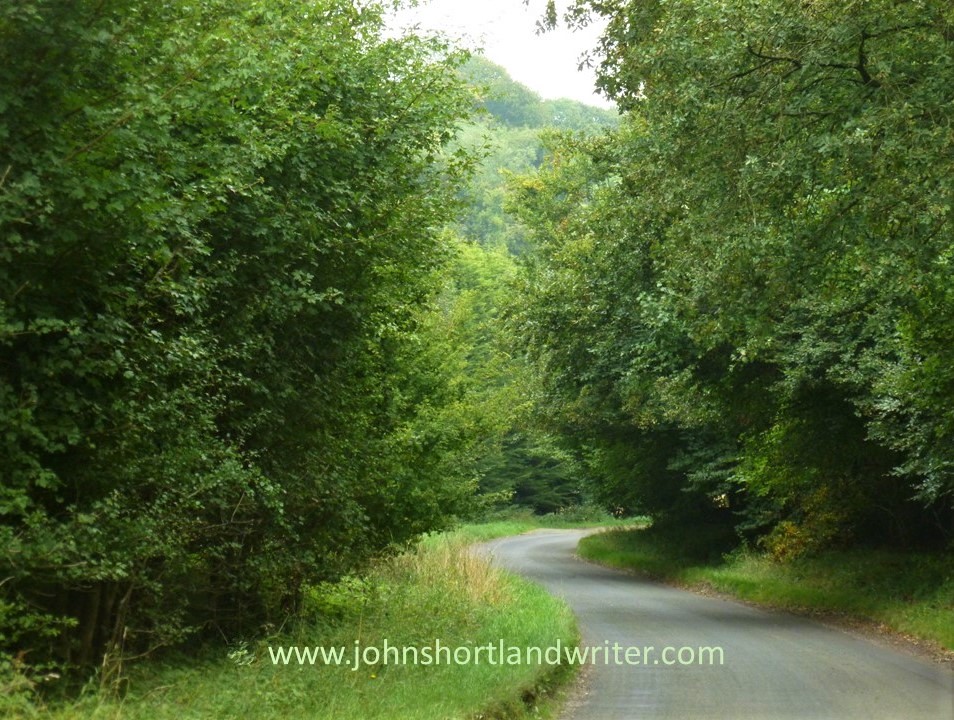
A country lane in the Chiltern Hills winds its way through dense woodland

As a child, I lived on the very edge of the village and not being schooled locally and with no children of my own age nearby anyway, I learnt to spend many hours on my own during the lengthy holidays. Although our house was close to the River Thames I found fishing of limited interest preferring always to be out walking or cycling.  As I grew older I travelled further afield exploring the lanes, fields and woodlands, learning all the time about the ways of nature.  Back in the fifties and early sixties people seemed to have more time to answer inquisitive children about these things or, perhaps, it was just that in those days people were more connected with the natural world so were able to answer their questions.  Whatever the reason, I became more knowledgeable and enthusiastic about country ways than I ever did with schoolwork.  A consequence of this is, when asked the question, “where are you from?” I respond without hesitation (and with a certain degree of pride), “I’m a Chilterns man.”

A childhood spent exploring the fields and woodlands that surrounded home

It was not until I reached the ripe old age of 49 that I moved away from the Chilterns to start a new life in the Cotswolds.  Although as the crow flies, the Cotswolds are not many miles away (I can even see the distant Chilterns from the top of my lane) they are very different in character, the former being chalk and flint country, the latter limestone.  But it wasn’t the exchange of deep, wooded valleys with few, if any, streams for a landscape of far-reaching views, fast-running brooks and drystone walls that I noticed most of all, it was the language.  When I moved to this then unfashionable part of the Cotswolds twenty years ago it was still a forgotten corner of the world where, even if the local dialect had mostly died out, the twang of local accent hadn’t.  It reminded me of, for it is related to, the south-western tongue spoken by many of my country cousins and also by my friends further west still.   So, when I gave my usual response to the question, I was rather peeved to hear it acknowledged by the words, “so you come from London way, then.” 

A Chilterns cottage built using the local flint
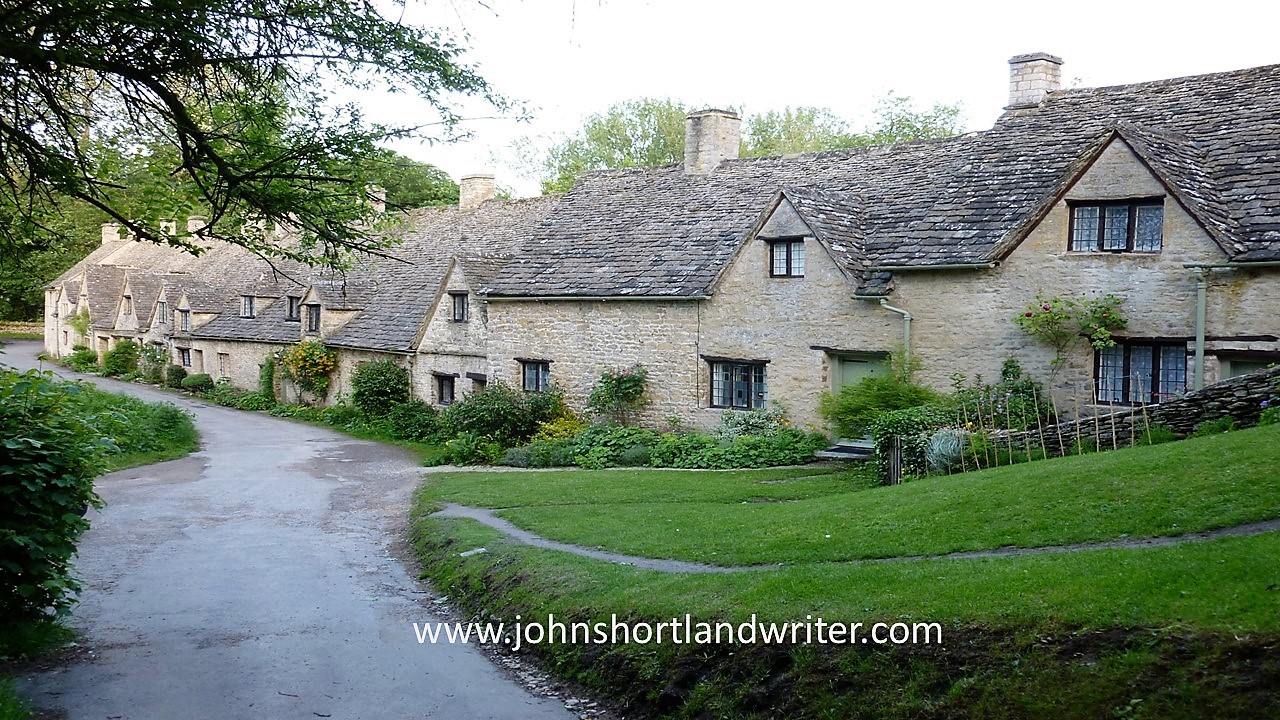
Cotswold cottages look very different and are made with local limestone

Now, I hasten to say, that there is nothing wrong about being referred to as a Londoner.  It’s just that our capital city is as much a foreign land to me as it would be to an overseas visitor.  Ok, so that might be a slight exaggeration, but somehow, I just don’t relate to city life despite my mother being born and raised in London’s West End.  She had come to the Chilterns as an evacuee from WW2 through her war work and there met my father, a local boy – but that’s another story.  Suffice to say, that I am a child of two halves – I have country family and I have city family much in the same way as I am a child of two cultures and two religions.  Despite my relating to country ways and to complicate matters further, (although I should be used to it by now), it is to my mother’s culture and religion that I feel a closer affinity to.  It still grates, ‘though, when I’m thought of as a townie.

City girl sophistication meets country gent: my parents soon after marriage

As I mentioned earlier, school life didn’t hold much appeal and so I persuaded my parents that I should leave aged sixteen.  As soon as I could, I took myself off on my bicycle to holiday in Devon.  Leaving Exeter with tent, camping gas stove and billy cans loosely tied to the crossbar I clanked and clattered my way along the lanes of Dartmoor.   At the end of each day I would pitch my tent wherever I could and reflect with delight upon all the new experiences that had come my way.  Getting hopelessly lost, I ended up at Westward Ho!, a small seaside town on on the north Devon coast.  From there I travelled east finding the hills becoming ever steeper and the villages further and further apart.  One day, I ended up on a remote farm on Exmoor where I decided I would spend two days to recuperate before heading for home.  It didn’t happen. 

The 16 year old hits the road!
Remote hill farm, Brendon Barton where I intended to stay for only two days

Looking back, I can’t imagine what my poor parents were thinking for there were no mobile phones or credit card statements for them to track my progress or whereabouts.  I would telephone them occasionally or send a postcard always being deliberately vague as to where I was staying.  In the meantime, I remained at the farm working – at first for food then, as I became more established and with the tent discarded, for a bedroom and beer money.  By the time my parents turned up at the door several months later (after some shrewd detective work) I had settled into my new life and rapidly adopting the ways of the hard but exhilarating Exmoor life.  Dragged back home to “get a proper job” I never completely left Exmoor behind.  Every spare moment was spent on the farm and, as regular readers of my blog will know, I still spend as much time on Exmoor as possible.  Being a National Park, the landscape and buildings of Exmoor haven’t changed very much over the 50+ years since I turned up on Lorna and Dick French’s doorstep although they have, as have most of the others I knew in those early days, since died.  To my dismay, there is one other thing that hasn’t changed at all: when I respond proudly to the inevitable question with “I’m a Chilterns man”, their response remains the same: “So up-country then?  London?”  Over the years, the ‘boy from London’ has become ‘the man from London.’    And I’m sorry, Londoners, Mum and cousins – I don’t like the label!

Dick & Lorna French who welcomed me into their lives and in the process changed mine

Dreaming of a White Christmas – again

When Irving Berlin wrote the now immortal lines, “I’m dreaming of a white Christmas, just like the ones we used to know” he was pining for colder weather for he was staying in California (or Arizona, for both states lay claim to the fact). The original version of the song actually began with a complaint about warmer climes: “The sun is shining, the grass is green, the orange and palm trees sway…”  How, as a child I could relate to that – well almost.

My childhood home was not in the Cotswold Hills but at the foot of the Chiltern Hills, along the banks of the River Thames which thirty or so odd miles downstream flows through London on its way to the sea. The microclimate of the river meant our village had a much milder climate than the higher villages just a few miles away. Although nowhere near warm enough for oranges and palms to survive we very rarely had any snow at all. The village wasn’t renowned (or so it seemed as a child) for its sunshine either and the grass remained obstinately green all year round. Searching through old photos, I can only find one where our garden had turned wintry white and that was only a heavy frost. The winter of 1963 where we had to push a car through a small snowdrift was such a rare event that it is still talked about some 56 years later.

Hawthorne Cottage Xmas 1970 watermark

When the time came to leave home and buy my own house, I moved to the far side of the Chilterns where snow was more common. Within a couple of months of my arrival, I had to learn to master wintry driving conditions that a Canadian or American driver would barely think twice about. For in the UK an inch or two of snow causes major panic, road closures and travel disruption.

Watlington 1982 (3) copyright

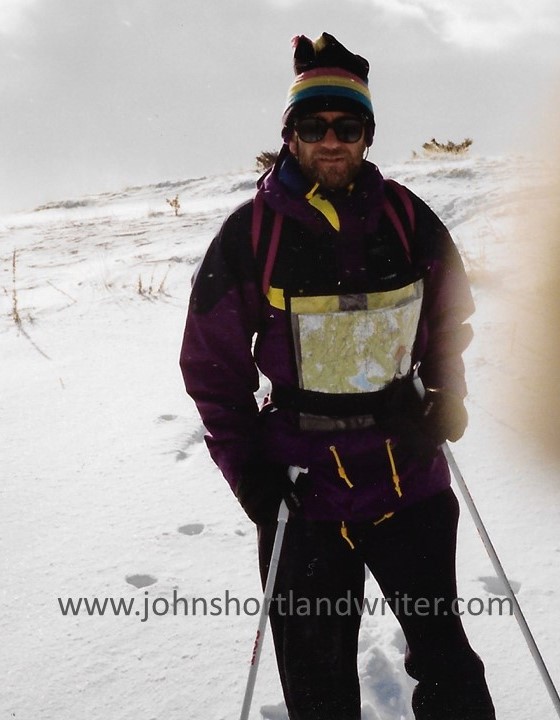
Fast forward to 2001 and my move to the Cotswolds. Until then, I had to go for my snowy ‘fix’ overseas to Norway, Switzerland, Austria or Canada. Never a great sportsman it seemed rather bizarre that I had hit upon a sport – Langlaufen or cross-country skiing – that not only did I love and turned out to be rather good at but one that I couldn’t practice easily in my home country. However, the Cotswolds are far snowier than anywhere else I have resided and in 2010 I actually manged to ‘live the dream’ by skiing from the back door of my home and along the secret valley.

Skiing - French Pyrenees (2) watermark

Living the dream in Norway

Snow 2010 (10) watermark

Snow in the secret valley

So why am I, like poor old Bing Crosby, singing that same old dirge? Is it because snow here rarely falls before Christmas and quite often doesn’t fall at all? The only white Christmas I have photographic record of (and I can’t remember any other) is of 2017 and even then, by Christmas Day nearly all of it had melted.

Snow Dec 2017 (10) watermark

Just occasionally, the snow does finally fall deep and crisp and even. When it does, much of Britain hibernates, nervous of venturing out. However, we still have horses and other animals to feed and tend to. And when I’m out in the four-wheel drive I feel rather satisfied that I have mastered the elements, satisfied in a smug way that only the English would understand for those used to snowier climes would wonder what all the fuss is about.

Glympton watermark

Driving to the horses

Christmas 2019 is proving to be mild and green yet again. It has been a bizarre year weather-wise for we have had the wettest autumn on record and the fields surrounding our cottage are under water once again where the little winding river has burst its banks. In Australia, bush fires are burning out-of-control under fierce, all-stifling temperatures. Friends in America have already had to cope with exceptional winter weather. Perhaps I should, rather than have a little moan about the lack of a white Christmas, be thankful that I live in a country where extremes of weather are unheard of.  On the other hand (and trying not to sound to whiny), it would be nice if we could have…

Floods Nov 2012 (10) watermark

Floods rather than snow for us this year 😦

Wishing you all a very peaceful, safe and happy Christmas – and may the weather be kind to you.  John.

The Colonel & the Fly

Over the years you meet very many people and, if you are lucky, there will be someone who has a major influence on your life, perhaps by changing its direction or outlook. I have been fortunate to have known two such people, one in my teens and the other, in my early thirties. The Colonel was the latter and he opened my eyes as well as my brain to many new ideas and experiences. By the time I met him, he was in his early eighties with a lifetime’s knowledge about so many things especially country life, something I too am passionate about. A great story teller; he had that rare gift of making you feel when in his company that you were the most important person in his life – as indeed you were at that moment.

The Colonel  (photographer unknown)

One fine September evening, I walked across the lawns of Woodlands Cottage towards the Colonel. Hosepipe in hand, he was swishing the surface of the swimming pool towards one end, totally engrossed in what he was doing. It was only when I spoke that he became aware of my presence and instantly his face brightened at the sight of a visitor. “Spring cleaning”, he said, “or rather, autumn cleaning. Soon be time to bed it down for the winter”. He pushed aside my apologies for disturbing him and the visit began, as always, with a large whisky and a chat in his snug: a small room lined with books, photographs of his military days, and with comfortable chairs and a writing desk.

I had met the Colonel a couple of years earlier when I moved into his village, six houses up. There had been a knock at the door and before I had a chance to speak, I was asked what religion I was. Before I had a chance to respond I was told that it didn’t matter anyway so long as I turned up at church for bell ringing practice the following evening at 7pm. Although it wasn’t given as a command, I obeyed. Over the years, I found that this natural ability to make people want to do as he requested must have accounted for his success in the army; I could well imagine his men following him into battle just because he asked them to.  This encounter led in time to me taking over a small area of his vegetable garden for my own use as my plot was woefully inadequate in size. The charge for this exclusive allotment was to spend time exchanging news and ideas. Inevitably, the only untidy part of the garden was the one in my care but there was never any reproach for conversation and a whisky were considered to be of far greater importance.

Ibstone watermark

The village church with its weather boarded bell turret

The conversation that autumn evening turned to fishing. I told the Colonel how I had been brought up in a (River)Thames-side village and how I had fished regularly as a lad. When I mentioned that spinning for pike had been a favourite sport he very nearly choked. “Sport?” he spluttered. “The only sport spinning for pike is, is very poor sport! Fly fishing: now that is sport. Not just sport, it is an art and not one easily acquired. Come around next week and I will teach you.” Living in a village high in the Chilterns, a range of chalk hills renowned for its lack of rivers, puzzled I asked, where exactly. “Well, here, of course. Where else did you think we’d go?”

Ibstone Common (2) copyright

The only natural water in the village is the old dewpond – no salmon or trout in there!

One week later and back in the snug, whiskies in hand, he brought out a selection of rods, each one carefully taken from its cloth case for its individual qualities to be explained.   One of split cane was very old and heavy but exquisitely balanced; another shorter and of fibreglass but a useful addition. Another rod was the one to use in fast flowing water, this one in pools. With each rod came tales of triumphs and failures along with the fishermen and ghillies he’d met over the years. For a while we were both transported to Scotland, to a land of heather hills, lochs and rivers filled with trout and salmon; to evenings in the sporting hotels where the events of day would be discussed and to the elderly Scot who owned the local smokehouse whose secret marinade recipe had died with him. “Salmon has never tasted quite as good since.” We sat in silence for a while until the Colonel leapt to his feet. It was time to start the lesson.

On the lawn, I was shown the correct way to stand. Imagine, I was told, that I’d just hooked my first salmon and then lost my balance. Now to cast the fly. He pointed to a fallen leaf – the fish – some yards away. Effortlessly he cast the line for it to land upon it. I tried but the line just landed a short distance from my feet. I was too tense, I needed to relax or I’d never cast properly. Time after time I tried without success. The instructions came thick and fast. “You’re lifting the rod too high; it’s going over your shoulder.” In desperation, the Colonel took my hand and brought the rod up to my nose. Hit that he said and you’ll only ever do it the once. The advice worked but just when I thought I was beginning to master the technique I was told to change hands and learn to cast with my left.

Ibstone watermark

The Colonel’s abode

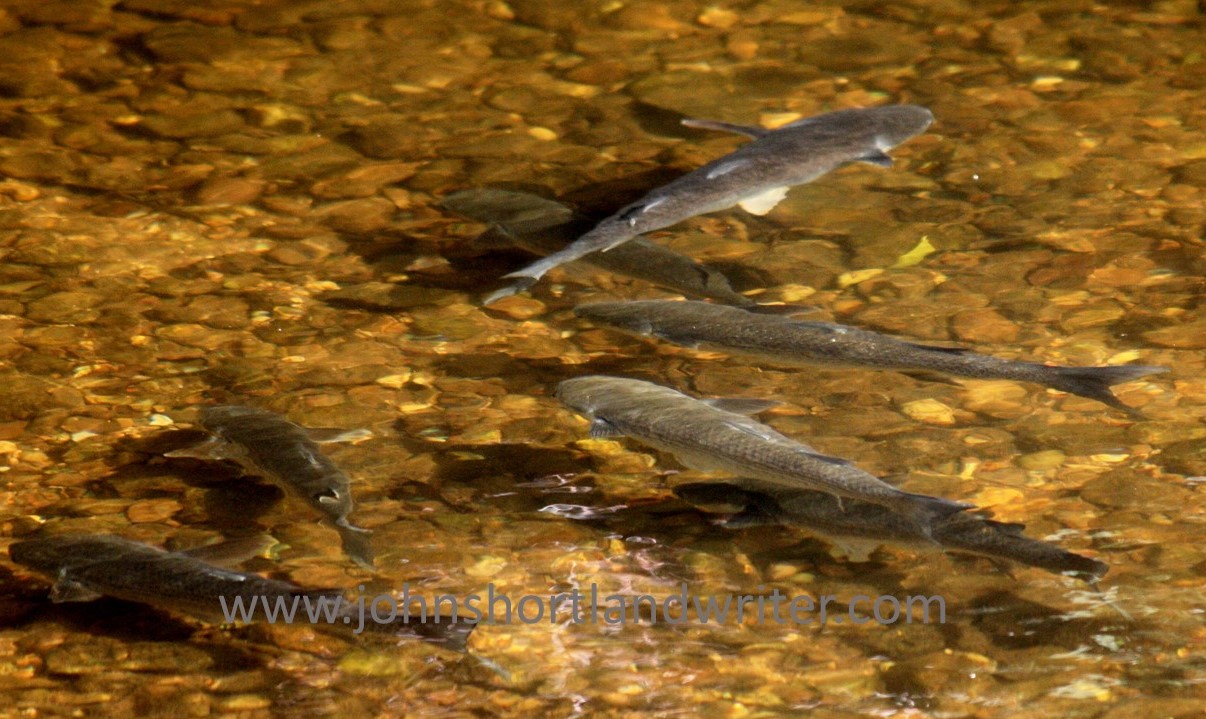
After two hours the Colonel began to meander across the lawn in front of me. Without warning, he grabbed hold of the end of the line. “What’s happened now?” It took me a moment to realise I’d caught a fish! With great agility for his age he ploughed off upstream, swam across a deep pool, plunged below low, hanging branches and all the time shouting instructions. “Keep the rod high, let the tip take the strain, lower it quickly…” In those few minutes I’d once again been transported north of the Great Glen and felt the exhilaration of catching my first salmon.

Trout x 5 watermark

River trout just waiting to be caught!

“Must be time for a celebration whisky.” Back in the snug the conversation turned to ‘real river’ fishing and then to shooting. Fishing and shooting go together I was told. I confessed that I’d never tried. The Colonel looked delighted. “Good. Next time you call I’ll teach you to bring down some clays.”

Conceived on Exmoor?

There used to be a standing joke between my mother and I that I must have been conceived on Exmoor as it has such a magnetic hold on me.  My parents had honeymooned there, staying at Ye Olde Cottage Inne at Barbrook in the mid-1940s – the fact that I was born in the early 50s and had an older sibling we conveniently overlooked.

Mum & H wedding photo watermark

Wedding Day

When I first came across Exmoor, in the summer of ‘68, I thought I had stumbled into a paradise, if not unknown to others, certainly unknown to members of my family.   “Stumbled” is an accurate description. My intention had been to cycle further west into Cornwall before returning south to Exeter for the train journey home.  Poor map reading skills took me instead to the North Devon Coast at Westward Ho!.   During my final term at school we had studied the novel Lorna Doone and now seeing Doone Valley, Exmoor marked on the map it seemed logical to visit despite it being way off to the east.

Badgworthy Water watermark

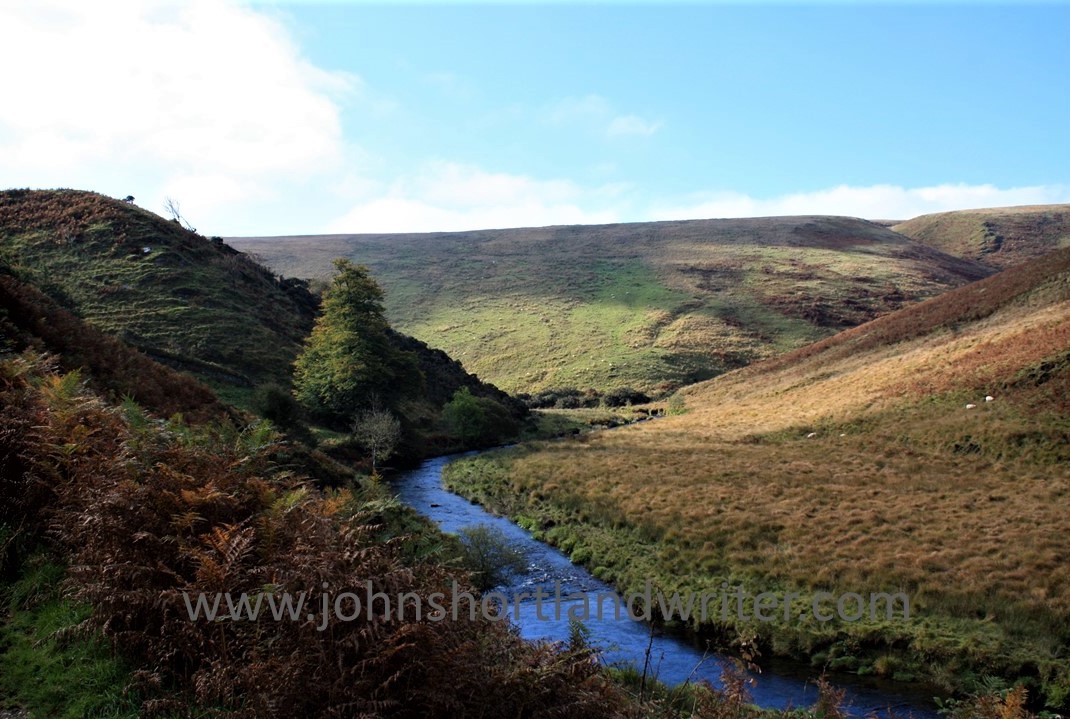
Badgworthy Water, Doone Valley

Brought up in the Chiltern Hills, I was used to a hidden landscape of narrow lanes, high beech hedges and dense and extensive beech woodlands.  Rarely, was there an unbroken view of far-distant places and, almost as rarely, large expanses of sky and cloud.  Cycling across Exmoor with its open, rolling landscape ablaze with heather and gorse and views across the sea to the Welsh coast was unlike anything I’d ever experienced.  Sometimes the lanes would pass between high banked hedgerows or descend into well-wooded coombes reminding me of home.  I came across a farm where I pitched my tent intending to stay two days before leaving for Exeter.

Nr Fingest 2 watermark

A Chiltern lane winds its way through dense woodland


River Barle watermark

The open views of Exmoor

Helping on the farm, two days turned into weeks and then into months by which time I had moved into the farmhouse and embraced Exmoor life.  I occasionally telephoned my parents, or sent a postcard, always being evasive about where I was staying and only telling them I was working on a farm and being well cared for.  With the benefit of maturity, I sometimes wonder how they coped with their sixteen-year old son, on his first lone holiday, disappearing for so long in an era of no mobile phones or credit cards for them to track my progress.  They only succeeded in finding me after I foolishly reversed the telephone call charge and soon after arrived on the doorstep to drag me away, kicking and screaming.  It was time to get “a proper job” but Exmoor and the farm had completely changed my outlook on life as well as the direction it would ultimately take.  After twenty years of “a proper job” I finally escaped to agricultural college and a life of outdoor work.

Brendon Barton 1968 (4a) watermark

Brendon Barton 1968

Pruning watermark

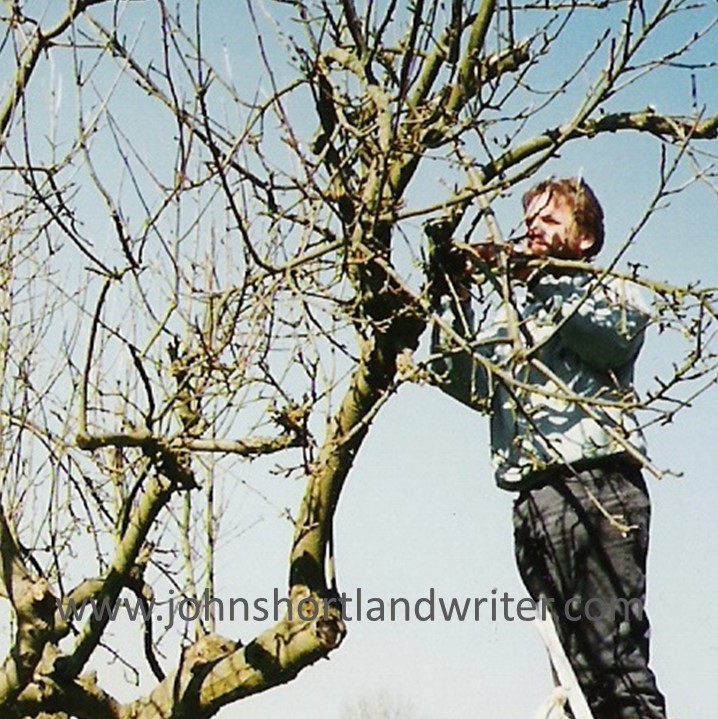
At agricultural college 1994

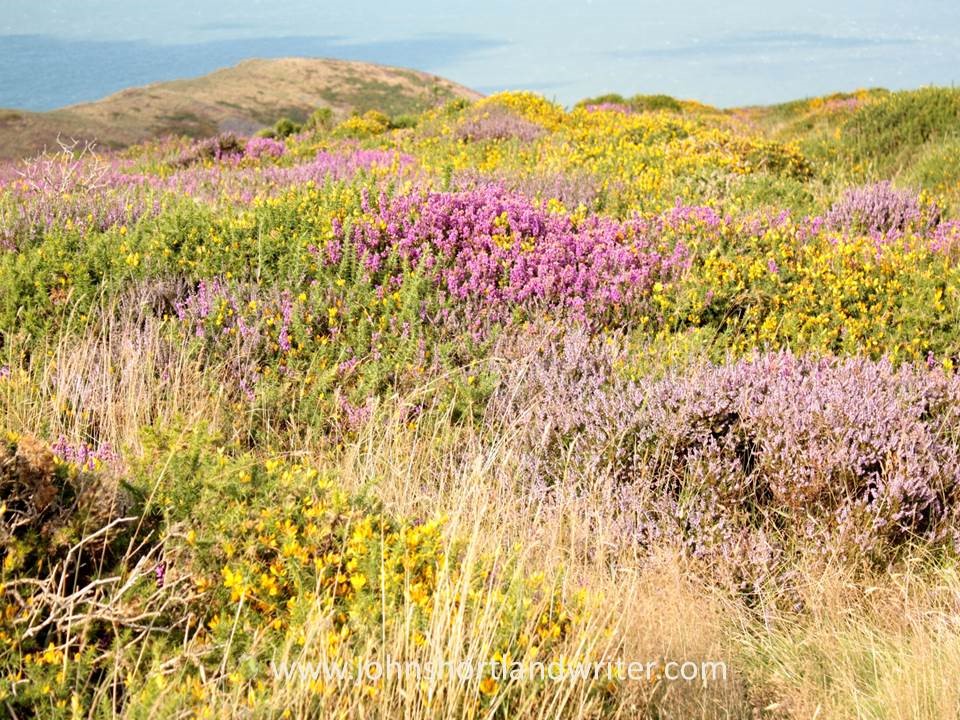
I had been surprised and a little disappointed when I first discovered my parents also knew Exmoor.  Despite not having been conceived there, my attachment to Exmoor has never waivered and more than fifty years later I regularly return.  Upon entering the moor the same emotion of discovery, as if seeing it for the first time, remains.  Many of the old friends that I made in those early years and their unique way of life that I was privileged to be part of, albeit in a small way, have gone but the landscape remains remarkably unchanged.  The heather and gorse are still a carpet of purple and gold, the sea (at least, on a fine, sunny day) still blue.

Countisbury (15) watermark

Countisbury Common, where the moor falls into the sea

Very recently, through researching my family history, I have found that an earlier cousin, at a similar age to myself, had also discovered Exmoor.  He too had never settled in school and life on Exmoor changed him.  He also chose to write about his time on the moor, something else we have in common. Although I was surprised to learn of his life and his book, this time I am delighted!

002

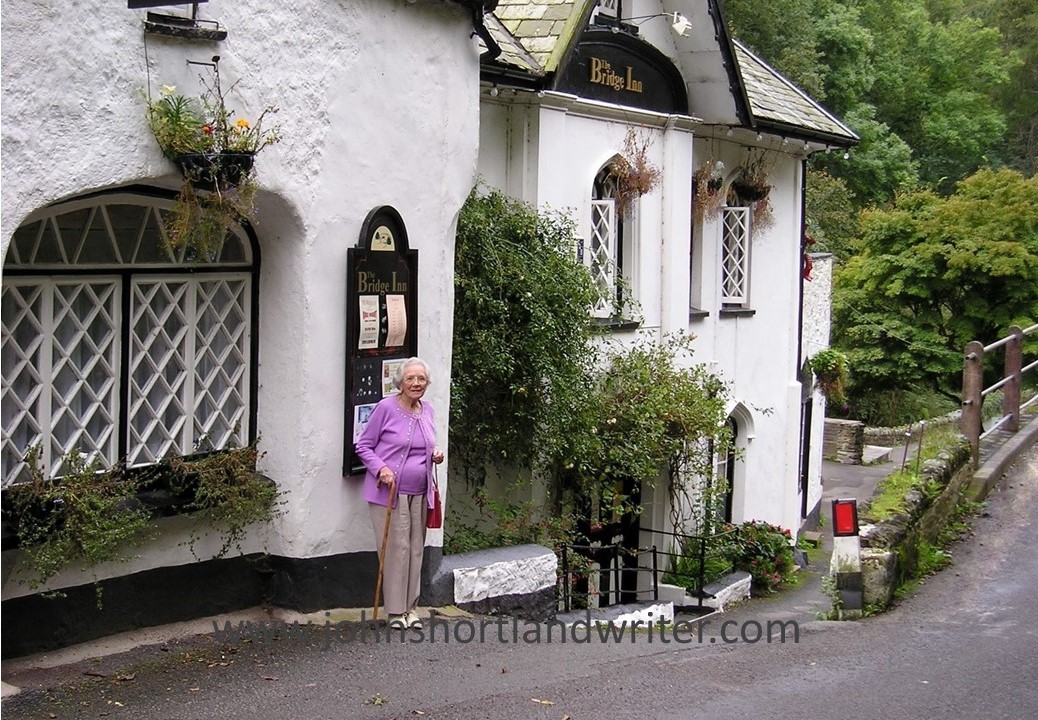
PostscriptJust a few years before she died at the age of 93, I spent a few days on Exmoor with my mother and took her to revisit the honeymoon hotel.  Long widowed, the day must have been a mix of emotions.

Honeymoon Hotel watermark

At Ye Olde Cottage Inne, renamed The Bridge Inn


Reincarnation or Just Coincidence?

I have written about the ‘dream’ house before but recently the mystery of it took an unexpected leap forward. 

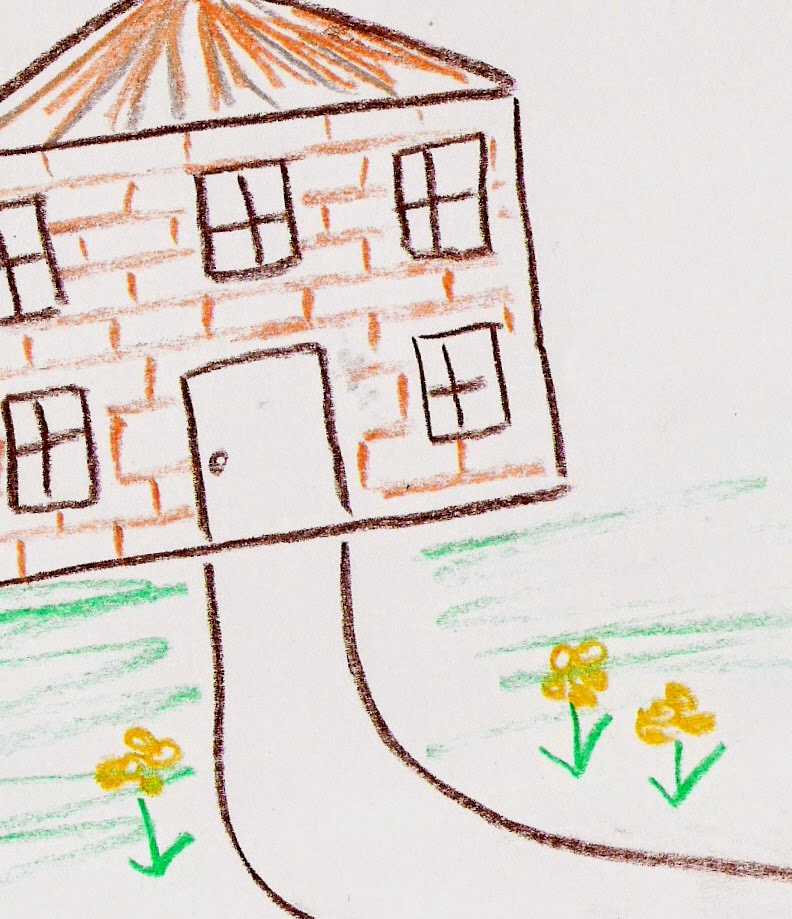
I am a small child running through the countryside when I arrive at what appears to be a derelict house.  At least I always assumed it was derelict for the two windows looked as if they had silted up and instead of being full length they were only one-third of their normal height.

The windows are at the back of the house but initially I approached it from the front.  There is a long driveway and as I run around a bend suddenly there, in front of me, is the house.  It is huge but very symmetrical – just as a small child would draw one if asked.  No sooner have I seen it than, in that typical disjointed dream way, I am around the back by the windows.

 I manage to wriggle through one of them and as I do I fall a short distance to the floor.  It is a small circular room with several doors leading off it; as I stand up I lift my head to look at the ceiling: it has stone vaulting just like an abbey might be.  And then … I wake up.  I don’t feel scared, I feel happy and warm inside as if I’ve come home after a long time away.

The dream recurs regularly from my very early childhood right through to the day in my late twenties when I awake and for some reason decide to draw the house.  No matter how hard I try, I can only draw it as a small child might but, somehow in doing so, I break the spell and I never dream of the house again.
Fast forward fifteen years and a career change to gardening for a living.  Now a trained Head Gardener I apply for a post in a village I have never heard of and arriving for my interview I proceed up a long, half mile driveway, round a bend and, yes you’ve guessed correctly, there is the house of my dream.  I am shown around the gardens and finally, at the end of the interview, approach the house from the rear.  There are the two windows…      

Having successfully got the job, part of my remit is to tend the house plants.  The room with the two windows is a small circular library with three doors leading off.  When I pluck up the courage to talk to my employer of the dream she tells me that the house was once a convent and this room is adjacent to the old chapel, now used as a dining room.  As for the vaulted ceiling she says there could be for the present plain one is false although they have no intention of changing it to find out.  I ask her what the tall obelisk at the front of the house commemorates.  She tells me it is rather a sad story: it is a memorial to the only son of the family for whom the house was being built in the early 1700’s.  He died before it could be completed and so they gave it to the nuns to live there.

I officially left the job – and I thought the house – thirteen years ago to take up a new position in the Cotswolds.  In many ways I was sad to go for I loved being there but a change had beckoned. Some months later I receive a telephone call asking me to act as a consultant on an occasional basis – is it the house that has prompted this – and I have returned regularly ever since.

Move to the present day after a gap in visits of several months where I admire the new building set in the grounds close to the house, an indoor swimming pool.  I am told that there were a number of problems in completing the work for when they started digging the builders dropped into an underground room.  Its existence had not been known of before and yes, you’ve guessed correctly, it had a stone vaulted ceiling…

Reincarnation or coincidence – I’ll leave you to decide.  I’m happy either way and if it is reincarnation I am delighted with the obelisk that has been placed in my memory.  I shan’t be asking for it to be taken down just because I’ve returned…

Add to Technorati Favorites

An Ancient Craft – Flint Knapping

The very earliest tools known to man were made of flint or antler and in the Chiltern Hills, where I was brought up and lived for most of my life, it wasn’t that unusual to dig up stone scrapers or even an occasional arrowhead, perhaps 4000 years old or more.  One scraper that I found many years ago is shaped perfectly to fit between the thumb and forefinger and still has an edge so sharp that it cuts card. 

To create these tools, the flints had to be chiselled or ‘knapped’, a technique that requires hitting the stone at an oblique angle with another hard object – such as another stone – to make it flake.  With the coming of the Iron Age, the need for stone tools was no longer required but the skill did not die out and even today there is a requirement for the finished material.

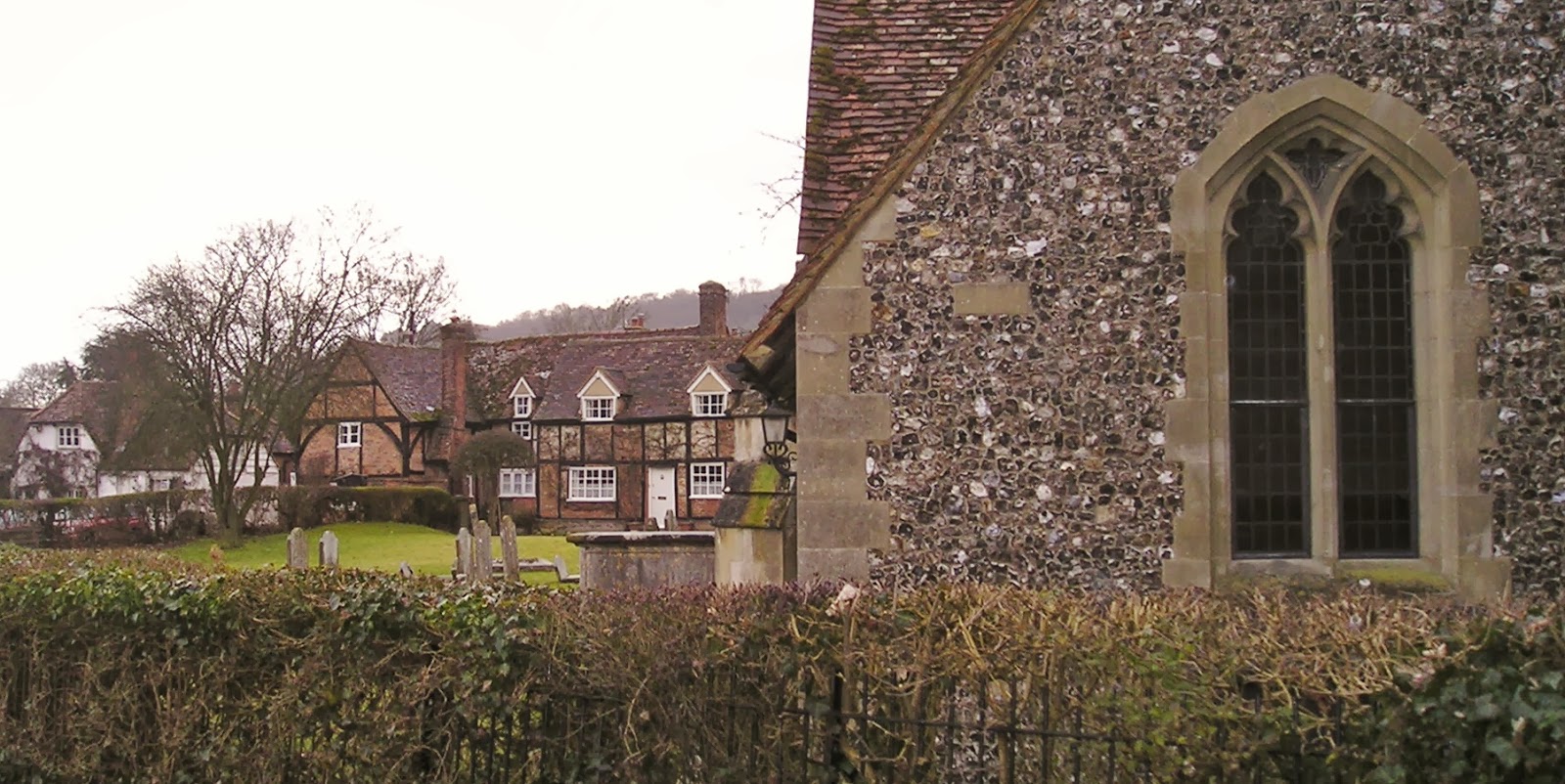
Flint, a type of quartz, is extremely hard and durable and, being found in quantity in the chalk hills of the Chilterns, was the natural material for housing there.  All types of properties used it from the humblest cottage to larger homes and churches.

One of the finest flint built villages can be found at Turville.  If the two photos below look familiar this is because they feature in the comedy television series, The Vicar of Dibley with actress Dawn French, playing the part of the Revd. Geraldine Grainger.  The village also featured in the 1998 film Goodnight Mr Tom, starring John Thaw.  The church dates back to the twelfth century.


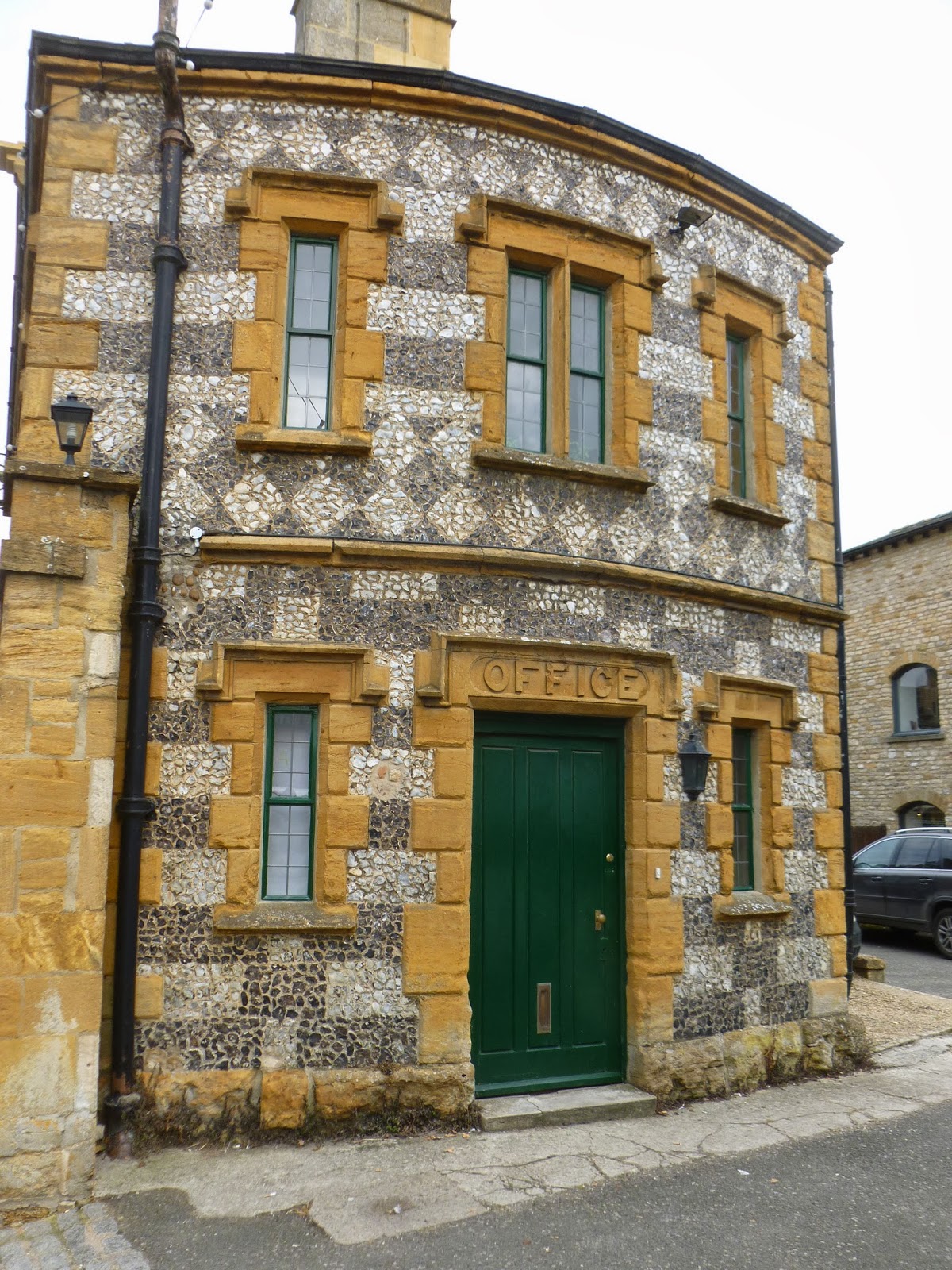
In the hills of the Cotswolds, the honey coloured limestone is the premier building material for almost everything but is especially well-known  for its use in the dry stone field walls and village houses.  At Stow-on-the-Wold in the centre of the region is the building below, once the office of the local brewery.  It is rare to find flint used in the area and, as can be seen, it has been used decoratively, something that is not found to my knowledge in the Chilterns.

Although all of these images show properties that date back at least 150 years or more, flint continues to be occasionally used in modern housing and was even used as embankment supports on the M40 motorway when it was widened in the Chilterns a few years ago.  As found throughout the centuries, when digging through the chalk, it proves to be the cheapest and most readily sourced building stone.

To find out more about flint knapping or to book a course to learn the art visit www.flintknapping.co.uk .  It is worth looking at just to hear the magical sound of primitive flutes made from elder  tree stems.


Add to Technorati Favorites