GROW YOUR OWN MISTLETOE

With Christmas almost upon us one of the most traditional of purchases along with the tree, goose or turkey will be sprigs and bunches of mistletoe. Placed carefully above a doorway where passing under it is unavoidable many of us will be subjected to the torture of being kissed by those we’d rather not and disappointed by those that we would have liked to have been but ignored.Mistletoe (5)   copyright.jpg

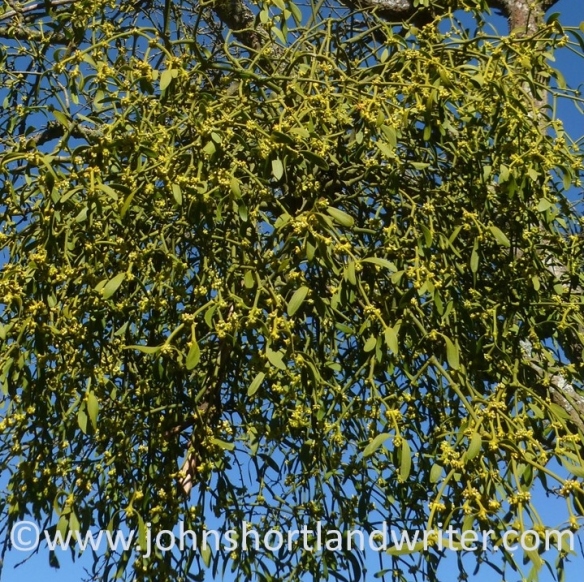
The tradition of kissing beneath mistletoe is very much a British one although it is rapidly gaining popularity (and why not?!) around the world. Our own mistletoe, Viscum album, (European Mistletoe) grows throughout much of Europe but is decidedly fickle as to its requirements. The majority of British mistletoe grows to the west of the Cotswolds, especially amongst cider orchards found in the counties of Gloucestershire, Herefordshire and Worcestershire. However, in other areas in the south, there are isolated populations where it can grow locally abundantly – the photos for this blog, for example, were taken in a garden in the Chiltern Hills. The further north, the rarer mistletoe is, being absent from much of northern England, Scotland, the Low Countries and Scandinavia.Mistletoe (2)   copyright.jpg

Mistletoe is a parasitic plant – or to be more accurate hemiparasitic – attaching itself to its host tree, most commonly cultivated apple or lime. Strangely, mistletoe rarely is found on the wild crab apple, perhaps due to its more congested growth. Likewise, it is rarely found in woodland where the density of trees probably reduces the amount of light and air circulation required. Although mistletoe, being green, carries out some photosynthesis this is limited and where it grows in abundance on one tree, it can weaken the host plant and reduce fruiting potential.

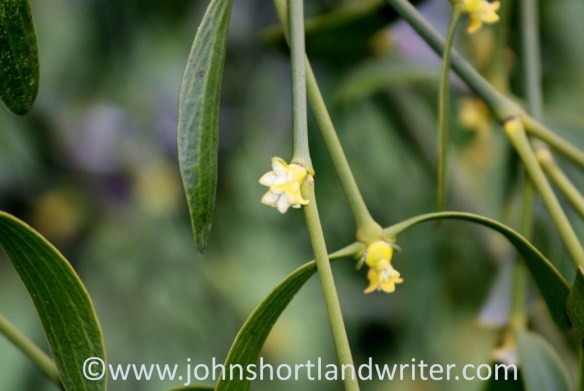
Mistletoe flower   copyright.jpg

European Mistletoe in flower

In the past, mistletoe has been very much associated with fertility and winter solstice rituals and its use as a decoration is still sometimes banned in churches. The Druids held the plant sacred, especially if it was found to be growing on oak (which it rarely does). Modern-day Druids now hold a festival each December at Tenbury Wells to celebrate the plant.Mistletoe (7)  copyright


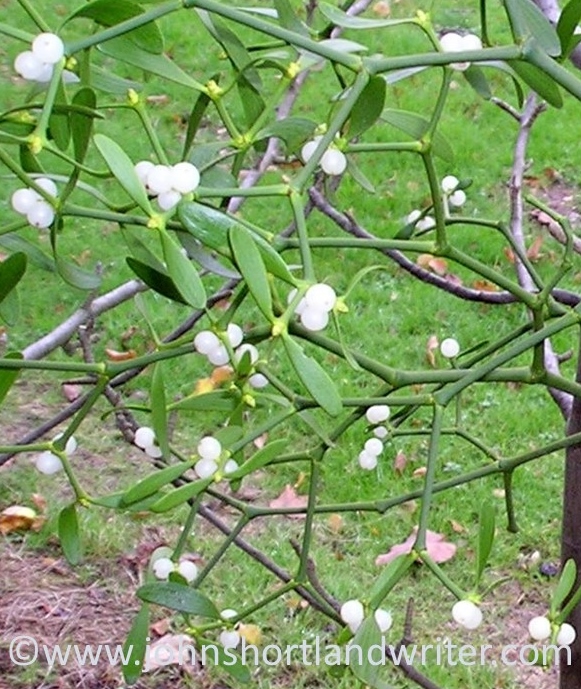
Growing your own mistletoe is relatively easy for most of the difficulties commonly associated with germination are false. Ideally, fresh berries should be ‘sown’ in February. These can be gathered or purchased or you may prefer to store those from Christmas. If choosing the latter option, store them in a cool, light, airy place and rehydrate in a little water before use. Squeeze the seeds out of the berries and remove as much of the stickiness as possible; they will still attach easily to the bark. Choose young branches away from the trunk and fix to their underside. There is no need to nick the bark or cover the seeds although it is probably advisable to mark the branch in some way to identify it in the future. The seeds germinate quite quickly but it will be four years or more before any real growth is apparent.   Mistletoe (like holly) have separate male and female plants so it will be necessary to have several plants to ensure cross-fertilisation and berry production.

Mistletoe Anchor Point   copyright.jpg

European Mistletoe: anchor point (haustorium)


There are over 1500 different species of mistletoe growing throughout the world. In America the native mistletoe looks very different to our own – one of the reasons why, to British eyes, plastic mistletoe sold in the shops looks so unreal: it is modelled on the American species.

For a huge amount of fascinating information on folklore and medicinal use, advice on conservation and purchase of mistletoe seed do visit The Mistletoe Pages website where much of the above information has been gleaned.

For those interested in Druidry: The Mistletoe Foundation

In the Footsteps of the Danes

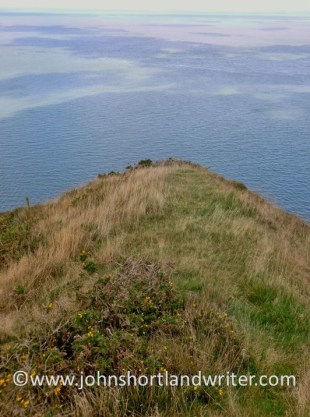
In 858AD Hubba the Dane invaded England to be defeated by the Saxons at the Battle of Arx Cynuit. Recorded in the Anglo-Saxon Chronicles by Asser, biographer of King Alfred the Great, the site of the battle it is thought took place at Countisbury, a tiny clifftop community on Exmoor. Whether true or fanciful, a walk to Wind Hill hillfort* is well worth the effort. It is a place where it is possible to experience all the elements that Exmoor offers in one glorious 360 degree panoramic view.

Countisbury copyright

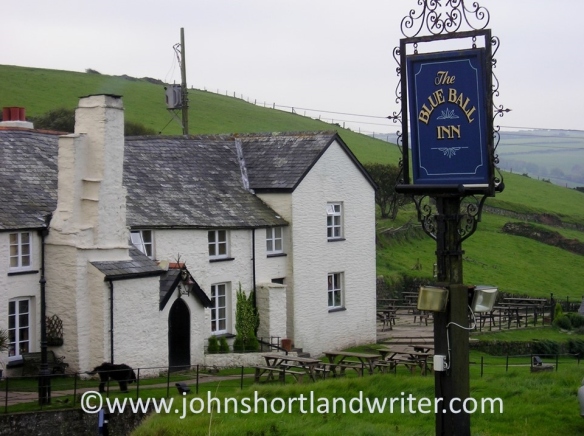
All the best English country walks should start and end at a pub and there are plenty of options to choose on this one. Mine started from the Blue Ball Inn at Countisbury which is as welcoming now as it was when I first crossed its threshold fifty years earlier.

Blue Ball (2) copyright

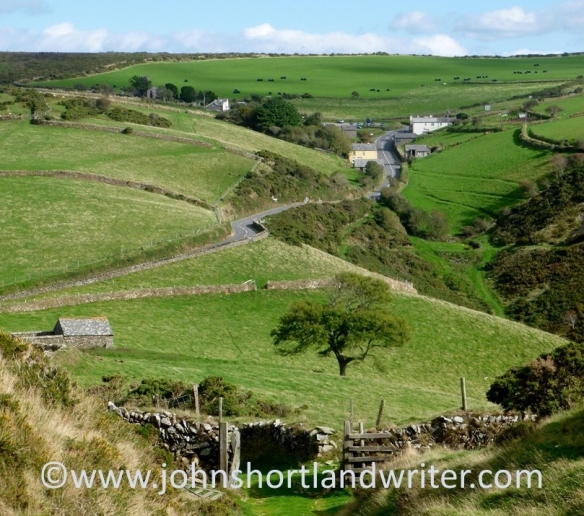
Turning left from the pub, walk down the road for a few yards before entering a gate to National Trust land, also on the left and the starting point of several extensive walks. Our destination is a short walk and is the high point close to the road. The path to the fort is well defined and grass covered; it merges with a field access track that leads gently uphill to its entrance. The second photograph below is taken from the fort: the pub is the white building.Wind Hill (9) copyrightWind Hill (5) copyright

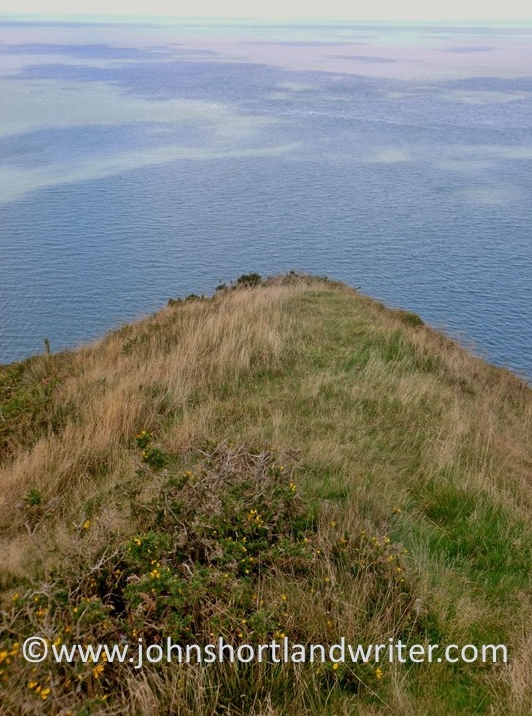
The fort is a rare example of a promontory fort where the natural landscape has been adapted to create the defences. The coastal cliffs which form its northern defence are the highest in England rising to over 300 metres, to the west and south the East Lyn River has cut a deep gorge. Where necessary double ramparts were built to defend the weaker areas: at the entrance they still rise, after two thousand years or more, to an impressive thirteen metres.

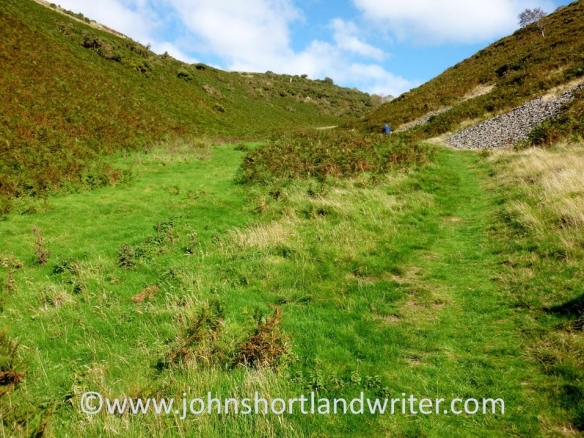
Wind Hill (10) copyrightWind Hill (2) copyright

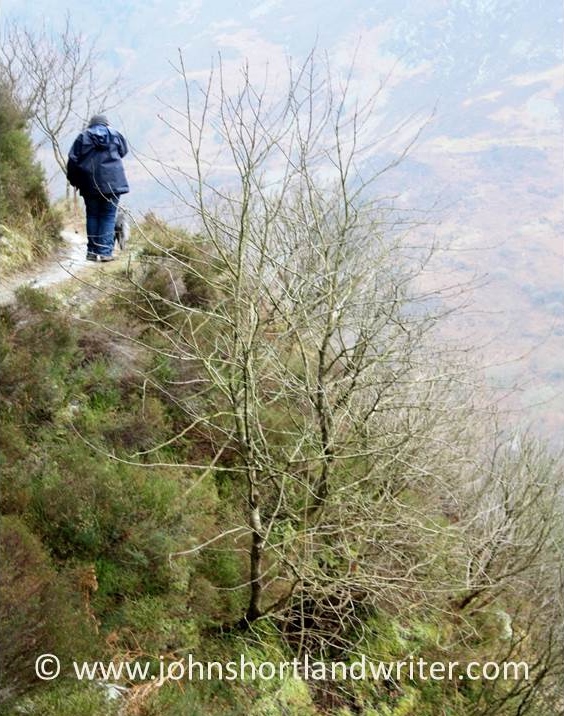
Although it is possible to make Wind Hill part of a longer walk I prefer not to do this. It is rare to meet anyone else here and to be able to explore the 85 acre site in splendid isolation gives a real feel of the place. Just spend time enjoying the silence,  lying down with your back propped against the ramparts listening to the wind and sheep calling.  As mentioned earlier, the views from the fort are magnificent: heather moorland, ancient woodland, hills, villages, sea, cliffs, the distant coast of Wales as well as wild creatures, ranging from the iconic red deer to seabirds and butterflies.

Wind Hill (8) copyright


* also known as Countisbury Castle


Links:

Historic England

The Megalithic Portal

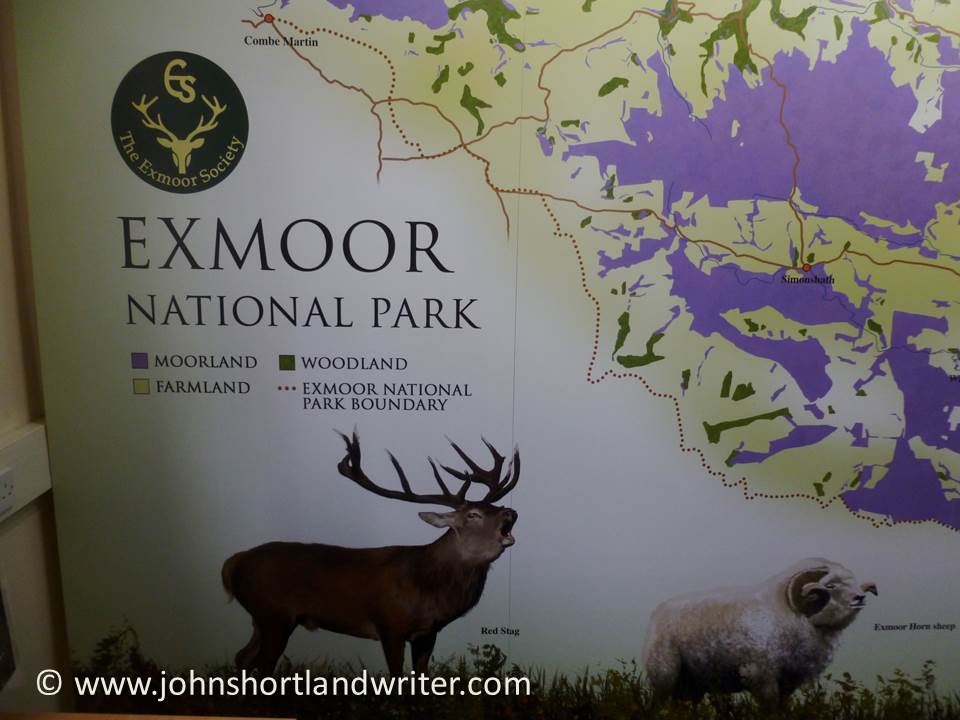
Exmoor National Park

The Blue Ball Inn

Aurignac – 40,000 Years of History

The small town of Aurignac – situated in the Petites Pyrénées of southwest France – was so sleepy when I stumbled across it that it is hard to believe that it has given its name to the so-called ‘first modern’ man to appear in Europe. Aurignac (2) copyright

The Aurignacian culture spread across most of Europe and much of southwest Asia. The first human bones were found in a cave close to Aurignac in 1852. Aurignacian Man produced some of the earliest art – a small figurine known as the Venus of Hohle Fels is the first figurative human form ever to be found. Perhaps their culture is best known for the cave paintings of animals discovered in the Ardèche region of France as recently as 1994.

Paintings_from_the_Chauvet_cave_(museum_replica)

Source: Wikimedia Commons

However, all this was unknown to me at the time – I was looking for somewhere to lunch. The search for a café led me to explore some of the back lanes of the town which revealed wonderful old houses, some half-timbered and dating back to the eighteenth century and earlier.

Aurignac (5) copyright

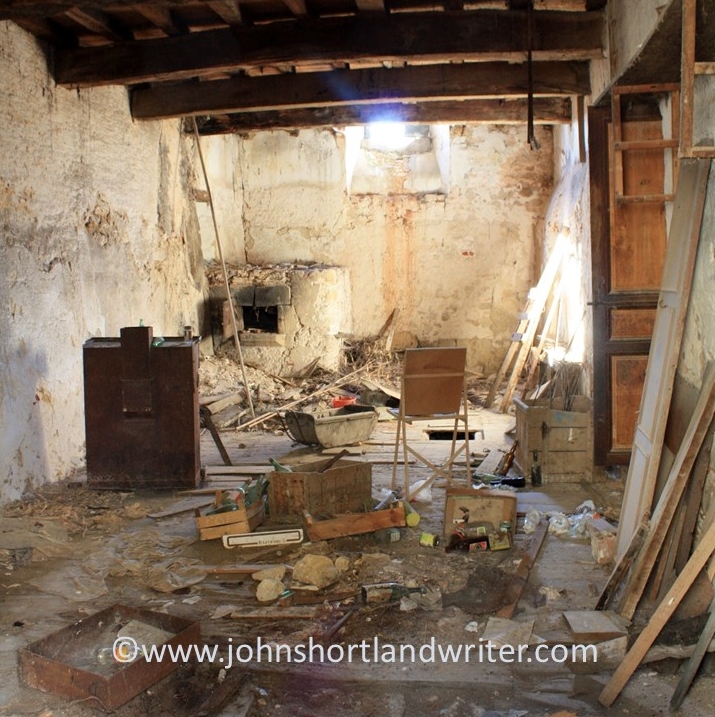
As with many buildings in the region, their beauty was enhanced by the decorative ironwork, often rusting, their paint bleached by decades of hot sun. One old building was derelict and a glimpse inside gave an impression of what it once might have looked like.

Aurignac (4)   copyright

Aurignac (19)   copyright

The oldest part of the town is surrounded by 700 year old fortified walls, some of which had houses built into them in the fifteenth century. The communal area for clothes washing, the lavoir, has been lovingly maintained.Aurignac (15)   copyright

Aurignac (7)   copyright

The ruins of a castle destroyed by Henry IV around 1615 during one of the many wars between England and France is open to the public. The keep or donjon is well preserved and it is possible to climb to the top to admire the panoramic views.Aurignac (23)   copyrightAurignac (25)   copyright

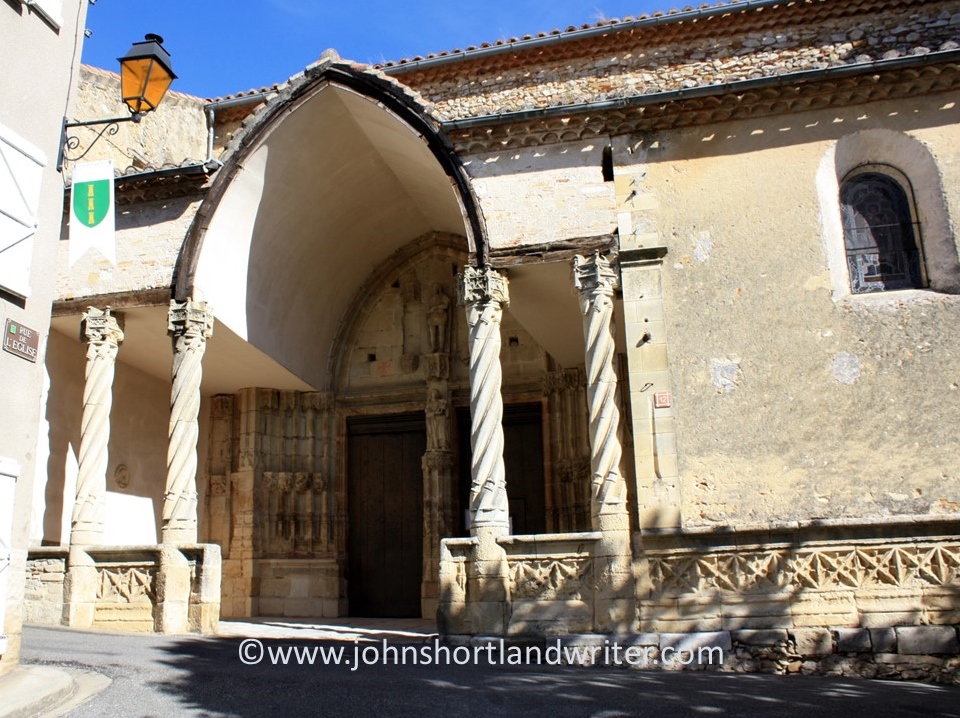
Also built within the old walls is the church with its ancient façade. This is an addition to the church: it was salvaged from a chapel demolished during the revolution and placed there in 1791. The church itself is of unknown date but predates the thirteenth century walls.

Aurignac (9)   copyrightAurignac (11)   copyright

Sadly, I only had an hour to explore – a day probably would not be long enough.Aurignac (20)   copyright

A Celtic Church on Exmoor

Exford lays claim to the title of ‘Capital of Exmoor’ owing to its central location (one assumes) in Exmoor National Park. It certainly has more facilities than most others of similar size – a village green, a post office, two shops and a garage, although the days when it sold petrol pumped by hand have long passed.Exford - St Mary Magdalene   copyright

The church of St Mary Magdalene pre-dates the Norman Conquest of 1066 and, unlike much of England, originates from the Celtic tradition brought from Wales or possibly Ireland. Centuries ago, much of Exmoor’s trade and travel links were by sea, the Welsh coast being only a few miles across the Bristol Channel; journeys overland were fraught with difficulty and danger.

Exford - St Mary Magdalene (13)   copyright

During the twelfth century mass was said by monks from Neath Abbey, giving another Welsh connection. As a Celtic church it was dedicated to St Salvyn although at an unknown later date it was rededicated to St Mary Magdalene. The east window depicts St Salvyn with St George and St Francis.

St Salvyn depicted in the left panel of the east window

St Salvyn depicted in the left panel of the east window

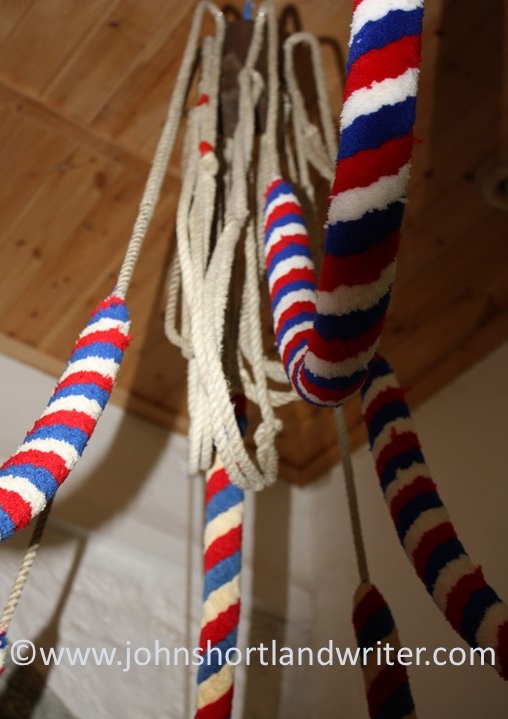
Despite its ancient origins the earliest part of the church still standing – the tower – only dates from the mid-1400s. It has a fine set of bells. The south aisle was built around 1532.

Exford - St Mary Magdalene (5)   copyright

The exquisitely carved rood screen dates from the fifteenth century and has a rather remarkable recent history. Discarded when the church of St Audries at nearby Watchet was rebuilt, it was rediscovered in the early 1900s in pieces in an old hay barn. It was beautifully restored and placed in Exford.

Exford - St Mary Magdalene (4)   copyright

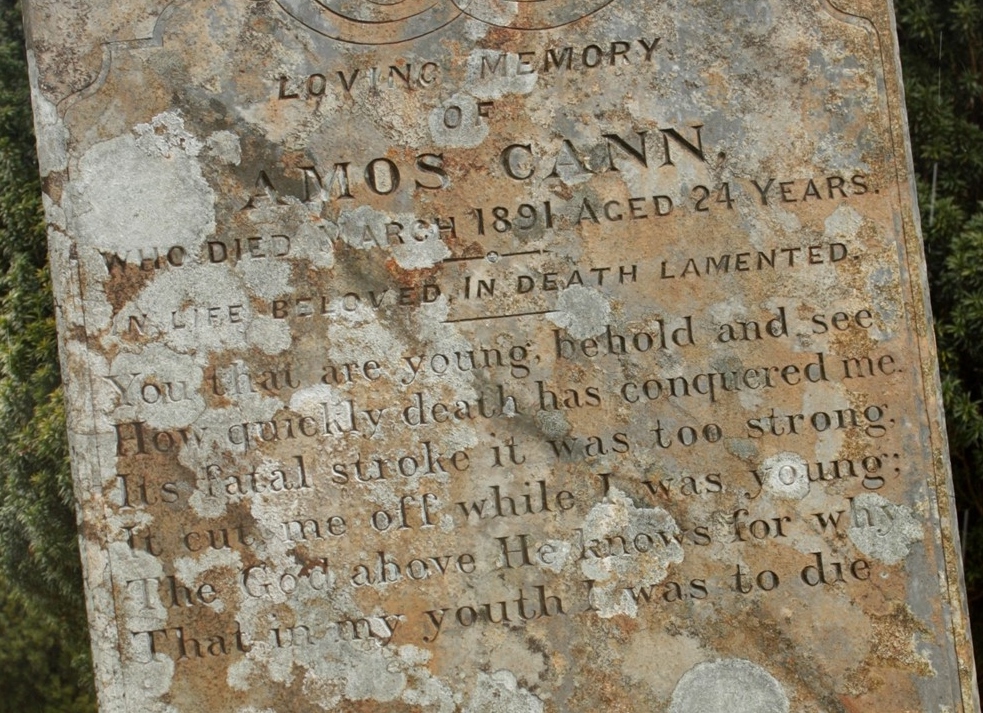
Close to the entrance gate of the churchyard stands the memorial to Amos Cann, a young man who froze to death walking home one night in the extreme winter of 1891. His body was found some three weeks later.

click on image to enlarge

click on image to enlarge

A Host of Golden Daffodils

If you want to see, as Wordsworth did, a ‘host of golden daffodils…beside the lake, beneath the trees, fluttering and dancing in the breeze,’ in your own garden now is the time to plant them. What’s more, you don’t need a lake or rolling acres to have a spectacular show. The secret is to plant them in quantity and with a little thought on position.

Daffodils (2)    copyright

Daffodils (Narcissus) are incredibly easy to grow for every full sized bulb that you buy already has next spring’s flower formed within it. All you have to do is pop them in the ground as soon as possible after purchase and nature does the rest.Daffodils (2)   copyright

A general rule is to plant any bulb twice the depth of its height: so if your bulb is two inches high, your planting hole needs to be four inches deep. When they are tucked safely below ground at that level the bulbs aren’t so likely to get damaged when weeding. To get the ‘host’ look don’t plant singly or in tiny groups of twos and threes. Think big, think twenty-five, fifty or even a hundred or more. This may sound an expensive option but daffodils are readily available in bulk mail order and many garden centres offer a ‘cram as many as you can into a bag’ deal. It is worth remembering too that the bulbs will continue to increase in quantity and flower for many years making them incredibly good value for money.

Naturalised Daffodils   copyright

Because daffodils flower early in the year, before most other plants in the border have got going, it is not necessary to plant them at the front. If they are planted further back, later their dying leaves will become hidden by spring growth. You will find that when planted too far forward, they are both unsightly and a nuisance.

Narcissus 'Salome'

Narcissus ‘Salome’

One of the best ways of growing daffodils is to grow them in grass or under trees – just as Wordsworth saw them. The simplest way to do this is to simply throw the bulbs and plant them where they fall. Some will land very close together and some further apart which makes them look as if they have been growing there forever. Make the throw gentle, a cross between underarm cricket and bowls – you’re not trying to win the Ashes. In grass, the bulbs will be easier to spot if you mow the grass as short as possible beforehand.

Naturalised Daffodils (3)   copyright

Which varieties to select is only difficult because there is almost too much choice. For naturalising I tend to select three standard varieties that flower at slightly differing times, thereby extending the flowering period. In the borders I just choose those varieties that I fancy.

Narcissus 'Chanterelle'

Narcissus ‘Chanterelle’

Although daffodils are best planted during August and September, I usually find I’m too busy with other garden tasks then. I have found they can be planted right up to December without a problem providing wintry weather hasn’t closed in. If the thought of planting large quantities sounds rather daunting remember you can always plant year after year until you’ve achieved the aimed for look.

Nine thousand daffodils!

Nine thousand daffodils!

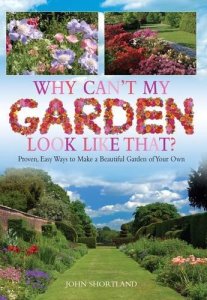
John Shortland is the author of Why Can’t My Garden Look Like That? a jargon-free and easy to read gardening manual, available from Amazon and good bookshops.  To take a peep inside click on the image below.

BOOK COVER FROM AMAZON

A Quiche or a Quad Bike? (the quiche won)

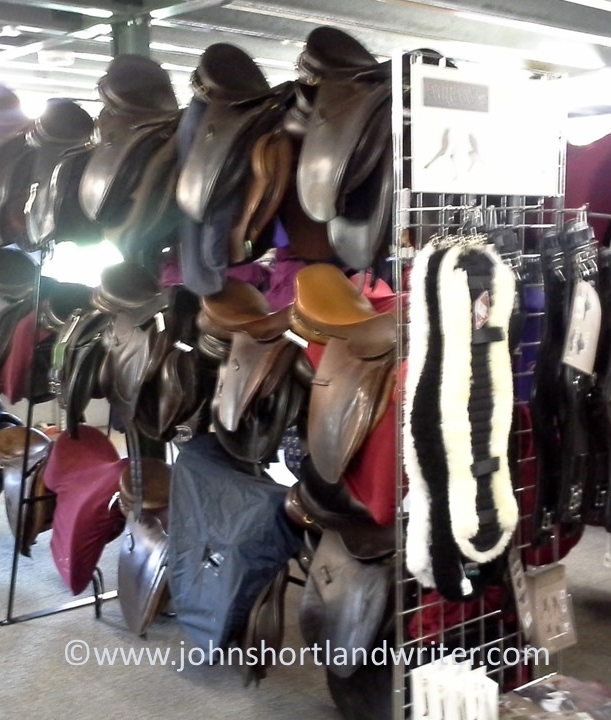
Sometimes you stumble over a gem of a place whether it’s a village, country house or, in this case, a shop. But it isn’t just any old shop for in it you can buy anything from a saddle and rugs for your horse, gifts for non-horsey friends, lunch or … a sofa (well, I very nearly did until common sense got in the way). Actually, I’d rather have bought the rather nifty looking quad bike but I wasn’t even allowed to consider that.004   copyright

005   copyright

Harley Equestrian’s Lifestyle Shop can be found down winding Northamptonshire country lanes providing you have map, compass or a sat nav. Fortunately, the latter takes you to the door. Now anything with the name ‘lifestyle’ in the title tends to make me want to drive in the opposite direction but, fortunately, my wishes were overridden. I was bowled away by the treasure trove I found within. There is more than enough to delight both the rider as well as those with no love of things horse.003   copyright

007   copyright

The way to a man’s heart is via his stomach and the lunch I ate at the café was delicious: the lightest of pastries with incredibly tasty savoury fillings were freshly prepared while we waited. The pudding was – as so often is the case – quite unnecessary and finished the meal perfectly. We were interested to discover that the café holds regular Friday night dinners, catered for by Eydon’s Pantry, a small local enterprise which also create meals for home eating.

001   copyright

002   copyright

Although it’s a bit of a trek from the Cotswolds I shall certainly be visiting again if only for Christmas gift ideas. Somehow ‘though, I feel that I’ll be back a lot sooner – probably on a Friday night.

Links:

Harley Equestrian Country Lifestyle, Woodford Halse

Eydon’s Pantry

Ragwort – a curse or a blessing?

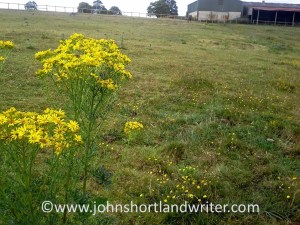
There is a general consensus that Ragwort (Senecio jacobea) is a noxious weed that is invading the British countryside, poisoning livestock and possibly humans alike.  Numerous articles, including some official ones, refer to it being ‘recently introduced’, ‘out of control’ or ‘increasing dramatically’.  Other sources suggest that just breathing in the plant ‘spores’* is enough to cause serious liver damage.

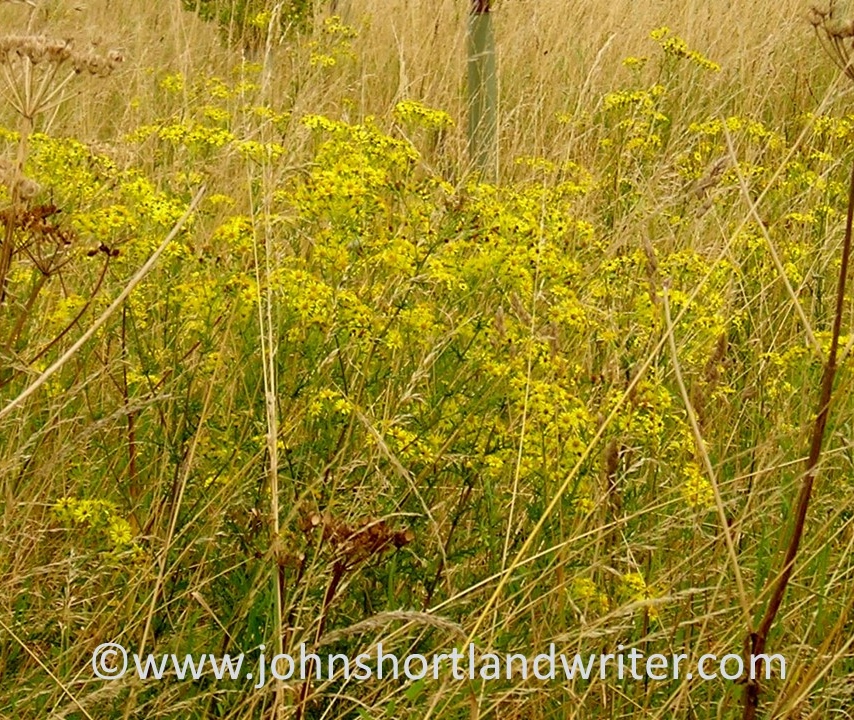
Ragwort

Ragwort

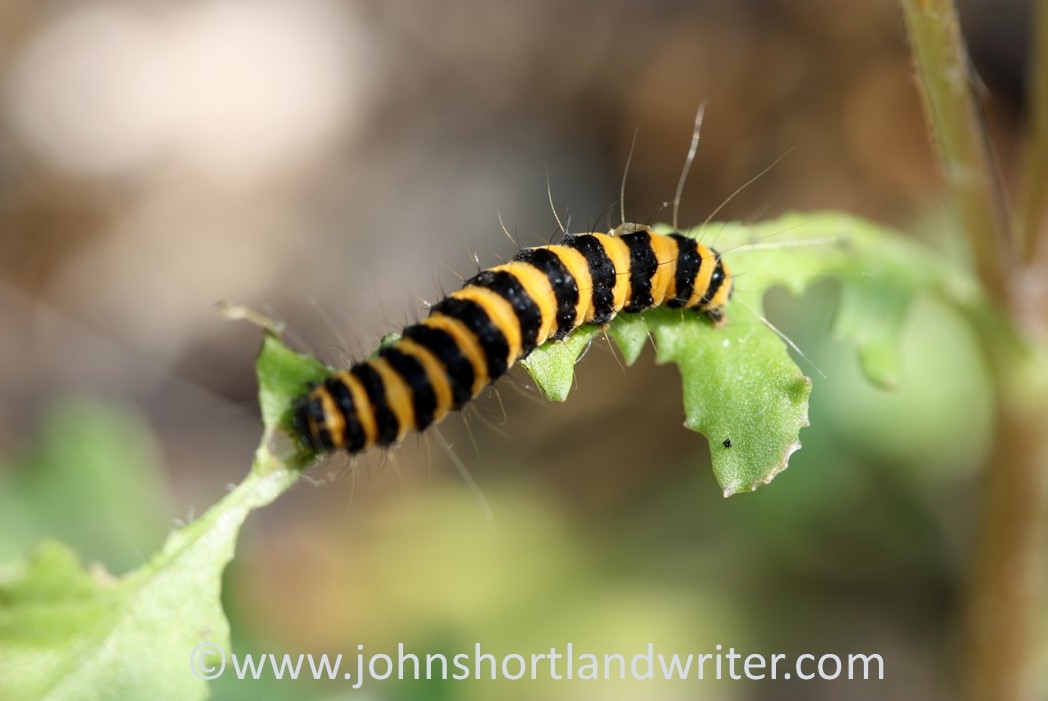
There is no doubt that in places ragwort is increasing just as other plants increase in number or range periodically.  There is also no doubt that it is a highly toxic plant that is capable of causing fatalities in livestock, particularly cattle and horses.  Less frequently reported are the benefits to the environment it brings for it a native plant that is host to numerous insects as well as Common Broomrape (Orobanche minor), an obligate parasitic plant that cannot complete its life cycle without it (although it is also parasitic on some other plant species too).

Cinnabar Moth Caterpillar

Cinnabar Moth Caterpillar

Plantlife, the conservation charity (link here), have produced a ‘position statement’ on ragwort control which – in my opinion at least – appears to be more balanced.  They acknowledge that livestock can be damaged and that control may be necessary in areas of high risk.  They also counterbalance the argument by stating that there is no evidence that it is proliferating.

Ladies Bedstraw - sometimes confused with ragwort should not be disturbed

Ladies Bedstraw – sometimes confused with ragwort should not be disturbed

The alkaloids in ragwort are harmless whilst they remain in the plant but become toxic once ingested.  It takes considerable amounts to cause catastrophic liver failure and this is usually caused by feeding contaminated hay over long periods of time.  To have a horse die from ragwort poisoning is extremely distressing both for the horse and its owner and as symptoms don’t show until cure is too late precautions do need to be taken.  Reaction caused by casual contact is usually dermatitis, and relatively rare.

Ragwort and horses - not a good combination

Ragwort and horses – not a good combination

Ragwort is more prevalent where disturbed soil conditions exist and the churning of ground by hooves create perfect conditions for seed to germinate. Although animals don’t select fresh ragwort in preference to other species they will eat it if other food is scarce such as in times of drought or through overstocking.

Ragwort growing beside path made by horses

Ragwort growing beside path made by horses

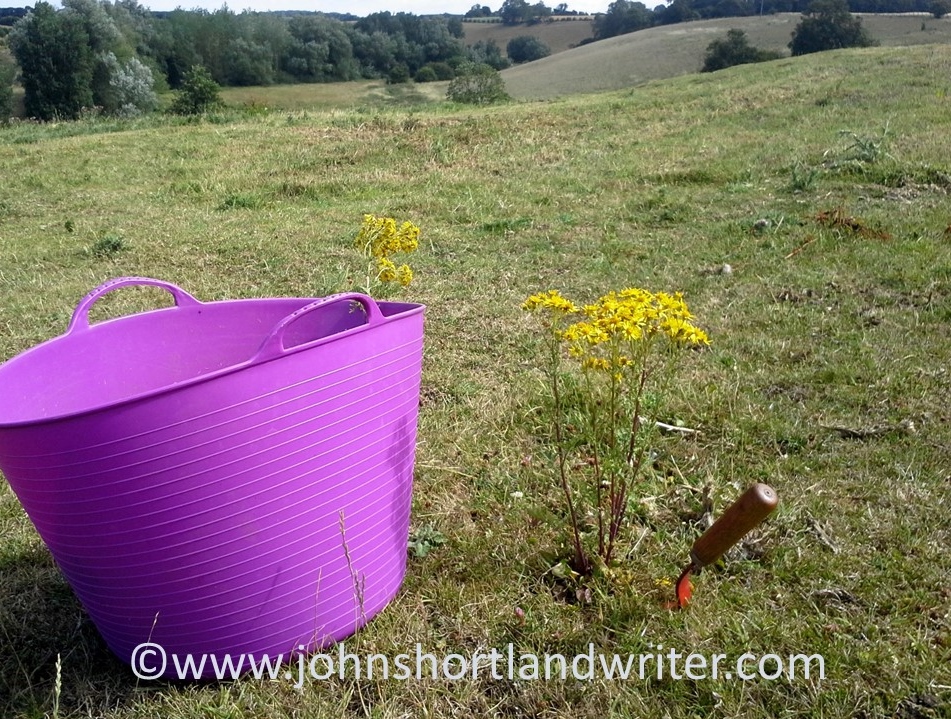
So should ragwort be controlled or not?  The answer, as with most things in life, is yes but in moderation. It is quite unnecessary to remove ragwort plants from areas of low or no risk as is sometimes thought. I keep horses and spend time each year removing ragwort from the fields in which they graze. The best way is to pull the plant out by hand rather than to use chemicals which create other issues. It is generally believed that the toxins can be absorbed through the skin so it is advisable to wear gloves to prevent this.

Always remove the pulled plants from the field

Always remove the pulled plants from the field

The tall flowering stems of ragwort with their attractive head of yellow daisy-like flowers are easy enough to see and remove. Less obvious are the non-flowering plants – these have a rosette of leaves hugging the ground. It is essential that the pulled plants are disposed of carefully, preferably by burning, as seeds can form on dying plants. It is also essential that the plants are identified properly and that other species are not removed. It should also be remembered that it is illegal to disturb or remove any wild plant that is not growing on land you own or have responsibility for.

Ragwort flowers

Ragwort flowers

Ground hugging leaf rosette of immature plant

Ground hugging leaf rosette of immature plant

*Ragwort is a seeding plant and does not produce spores. This is just one way how misinformation can cause confusion and unnecessary health concerns

Rosa de Rescht, Lost in History

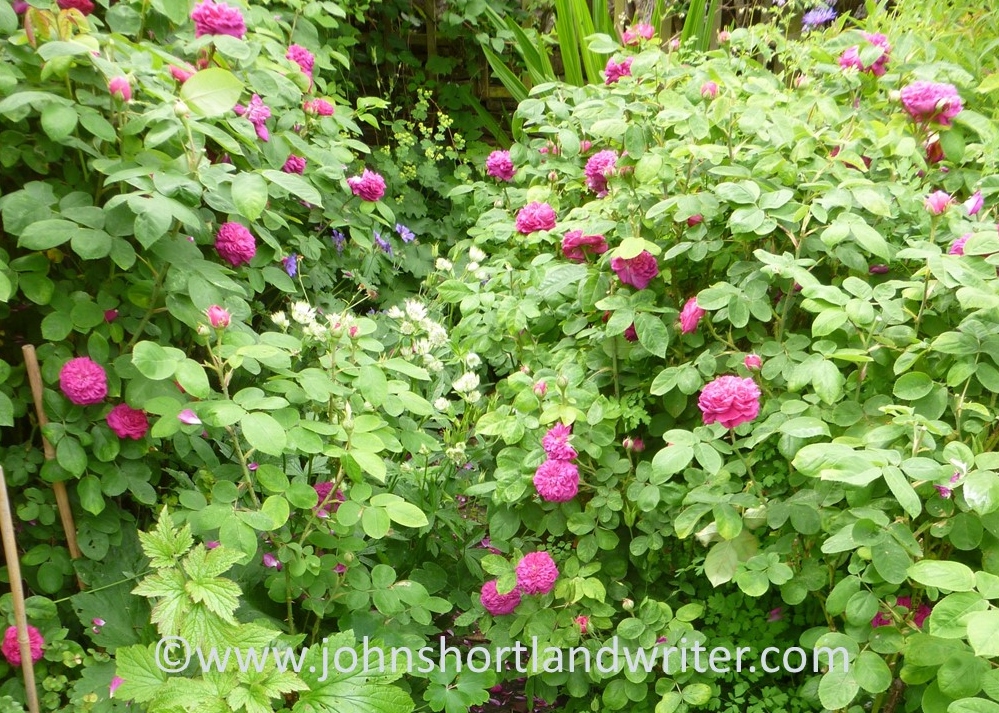
Everything about this little grown rose is a conundrum. Even its name is spelt in different ways as it is sometimes listed as De Resht and categorised as a Portland rose and sometimes as a Damask. Wherever it is found in a catalogue one factor that is consistently agreed upon is its scent which is exquisite.Rosa 'de Resht'   copyright

Its history is equally confused with stories of how it was found growing in Persia at the end of the Second World War or how it was brought to France in the early 1800s with numerous other theories of its origin in almost every decade in between.

The rose flowers are of medium size and fully double, magenta in colour with a slight crimson hue. They are repeat flowering although this tends to be in flushes so there are short periods when the plant is quiet. Being double, they are of less value to bees and other insects.

Rosa 'De Resht' (3)   copyright

Rosa de Rescht is an upright rose about 3ft (1m) in height which makes it ideal for use as a small hedge. It suckers sporadically, these often being thrown up some distance from the parent plant. These are never a nuisance and as they come true to type can be severed and grown elsewhere or left to bloom where they wish. The foliage is bluish-green and, in my garden at least, is healthy and free from pests.Rosa 'De Resht' (2)   copyright

As with all roses, care when planting is rewarded although they do cope quite well on poorer, dry soils too. They revel in sunshine but I also have them growing in light shade without any noticeable problems with flowering or growth. Like all repeat flowering roses, removing the fading blooms (dead-heading) encourages new ones to form.

I’m not a great lover of gardens where roses are grown formally on their own – there can be few uglier sights than a rose bed in winter! Rosa de Rescht grows admirably amongst herbaceous plants and this is how I grow them.

Rosa De Resht   copyright

It is unlikely that you will find Rosa de Rescht in a garden centre but it is readily available from specialist nurseries. Peater Beales and David Austin both list it as do some smaller mail order nurseries. A single plant of this variety won’t add much value to a border, buy a minimum of three even for planting in small spaces. In time, you are likely to end up with more but why worry? This little rose is so charming and its scent so sweet you will be only too delighted.

Castleyons – an Irish Gem

The small village of Castlelyons in Co. Cork, Ireland appeared deserted when we drove into it and as we seemed to be the only car on the road there was no fear of being run over when taking the photo below. As if to confirm its silence the main street was dominated by the ruins of an old Carmelite abbey.Castlelyons   copyrightCastlelyons (2)   copyright

Little is known of the origins of the abbey for there are few surviving written records. It is thought that it dates from the beginning of the 14th century although the existing ruins are from a hundred years later.

Castlelyons (5)   copyright

The size of the nave is huge measuring over sixty feet in length and twenty in width. It is separated from the chancel by the tower which although very ruined still has its complete spiral staircase which can be climbed – but not for the faint-hearted. The chancel which is also very large (over fifty feet in length) is where the altar would have been placed. A number of grave slabs survive some of which still have visible markings.Castlelyons (7)   copyright

Castlelyons (9)   copyright

The cloister, where the monks walked and meditated, is less complete but the turf square and parts of columns gives a sense of the place. The monastery was dissolved during the Reformation and passed into private hands. Now it is a national monument.Castlelyons (12)   copyright

A mile or two from the abbey ruins is the Castlelyons Graveyard at Kill-St-Anne. At its centre is a mausoleum built about 1747. The interior is circular with just one marble monument to James Barry, Earl of Barrymore and carved in 1753. External steps lead to a crypt below.

Castlelyons (19)   copyright

Castlelyons (22)   copyright

Close to the first lies a second mausoleum, also built in the eighteenth century, for the Peard family, local landlords. Their earliest grave (dated 1683) lies elsewhere in the churchyard and commemorates Richard Peard, an ensign from Devonshire in England.Castlelyons (20)   copyright

The church – or more accurately churches – lie in ruins for a more recent one was built within the original. They date from the eighteenth and fourteenth centuries respectively. The remains of the bell tower and gothic arches are from the earlier date, the elaborate stone window which are in the later ruins are reputed to have belonged to the original church. Whatever the truth of this tale, the result is beautiful and romantic.Castlelyons (23)   copyright

The churchyard is a haven for wildlife and native flowers flourish beside mown paths. Beside the old cemetery is another, newer one still in use and equally well-maintained as were the old abbey ruins and the village itself. Castlelyons maybe off the beaten track but it is well worth making the effort to visit. It is rural Ireland at its very best.

Castlelyons (24)   copyright

Much information has been gleaned from information boards within the village and also the Castlelyons village website – link here. Apart from details of its history the website shows that despite its small size, the village social life is thriving.

JFK and the Irish Famine

The Great Famine – also called the Irish Potato Famine – killed a million people between 1845 and 1852 and created much bitterness towards the ruling British.  Restrictive laws against Catholics who made up over three-quarters of the population, including the prohibition of owning land, had been relaxed but the majority still held only tiny parcels of land, the remainder owned by absentee British aristocracy.  As a result, only potatoes could provide anywhere near enough food for their families and these were grown at the expense of all other crops.  When the previously unknown disease, blight, destroyed them they had no access to other foodstuffs.   At the height of the famine, enough food was being produced elsewhere in the country but this was sent for export fueling ever greater resentment.  Evictions too were common.  The alternative to death was emigration and over a million left for a new life elsewhere.  Pictured below is the Dunbrody Famine Ship, moored at New Ross, Co. Wexford, a replica of the original boat.

New Ross (2)  copyright

The New World was a popular destination and in 1849 Patrick Kennedy, great-grandfather of American President, John F Kennedy and whose family lived near New Ross sailed to Boston, albeit from Liverpool, England. Marrying soon after his arrival he died nine years later of cholera at the age of 35.New Ross (5)   copyright

In 1963, President Kennedy visited New Ross and his ancestral home at nearby Dunganstown.  In 2008 his statue was unveiled by his sister Jean Kennedy Smith.New Ross   copyright

Fifty years after JFK’s visit, the Emigrant Flame was lit by his sister and daughter, Caroline Kennedy Schlossberg.  The fire was taken from the Eternal Flame by his graveside in Arlington Cemetery travelling 3500 miles: it burns constantly to commemorate all emigrants throughout the world.New Ross (6)   copyright