The Heath

‘We’re off to the heath!” Such excitement whenever my father made this announcement.  It happened perhaps just three or four times a year and when it did it was always a special day.  Almost seventy years of summer sun – for we only ever went there when the sun was shining – have passed and the memory of those innocent days still bring joy.  Much later the heath became my place of refuge when sadness threatened to overwhelm me; under the great tree that had witnessed my journey into adulthood, its shade restored and healed me. 

Many summers have passed since I last sought the shade of the great tree

Going to the heath involved ritual.  The ritual included packing the picnic that my mother had been busy making; the ‘paste’ and cheese sandwiches, rock cakes that required the currants to be removed before being eaten (“no, mummy, they look like eyes”) and the steel Thermos flasks of scalding hot water for tea.  No tea bags in those days so teapot, loose tea and strainer were all added to the basket along with the rug for sitting on.  The rug fascinated me for it was of coarse wool and a faded khaki in colour but, most of all, it had my father’s name written on it in capitals:  SHORTLAND H A 174445, the numbers being those from his army days.  The blanket, he would tell us, had seen the Holy Land, Tripoli, the Pyramids of Egypt and the ancient ruins of Rome.  Being spared the horrors he’d witnessed during World War 2, it seemed to us as if the rug had magical qualities, perhaps it was the carpet that would one day take us to these far-off places as well.  Of equal importance to the outing was the cricket bat, ball and stumps, all to be placed in the boot of the cream Consul car – but only after I’d been lifted out of it for my jumping into the boot was all part of the ritual too.

Being packed into the car boot was all part of the ritual in 1955!
These days, picnics are taken in a lot more comfort…

Driving along the narrow country lanes my sister and I, noses pressed hard against the car window, would comment on every house made of flint, or with a thatched roof, that we passed for we knew the journey so well.  “Oooh, I so wished we lived there…”  After a few miles the car would begin to slow and we eagerly awaited the moment it would stop and we could all clamber out.  Hoisting me onto his shoulders so that I could see over the high hedge, we would look down onto the ‘model farm’.  How I loved it for it looked so much like my toy farm at home with its cows, sheep and horses enclosed by beautifully painted white wooden rails.  Of course, it wasn’t really the miniature farm that my father claimed it to be but set in a deep and steep-sided valley gave it the illusion of being on a much-reduced scale.  One day, I’m not sure how or why, we visited the old farmhouse with its ancient, beamed ceilings.  In one room the main beam was much split with age into which coins had been hammered.  It only added to my sense of awe as the farmer showed me the oldest coins, some of which dated back three hundred years or more.  He also showed me the one he’d placed with the ‘new’ queen’s head on it, the first he’d seen, for Elizabeth the Second had only come to the throne in the year of my birth.

Everything about the farm seemed to be in miniature….

Our next stop would be for a stroll around the village of Fingest.  The church fascinated me for it had beautiful, honey-colour rendered walls quite unlike the other churches in the area.  Its other unique feature was its bifurcated tower which to childish eyes looked as if it was splitting in half.  Best of all, inside the church, was a ladder, so tall that I was sure it must be Jacob’s ladder that I’d learnt about in Sunday School.  I never saw any angels climbing it but I was convinced that if I was allowed to do so I would reach Heaven. In adulthood, I would live in the village for a short while although by then, it was the excellent inn where they served great ale and delicious suppers that I eagerly sought after a long day at work.

The church at Fingest
Jacob’s Ladder – was heaven just beyond the top rung?

Fingest’s neighbouring village of Turville would only be visited on our way back from the heath, my parents stopping off at The Bull & Butcher.  In those days, children were not allowed in pubs and so we were left outside to explore its two streets and to clamber up the steep hill to the windmill.  How carefree those far-off days now seem when small children could be left to freely wander without fear.  The village now is famed for it being the village of the film ‘Goodnight, Mr Tom’, the windmill featured in Chitty Chitty Bang Bang and the church in the Vicar of Dibley.  After I moved from Fingest, I had the pleasure of living within a couple of miles of the windmill (and so close to the heath) for eighteen years.

Time stands still in the ancient village of Turville
The windmill stands high above Turville village

The lanes beyond Fingest become narrower and more enclosed by hedgerow and woodland as you approach the heath, all of which adds to the excitement of finally arriving at its wide-open expanse.  The car parked, out we would spill while mother busied herself with the picnic and my father set up the cricket.  We only had one wicket and so the match didn’t consist of ‘runs’ – our reward was in actually managing to hit the ball at all and the praise we would receive for our skill.  Perhaps this is why the heath holds such affectionate memories for, back in the fifties, fathers didn’t interact hugely with their children – mine was too busy working or tending the garden to make trips out a regular occurrence and my mother, like most women, was unable to drive.  Finally, we would hear mother calling us for tea and after devouring everything in sight we would lie back on the short turf replete and happy.  On one occasion my mother had packed roasted chicken legs, a rare treat for chicken was, in those days, a luxury meat.  Before we had the chance to try them, our little mongrel dog Tammy had snatched them away and into the bracken to eat out-of-sight.  Chicken never again appeared on picnics.

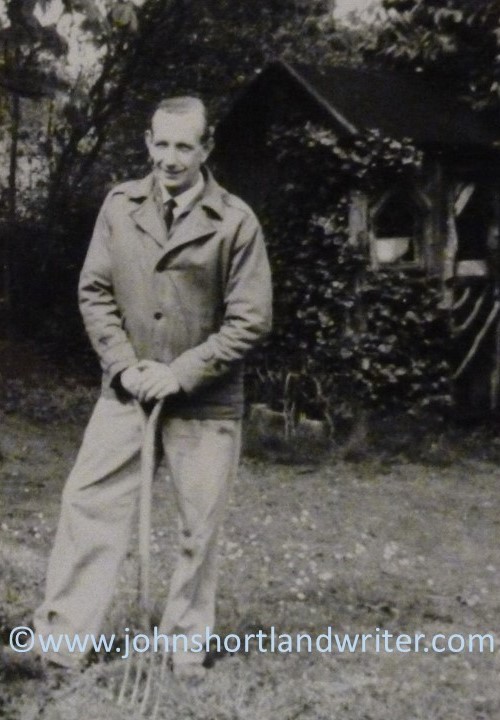
My father in 1963 – a tie was required even for casual dress in those days…

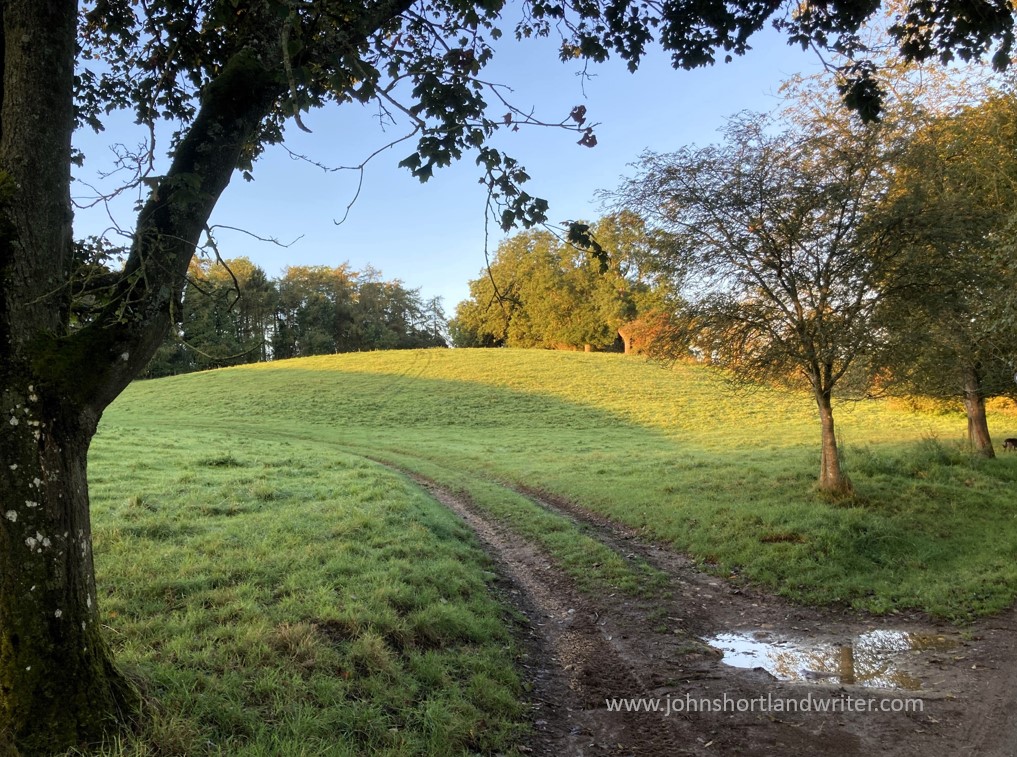
Soon we would be up and eager to explore.  The heath was beautifully unkempt; the rabbits cropped short the wide grass rides allowing the bracken and scrub to grow elsewhere, untouched so it seemed by man.  Along the western edge of the heath an ancient avenue of lime trees grew, their limbs now left to grow in a haphazard, twisted way.  From time to time one of these great boughs would fall to the ground there to gently lie and rot and return to the soil.  By summer, the bracken would have grown tall enough to obscure them from view. We knew where to find them and would crawl alongside beneath a green tunnel of fern fronds.  Tiny, pale toadstools grew from moist fissures in the bark, beetle scurried away from our disturbance and here we learned about nature., much of which seemed magical to young eyes  Later, as I learned patience, I would sit quietly to watch for wildlife: a wren chattering away as it searched for insects, the occasional slow-worm hunting for slugs and not as slow as its name suggests.  Once I was rewarded by a family of stoats moving like a sinuous string of sausages as they followed one another each holding the tail of the one in front in its mouth.  Such excitement!

Casual wear for ladies in 1963: my mother out for a picnic in the country

Magic played an important part in our young lives for everything we didn’t understand surely had to be caused by magic?  We saw regular proof of this in our painting books for they had the word ‘magic’ written across the front cover.  A blank page of paper would be transformed into a colourful picture by just brushing with water from the empty paste jars. The paste jars held the exact amount of water required for ‘art’ without too much risk of spills. In those days of necessity, although the word recycling hadn’t been invented, everything – paper, string, milk and other bottles – were all carefully saved or returned for re-use.  Plastic wrapping and the throw-away society was still to come. 

Evidence of magic could be easily found within these pages!

Further proof of the magical world around us came one day when exploring a new part of the heath.  We’d always thought that one dark, wooded corner looked rather forbidding but like all small boys, I knew better.  Venturing deep inside it, with every twig snapping under my feet making me jump, I came across a small, black pond besides which stood an old hollowed oak.  I squeezed inside the trunk to look up expecting to see sky.  Instead, there was darkness followed by much scrabbling and hissing as dust and twigs dropped onto my head.  Running as fast as I could I found my sister to tell her all about it.  Unbelieving, she and I returned and this time it was she who was hissed at.  Scared witless, we ran back to our parents.  Just an old barn owl we’d disturbed my father had said.  But we knew better, we’d found the door to the magic kingdom of elves and goblins.  How lucky were we that the door hadn’t snapped shut with us inside, never to return, as described in the numerous books that we had read.  Utter nonsense we were told.  That, we realised, was the trouble with grown-ups: they didn’t believe and that was why the magic was hidden from them.
                                                                                     *

I have to admit that it probably was a Barn owl that scared us

From time to time, I still return to the heath although I now live many miles from there. Whenever I do, I am struck at how small this ‘giant’ area to children’s eyes actually is. The difficult stage of my life, where the old tree supported me through despair, have long passed and the memory of it does not overshadow the pleasure that revisiting brings. Despite being a grown-up, I can still feel its magic.  I’m not alone in this for recently I read Hugh Thomson’s book, The Green Road Into The Trees, in which he crosses southern England on foot.  He too, feels the need to return to this very same heath in search of healing and finds it.  He believes that the mysteries of the Ancient World are not as far away from us as we tend to think for our mixed Celtic, Saxon and Viking heritage shapes not just the British landscape but also our souls.  Perhaps that’s where the magic comes from?

Moving Into Autumn

The autumnal equinox has just past and with it comes those rare, clear and sunny days when the outdoors beckons, and your senses become alive to every detail.  Perhaps it is because you’re all too aware that soon there will be many days when the countryside is shrouded in a clinging, wet mist that takes hours to lift, if it does at all.  An early-start walk is all the better for several reasons: the light is extraordinary, the air clear, and there are few, if any, people out and about. Perhaps, best of all, with the shortening days, early isn’t at some God-forsaken hour 😉

Early morning sunshine…

From our little, Cotswold stone-built house it is only a matter of yards to the river.  Unlike the true days of Autumn, the river is also clear.  All too soon, the warmth mixing with the cool will see the vapours rise, often hiding the surface and sometimes blanketing the whole valley.  Today, despite the frequent rain showers we’ve been having the water levels are low, there are no birds singing and I have only a sentinel heron to share it with.  Dismayed at my appearance, he flies off lazily with a scolding, harsh croak only to settle a few yards further away to watch me as I pass.  No sooner have I done so than he returns to his favoured spot to continue his hunt for crayfish.

The heron rose with a harsh croak…

Although the sun is shining, it is still set low in the sky, casting lengthy shadows and intensifying the first changes of colour in the trees.  As it climbs higher, so the colours will appear to fade and the shadows shorten, and another part of the early-morn magic will be lost for another day.

First hints of autumn…
The long shadows of early morn…

Reaching the plantation, the sun filters through the still-densely clothed branches, diffusing the light and giving it the look of an Impressionist painting.  Perhaps this is how Monet got his inspiration when looking at his waterlily pool.  The path stretching ahead just invites you to walk onwards.  At its end, where it meets the lane, the first of the stone houses in the nearby village remain silent, as do they all, for their occupants are still either asleep or not yet venturing out.  They are missing so much but I relish the silence and glad that it isn’t disturbed by the sounds of civilisation.

Almost, if not quite, an Impressionist painting!
Cotswold stone cottages

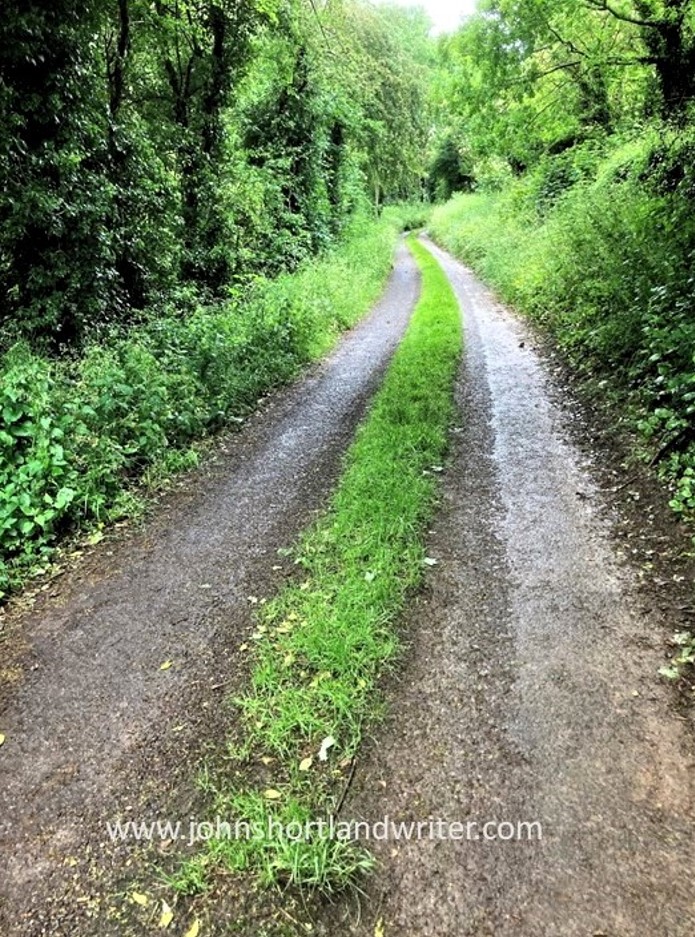
There are four lanes that lead into the secret valley.  The one that I now take is little used and the grass grows thickly in its centre.  Another is similar and, with no passing places for a mile should you meet another vehicle, only those with good reversing skills tend to use it.  Occasionally a ‘lost’ driver attempts it, thinking it will be a short cut to their intended route, only to end up traumatised by the experience.

One of the little-use lanes out of the secret valley…

All along the lanes, the banks and hedgerows are thick with berries and the fading flowers of summer.  Every year I intend to make a note of what I see but, although I never do, I can be fairly certain of seeing the same late bloomers, sometimes right though to Christmas.  These single flowers are extra-special, as they cling onto life reminding us of their glories past and giving us hope for the following year.

l-r top: hawthorn berries, crab apples, campion
l-r bottom: cranes-bill, prickly sow-thistle

I have reached the cattle sheds now at the top of the hill above my cottage.  Large and airy, they are empty and silent now for the livestock is still out in the fields and making the most of the last of the summer grazing.  By Christmas if the season is reasonably mild and dry, or sooner if not, they will be brought in to be kept dry, warm and fed.  The barns surrounding the sheds are stacked high with straw and hay, their bedding and feed – in a good year, there will be enough to last the winter however long it maybe; in poor summers extra will need be purchased for they will not be returned to the valley’s water-meadows until they have calved and the weather is right.

Enjoying the last of the good weather…

It is a short downhill walk to home now.  Within minutes I will be back, the kettle on and looking forward to a well-deserved breakfast.

Home sweet home…and breakfast!

.

.

.

Winter Pruning of Limes, Hazels & Dogwoods

Hard pruning takes courage and gardeners are often reluctant to carry it out for fear of harming or, even worse, killing the plant. Once it is understood that more trees and shrubs are lost through neglect than by pruning the task becomes somewhat easier. In far too many gardens woody plants are grubbed out because they have outgrown their allotted space when judicious pruning at an earlier stage of their life would have allowed them to thrive and give pleasure for many more years.

Outgrown its space? Don’t remove it, prune it!

January and February are the perfect months for carrying out coppicing and pollarding and some shrubs like willow and dogwoods, grown for the winter colour of their bark, are actually improved by the process. Coppicing and pollarding are traditional techniques that have been carried out for centuries in woods and forests to provide a plentiful supply of fuel and fencing materials. As with all procedures, jargon evolves and coppicing and pollarding are just words that describe the removal of branches back to the tree trunk (coppicing) or, in the case of pollarding, the removal of stems to ground level. Somehow, if you just say to yourself, “cut off every branch” the mystery of the process disappears and becomes less intimidating.

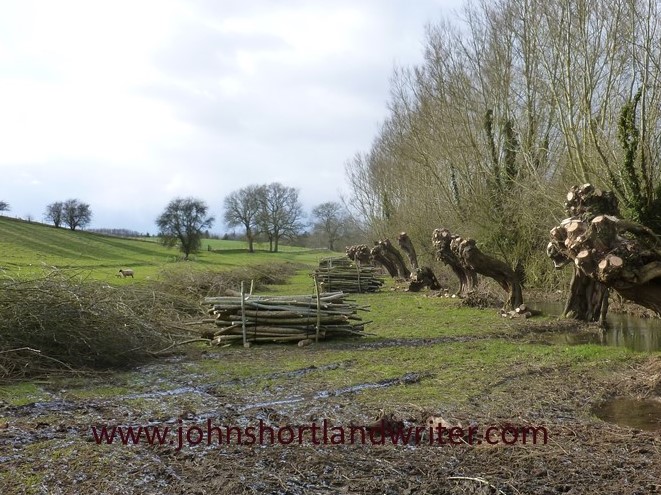
Willows – some newly pollarded line a riverbank

Limes (Tilia) are very beautiful when grown as full-sized trees but become far too large for most gardens. They are better planted as parkland trees in a field, if you are lucky enough to own one, where there stature and grace can be appreciated from a distance. Too often they are grown where their branches overhang driveways where they drop their sticky honeydew over vehicles and become a nuisance. Most limes are host to tens of thousands of aphids (greenfly) which feed on its sap and then secrete the unwanted waste. Somehow, the gardener’s jargon word ‘honeydew’ sounds so much nicer than ‘greenfly crap!’ If you are determined to plant a lime tree in a confined space the Caucasian Lime, Tilia x euchlora which doesn’t have this problem is the one to go for. Remember that any tree in a confined space will need its size controlled so read on to find out how to pollard it.

Limes, when mature, are beautiful but very large trees

The time to pollard a tree is winter and January, when there isn’t too much to do gardening-wise, is the perfect month. I always aim to complete by the 31st which allows time to continue into February, if need be. By the middle of that month the sap will be starting to rise within the tree so it is sensible to complete the task by then. It is very straightforward to remove the branches for which you will need secateurs for smaller twigs, loppers for larger ones and a sharp pruning saw for anything bigger still. Which tool to use when? That too is easy to know. Secateurs and loppers should cut through the stems easily – if you need to twist the tool or the stem, you should be using the saw.

By midsummer there is plenty of new growth on this old willow pollard

Common sense will tell you that if you remove all branches from a tree there will be nothing left to offer any screening. This isn’t always important and coppiced trees send out new growth very rapidly as the weather warms up. However, for privacy or a different ornamental effect more careful pruning is required. All that needs to be done is to cut back any branch or twig that has grown beyond the space you have allocated for it.

A pollarded lime allee provides drama and a focal point
This lime allee has had its side branches retained to give denser summer screening

Limes are not often grown for the colour of their winter twigs probably as they are up rather high and so less noticeable. Willows (Salix) (when coppiced, for they can also be pollarded) and dogwoods (Cornus) are very different for their bright yellow, orange or scarlet stems are very visible and a mainstay for any winter garden. They are also quite simple to prune as it is all carried out at ground level. When the plants are mature, I prefer to cut them over a three year period as this retains their overall height. Quite simply, it means that only a third of the stems are removed or, if you have plenty of shrubs, completely prune one in every three to their base. The purpose behind this pruning is not so much to control their size but to maintain the strength of colour which is at its best on younger shoots. If left, they gradually become quite dull.

The coloured stems of dogwoods

Hazels are treated very much like willows and dogwoods, although the usual purpose is purely to maintain a convenient size or to provide ‘pea sticks’ to be used for supporting summer plants as well as peas and beans. For guidance take a look at my earlier post from 2021 which can be read by clicking on the link here.

A hazel tunnel is created by partial coppicing to reduce the number of tall stems

“If Only… If Only…”

What is it in human nature that always makes us long for the exact opposite of what we are getting at that moment?  I wouldn’t go so far as to say that I’m constantly wishing for something different for I’m pretty easy-going – well I think so, anyway 😊   But over the last few days I’ve heard myself saying “if only…” a lot more often than is usual. 

Until Brexit changed our outlook somewhat, as a nation we were brought up to believe that talking politics (or religion) was taboo, it wasn’t something to discuss even amongst close friends or family. It was always said that the reason for not doing so was to avoid offending anyone.  I think that may just have been an assumption and that the real reason for not talking about these things is because we Brits are always taking about the weather.  There’s no time left to discuss anything else. One of the certainties in an uncertain world is that in the UK the weather will never be the same two days running.  Now even that certainty has been take away from us for we have been suffering from high temperatures and prolonged drought.

Parched earth
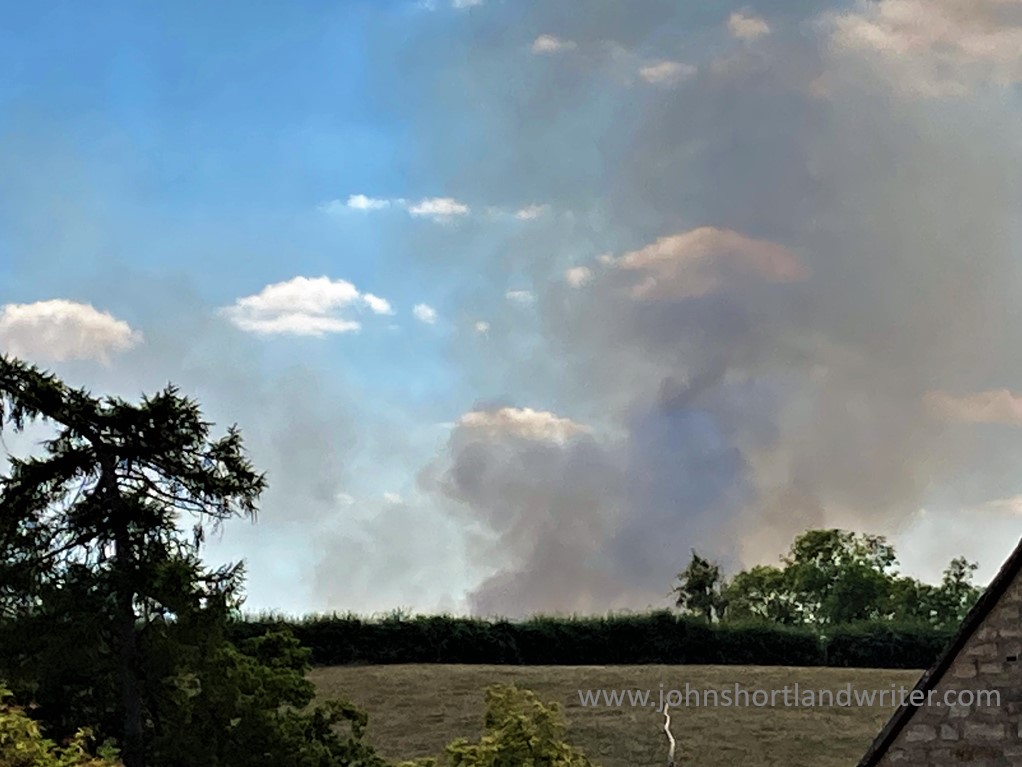
Wildfire – a little too close to home for comfort. (We’re ok!)

I have extended family scattered all over the world and as a child lived in a house where foreign accents and languages were frequently heard for not all of our visitors spoke English.  One of the phrases that was a constant, for we lived in the countryside, was how green our landscape was.  Those that came from more tropical climes couldn’t believe how cool our summers were either.  This year they would feel more at home for our fields and woods are tinder dry and our grass parched and brown.  It is for this reason that I have been saying “if only…”   As a relief from the arid conditions, I have decided to write about cooler, wetter times not because I really want it to snow in August but so that we had some images to look at to remind us that, unlike many other places, our drought and oppressive heat is unlikely to last very long in comparison.  If it helps to make me feel slightly less grumpy about our present state, then so much the better.

View from our garden in a normal year – nice and green!

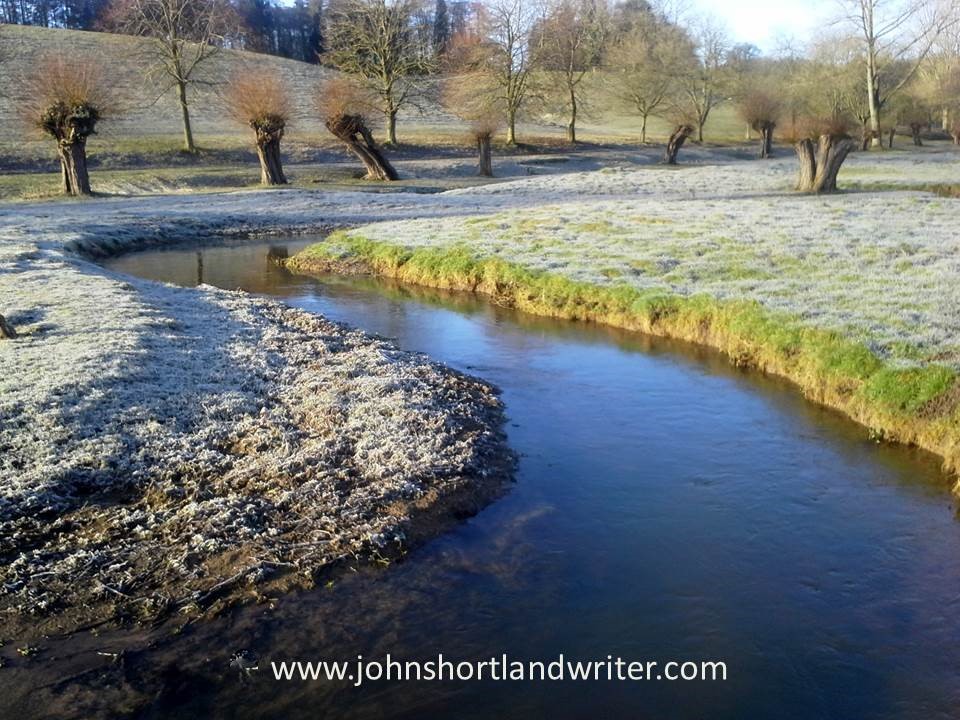
“If only it was colder” – to wake up at the break of day to cloudless skies and sunshine is, to put it frankly, un-British.  There’s nothing worse than to lie in bed overheating only to find no relief when you get up.  Give me a crisp, frosty morning any day, when the sky is blue, the air cold and our little river shimmering, not in a heat-haze but a cold-haze.  Of course, in reality, our winters aren’t like that very often.  Far too often the days are grey and gloomy but I’m highly unlikely to say “if only…” about one of those.

A rare day when it’s bitterly cold but sunny – just how I like it!

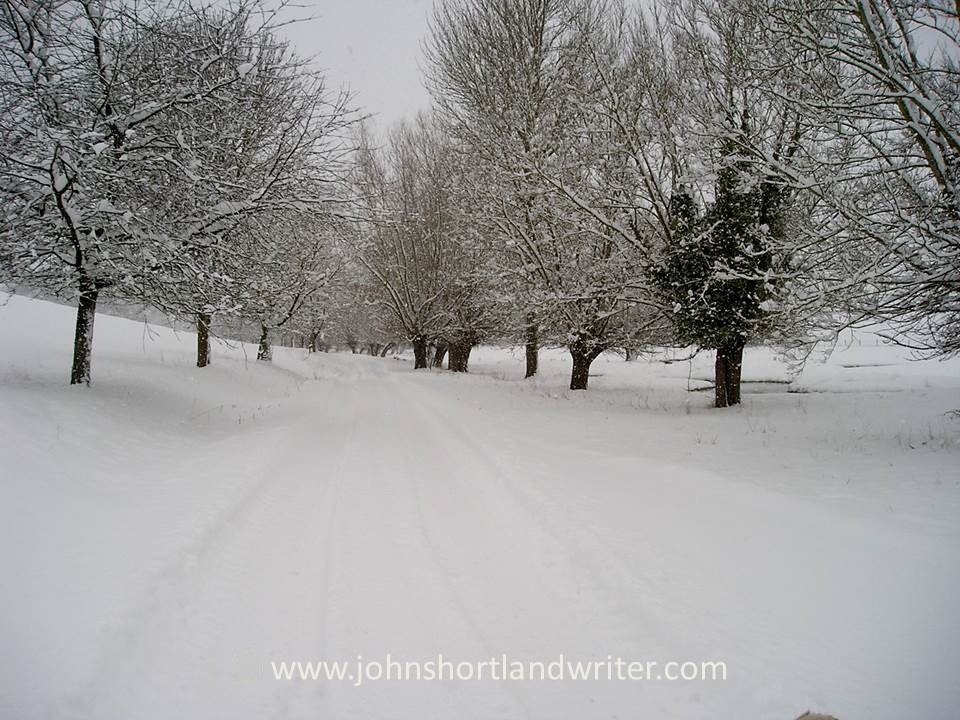
“If only it would snow” – I love the white stuff even though it does make life more difficult.  Whether the drifts are across the road or not, we have to be out in it to attend to our horses for they need feeding and watering whatever the weather.  Snow in southern England is a very hit or miss affair and we have had none for the last few years.  Only once in the past twenty years of living in the secret valley have I had snow deep enough to ski on and it is a great source of pride and pleasure that I managed it even once.  There is nothing like clipping on a pair of skis and swishing through a landscape that has been silenced by snow.  The photos below were taken some years ago – just looking at them makes me feel pleasantly cool.

Wintry view from our house
The road leading out of the valley

“If only it would rain” – these words are almost never spoken in this island nation for rain is constantly being blown inland on a south-westerly from off the Atlantic Ocean.  However, at the moment, it is rain we need more than anything.  Our garden plants are shrivelling, the winter corn cannot be sown for the ground is rock hard.  And as inferred to earlier, we miss our green grass, our wildflowers and the verdancy of our woodlands.  The last couple of days the forecasters have been telling us that rain is on its way and that it will be torrential when it arrives.  So far, we have had three light showers lasting just a couple of minutes.  What we need is two weeks or more of gentle, refreshing rain.  Whether we get it we shall have to wait and see.  Our valley looks rather splendid when it is flood but I don’t really think we should wish for that. 

Our little house sits high above the river so flooding isn’t a problem
It’s sometimes hard to imagine that the little river can flood so much

There is one more “if only…” that I know I shall be saying before long and that is “if only it would go back to that lovely summer weather we were having.”  Some people are just never satisfied!

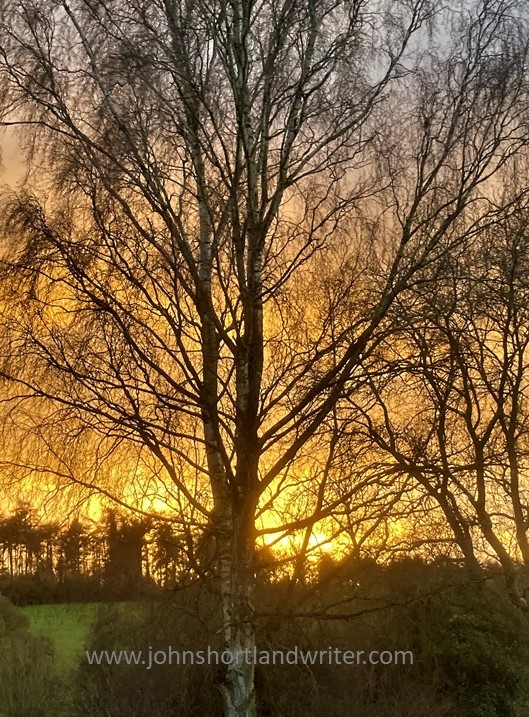
A glorious sunrise over the valley

A Hurricane in a Teacup

With much of Britain recovering from the effects of three storms – Dudley, Eunice and Franklin – within ten days and Storm Gladys about to arrive, it seems appropriate to have some up-to-date thoughts on the time when we England experienced a hurricane. Or did we experience one? After the ridicule that poor Michael Fish, the weatherman, had to endure after he proclaimed in 1987 that “Britain doesn’t have hurricanes” only for the nation to wake up to find itself flattened, the forecasters have avoided using the ‘H’ word. Instead we have storms that are now named in the same way as hurricanes. Even more recently still, we are told we have ‘red alert’ storms. So, were these latest storms hurricanes or in reality were they, as my late father would have said, “just a bit of a blow?”

I wrote the thoughts below many years ago when pondering on the English Hurricane and the later 1990 storm. That wasn’t officially a hurricane either but did far more damage – hurricane-like damage, in fact. The only thing that this and these latest storms prove is that the debate hasn’t moved on very much over the intervening years…

The dangerous work of reconnecting electricity continues through the night

English people constantly talk about weather. It’s in our makeup, our genes – we can’t possibly walk past someone, even a total stranger, without saying something about it. We can’t help it, no matter how much we realise that the person isn’t that interested (or, for that matter, even if they don’t speak English, when we madly gesticulate skywards). We rattle on about too much rain, too little rain, too much sun, no sun, cold for the time of year, how warm it is. So, in the spirit of being a true Englishman, despite my part-Polish ancestry, I’m just going to mention that we had a fantastic sunset in the secret valley a couple of days ago.

I think the reason we may behave like this is because English weather is nearly always gentle. The landscape that makes up England is beautiful and can be dramatic but not in the way of so many other countries. Take the USA, for example. Where’s our Grand Canyon, our towering redwoods, our Rocky Mountains, our Great Plains and our Niagara Falls? We have them in miniature and, perhaps, that is just as well as we are such a small country. And likewise, our weather: we have heatwaves, we have floods, we have blizzards. But they are rarely anything truly spectacular (except to those poor people affected by them, of course). And so when we were told by the weather men in 1987 that reports of a hurricane were completely exaggerated, we believed them totally. And despite the fact that much of the country was hit hard by it when it arrived, my part of the Chiltern Hills where I lived at the time was not much affected, even though it is one of the most wooded parts of the country.

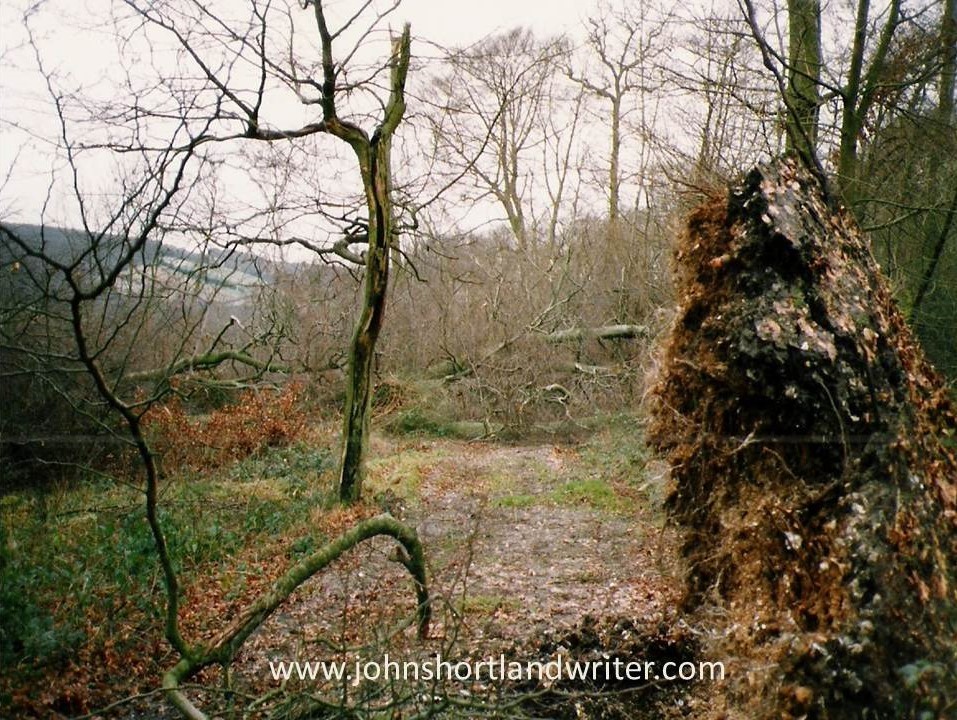
The night in January 1990 was different. This time we had winds, whilst not as severe as three years earlier, which created total havoc with the already weakened root systems of the trees. Great swathes of the magnificent beech woods that are the very heart and soul of the Chilterns were flattened in a couple of hours. I lived at that time in the middle of one of these woodlands and am frequently reminded that, as the rest of the world cowered in their beds and the trees came crashing down all around our house, I woke up to say “a bit windy out there” before falling asleep again. As dawn broke the true damage to the landscape (but fortunately not our home) could be seen.

It is now over thirty years since that storm and the woodands have been transformed. Those of us that remember the 200 year old beech know that the majority are gone and, in their place, are new trees of mixed species. It will be many years before the magnificence of the woods return but they are healing. This photo below is taken from the same spot as the one above. Some of the biggest old stumps have been left, too difficult to move – time has hardly changed their appearance apart from their ‘roof’ of mosses.

One of the unforeseen benefits of the hurricane is the increased amount of light reaching the woodland floor, for beech trees cast a dense shade where little can grow, other than where the canopy is lightest. Apart from the view to the valley below, which was unseen before, many wild flowers are better now than ever. Roll on April when we can see the blue carpet of tens of thousands of bluebells disappearing into the distance.

Oh! And I nearly forgot to say, the weather today is a mix of sunshine, cold winds, rain and sleet. Don’t forget to tell the next person you meet!

.

.

Ash to Ashes?

On the farm where we keep our horses there is a venerable, old ash tree. ‘So what?’, you might ask, for around much of Britain ash trees are two-a-penny; in fact, their self-sown seedlings can be quite a nuisance. Well, firstly, this particular ash is very special.

Growing halfway along a scrappy old hedgerow dividing two fields, the ash has seen generations of farmers, farm workers and, perhaps, lovers all sheltering from the sun and the rain. It would seem the obvious place to rest when taking a break from toil in the heat of summer harvest and haymaking. Perfect, when its branches spread widely to cast shade but not when the trunk stands bare, its branches freshly pollarded. Years of pollarding have created a relatively short trunk full of cracks and fissures, the home of bats, owls and the occasional nesting kestrel. Its branches show the characteristic shape of old, abandoned pollards.

Pollarding, the removal of branches, is an ancient country method of producing straight poles. These would be used in many different ways from sheep hurdles and fencing, for building material and posts, to pegs and walking sticks. I have quite a collection of the latter, my favourite being a five-foot ash stave that I cut as a sixteen year old. Over 50 years of continual use it has become as smooth and as polished as if it had been carefully honed.

Willow coppicing. The branches, known as cordwood, stacked ready for transporting

Pollarding is carried out every few years, the time period varying with the timber size requirement and the rate of growth. Contrary to what one might expect from such drastic treatment, pollarded trees have a much greater lifespan than those left unpruned. Or they did have.

Ash Dieback disease, Chalara, was first seen in the UK in early 2012 on trees imported from Europe. A total ban on importing new trees came into force later that year but, by then, the disease had begun to spread. A classic case of ‘too little, too late’ for Chalara had been known on the Continent since the early 1990s. Now it is to be found in many regions of the British Isles. Here, in the Cotswolds, it has been slow to show its face but this year, the effects are noticeable with dead and dying trees standing alongside others that appear not to have been infected.

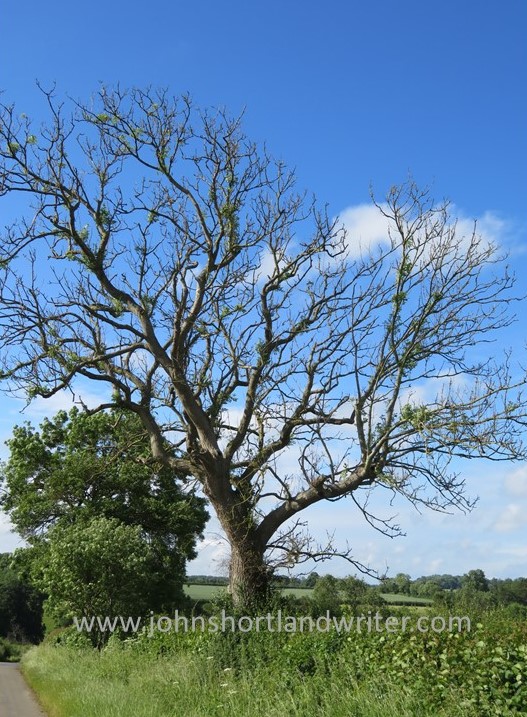
Stunted & sparse leaf growth on diseased ash trees
A severely infected ash tree with a healthy tree behind

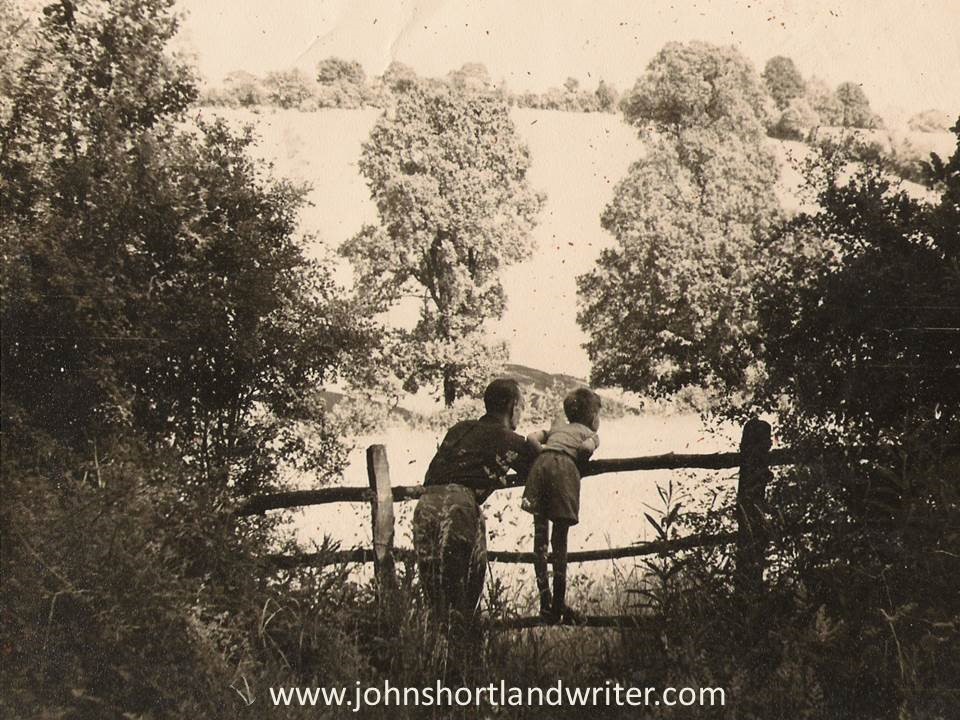
It is thought that probably 90% of all ash trees will succumb to the disease, the loss of such a great number dramatically changing the appearance of the countryside. As a boy I lived in a road that was lined with elm trees. Like the ash, those in our garden my father regularly pollarded and I would be sent up to climb onto the lighter branches to saw them off. No health and safety issues in those days! A favourite old photo of mine is the one below showing my father and I in what now looks an idyllic rural scene. It also shows how old elm trees were once the dominant feature of English lowland landscapes; all gone due to the ravages of Dutch Elm Disease that arrived in the 1970s. It is hoped that by not clear-felling the ash, as they did with the elm, disease resistant trees may be found. If not, once again our treescape will change just as dramatically.

My father & me with elm trees dominating the landscape c.1956

Ash, Fraxinus excelsior, is more often allowed to grow unchecked to its full glory. The pinnate leaves and wide-spreading branches create a light shade under which many of our native flowers thrive. It is also home to bats, birds and numerous insects including six of our rarest beetles and flies. It is especially associated with the scarce Brown Hairstreak butterfly (source: Devon Wildlife Trust) – only time will tell whether this butterflies breeding success will decline even more.

A healthy ash tree in spring

In the spring, before the leaves open, the ash bursts into flower, all too often overlooked. Make a note to take a closer look next spring, for it may be one of the last chances you have before, like the elm, it too fades into history.

Ash flowers in early spring before the leaves open

If you have a favourite ash tree in your own area why not photograph and upload it onto a nature recording website such as iRecord? That way, you will be preserving it forever and help to create an historic record for the future. Perhaps one day there will be disease resistance and ‘your’ tree can be replaced. You can find the link here.

Discovering the Five Senses in Lockdown

It sometimes takes a crisis to make us re-evaluate what is of importance in our lives and the present one of Coronavirus/Corvid-19 surely has to be the greatest that we will collectively face. Now, several weeks into lockdown we have all been developing new patterns to our daily regime, one of which may well be taking more exercise. Never before have we placed so much value on fresh air and being able to walk freely whether it be in our parks, gardens or open countryside.

Marlow watermark

                           Riverside path, Higginson Park, Marlow (before social distancing).                                 The river is the River Thames in Buckinghamshire

Living where I do in the Cotswolds surrounded by fields and with woodlands and the river close by it is relatively easy for me to enjoy the open space. For others able to take advantage of their enforced free time, it may involve a longer walk and I have certainly noticed an increase in the numbers of walkers and cyclists here in the valley. I have also noticed that for many of them one aspect of their lives hasn’t changed: as they walk their eyes are glued to the screen of their mobiles and headphones are clamped to their ears, seemingly unaware of their surroundings. It has made me think all the more of our five senses and how we use (or should use) each one of them when out exercising.

Nr Fingest copyright

Cycling in the Chiltern Hills

SIGHT For those of us blessed with the gift of vision, perhaps sight is the most important sense we use and perhaps the one we most take for granted.  Without it, it is still possible to enjoy one’s surroundings for the other senses become heightened but I doubt if anyone would deny the pleasure of seeing the beauty that surrounds us on our daily walks. Even within cities there is much nature to be enjoyed although I admit that sometimes it has to be sought with more vigour and awareness.

Viola watermark

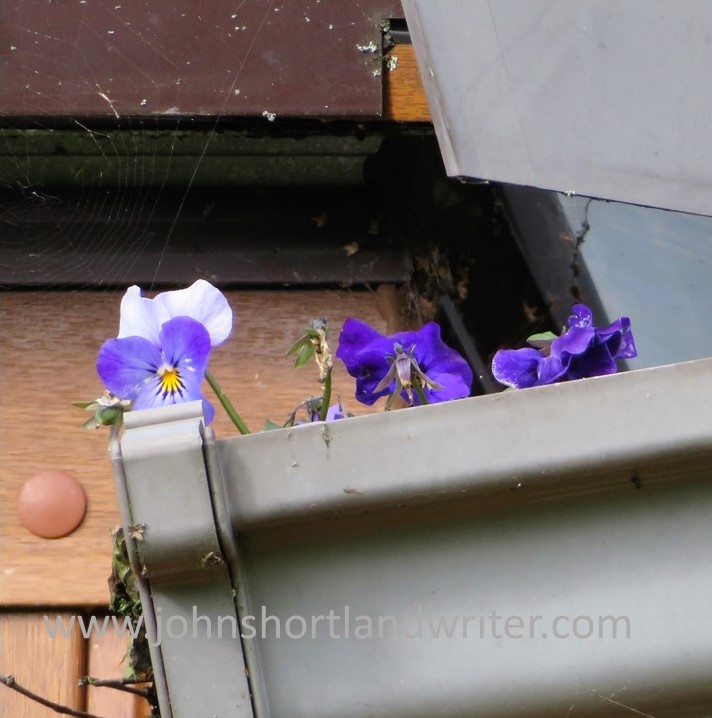
Look everywhere – self-sown violas peep out from overhead guttering!

At this time of year, more than any other season, there is much to see. Tight leaf buds unfurl into an explosion of vivid green foliage, iridescent wherever sunlight filters through; young ducklings tumbling into the park pond to take their first swim. But it isn’t just the natural world to be seen anew, there are other things too. Although it had been there for more than a hundred and forty years (and I’d walked past it very day for twenty) the date scratched into the stone on this wall had gone unnoticed.

Date stone watermark

Who scratched this date into the old stone wall and why?

HEARING Along with sight the second most important sense we use on our daily amble. Apart from the glory of birdsong there are other sounds that bombard us when out walking. The wind flurry that makes the catkins tremble and shed their pollen, the stronger breeze that make the twigs and branches clatter gently against one another. Then there’s the rustle in the undergrowth. Stop and wait silently and with patience you may be rewarded by the sight of a little field mouse going about its daily chores or a rabbit venturing out to feed.

Field Mouse watermark

patience was rewarded when this little field mouse ventured into the open

Altamont Gardens (8) watermark

… and also this rabbit

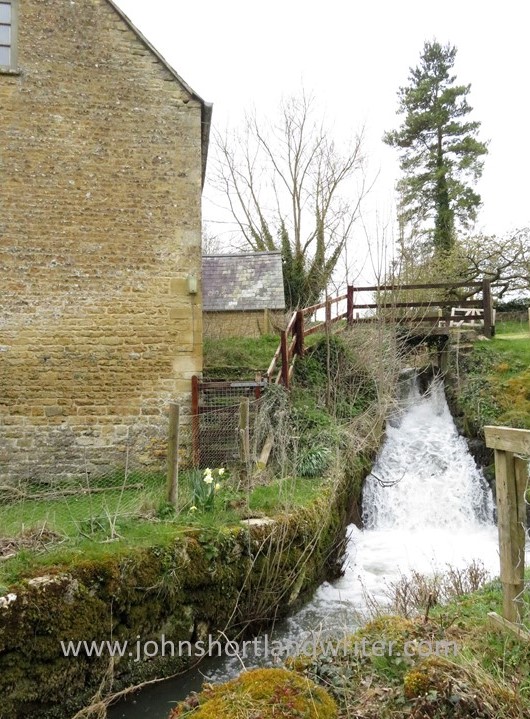
The sound of the river alters constantly. The smooth, barely audible glide of the water changes to a tinkling of soft musical sounds, its flow interrupted by a fallen branch. A few yards further downstream they rise to a crescendo as they crash and tumble over the old millrace before returning to silence as the flow stills in the calm of the millpond.

Radford Mill (1) watermark

The old millrace 

Radford Mill watermark

the calm of the millpond

TOUCH   In the present crisis we are sensibly being discouraged from touching things unnecessarily. Out on walks perhaps care may be advisable when opening gates or climbing stiles but, if you do, take a moment to think about what you feel. Heed the cold steel of the metal five-bar gate and the way it slowly warms beneath your hand; feel the rough timbers of a stile worn smooth from much use over the years. Of less concern health-wise – and all the more pleasurable for that – become aware of the softness of new horse chestnut leaves; later in the year they will become as harsh as sandpaper. Run your fingers across the twisted, grooved bark of the sweet chestnut tree and stroke the furry softness of the aptly named ‘Lamb’s Ears’, the favourite garden herbaceous plant Stachys byzantina.

Sweet Chestnut 4 watermark

The deeply grooved bark of the Sweet Chestnut tree

Stachys byzantina  Lamb’s Ears

SMELL   The scent of spring is everywhere at the moment and to be delighted in. However, the sense of smell is also a powerful trigger of long-forgotten memories. In a few weeks’ time the sweet scent of drying hay in the meadows may recall childhood farm holidays but for now there is the unique smell of new-mown lawns. Both start off as freshly cut grass yet their scent is so surprisingly different. Likewise, compare the subtly differing fragrance of apple and cherry blossom, both in their full-blown glory right now.

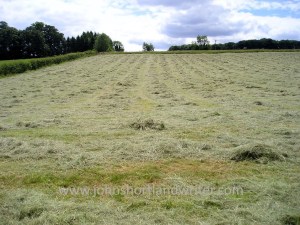
Drying hay before baling

The smell of freshly-mown grass…

Without even leaving home, squeeze the leaves of the herbs on the kitchen sill and notice their variation in scent, their colours and textures too. Early morn in the woodland, especially after warm rain, the delicate perfume of bluebells quickly disappears as the sun becomes stronger. Half-close your eyes and glory in their colour, in the silence and in their perfume and leave all cares behind you – if only for a while.

discover the different textures & scents of herbs

The vivid greens & blues of an English beechwood in spring

In town, the scents are also there just waiting to be noticed. Rain falling on roads and pavements or scorched by hot sun both produce delightfully tarry smells, one mild, the other strong. In the formal beds of the local park flowering bulbs stand in regimental rows; each have a unique scent which rises in the air to mingle with the vanilla fragrance of wallflowers. The wallflowers, their dull green foliage barely noticeable throughout the winter, now shout out the arrival of spring through the colours of their flowers of brick red, orange and yellow.

Tulips & wallflowers – a favourite park bedding combination

TASTE   In shaded places where the soil stays moist you may be greeted – even before you arrive – by the pungent scent of wild garlic. A prolific carpeter of the woodland floor its leaves and flowers make a useful ingredient to spring salads. Wild garlic or Ramsons to give it it’s country name, is fickle where it will grow. In some places that would seem suitable, not a single plant can be found. A less common member of the onion family to be found in the wild are the chives of our gardens, they grow along road edges and field boundaries locally. It is thought that they were spread by the old drovers of centuries ago so that they could harvest them along the way to liven up a bland meal. There is no doubting its identification, disturb the tubular green leaves and the familiar scent is immediately released.

Ramsons grow in damp, shaded places

It is not only the onion family that can be nibbled en route. Richard Mabey in his book Food for Free, published many years before foraging became a ‘craze’, suggests nibbling on the half-open buds of hawthorn. Many a country child has done so over countless generations and perhaps that is how they got their old name of Bread and Cheese. To me, they only have a slightly nutty taste and texture.

Hawthorn leaf buds are not really worth eating!

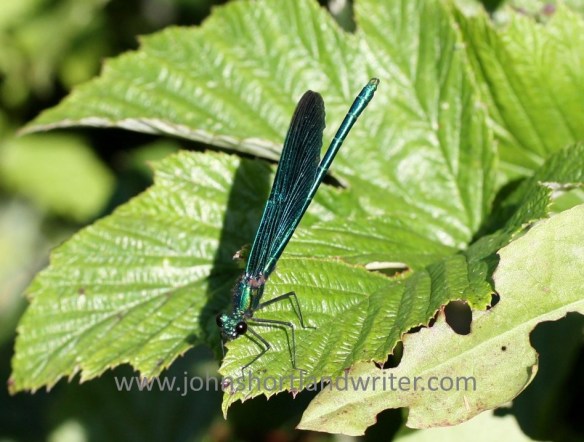
As a boy, brought up close to the River Thames, the hollow stems of the common reed were a regular source of pleasure for the soft pithy centre could be drawn out by pulling the stems through clenched teeth. Close to my present home there is also a small reedbed. These tall reeds have something to offer every one of the other senses too: sight – the pleasure of watching petrol-blue damsel-flies sunbathing on the stems; hearing – as they sway and rustle with the slightest breeze; touch – the coarseness of the leaves, a contrast to their smooth stems; smell – those of the river as it seeps around the roots, a heady mix of wet mud and wet greenery.

Only the male of the Beautiful Demoiselle damsel-fly has petrol-blue wings & body

So, within the bounds and restraints of the Covid-19 advice when out on your daily exercise, remove the earphones, place the phone in your pocket and use, really use, every one of your senses. Not only will you notice more, you will wonder how you never managed to notice them before. Stay safe, stay alert and take this unique opportunity to discover a new world on your doorstep.

Finally, one word of warning. Only try tasting wild plants if you are confident they have been identified correctly. If you decide to forage, do so responsibly and only pick a few leaves at a time. Make sure that all plants for consumption are free of pesticides and other contaminants, especially those growing in or near water.


Having a Blackthorn Winter?


The first trees are beginning to bloom in the Cotswolds; in a few days’ they will be billowing clouds of white blossom.  My father, a countryman through and through, would always mark the occasion by repeating the old English warning of a coming “blackthorn winter” and “the cold blow” ahead.  But was he correct?

h-about-1964-2-copyright

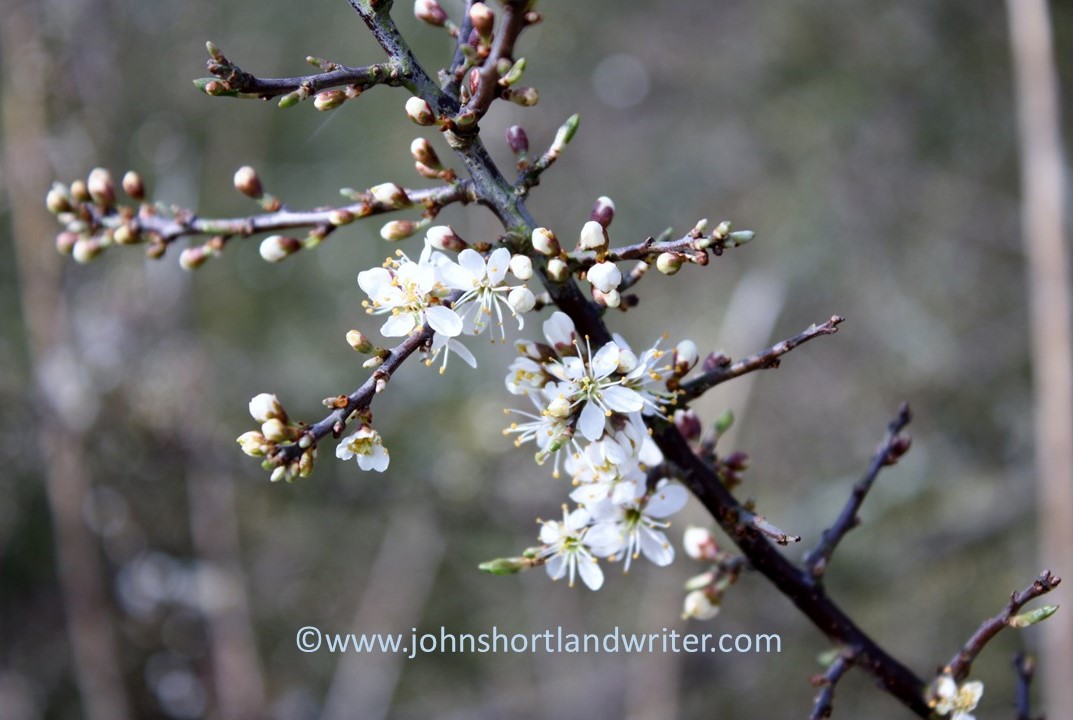
The blackthorn (Prunus spinosa), also commonly known as sloe, is frequently used as a hedging plant where its tangled and viciously thorny branches make an impenetrable, stock-proof barrier.  When left untrimmed it grows into a small tree.blackthorn-blossoms-crowd-an-old-cotswold-green-lane-copyright

I haven’t found a referral to the earliest date for a blackthorn winter but it almost certainly goes back centuries for the blackthorn is a ‘magick’ tree and often used in witchcraft.  But can it really dictate the weather?  Common sense says ‘no’ unless, of course you believe in magick.

blackthorn-3-copyright

Pretty flowers hide vicious thorns

There appears to be a problem with my father’s and others belief in the blackthorn winter.  The tree that blooms first and so often referred to is not blackthorn but the cherry plum, another Prunus – Prunus cerasifera.  Sometimes known as the Myrobalan Plum, it is also found in hedgerows and when allowed to grow to full height is often covered in red or golden cherry-sized, edible fruits.  It was introduced from southern Europe about three hundred years ago.

cherry-plum-copyright

Prunus cerasifera, the Cherry or Myrobalan Plum

So, blackthorn or cherry plum?  For the time being we will be having a “cherry plum winter”.  The sloe will blossom in about three weeks’ time when we will probably have the blackthorn winter too for one thing is proven: in England, we are far more likely to have a spell of wintry weather now than we ever are in December.  Either way, let us hope that it is a good year for both trees for then we can look forward to cherry plum pies washed down with a nice glass of sloe gin.

cherry-plums-copyright

Cherry Plums

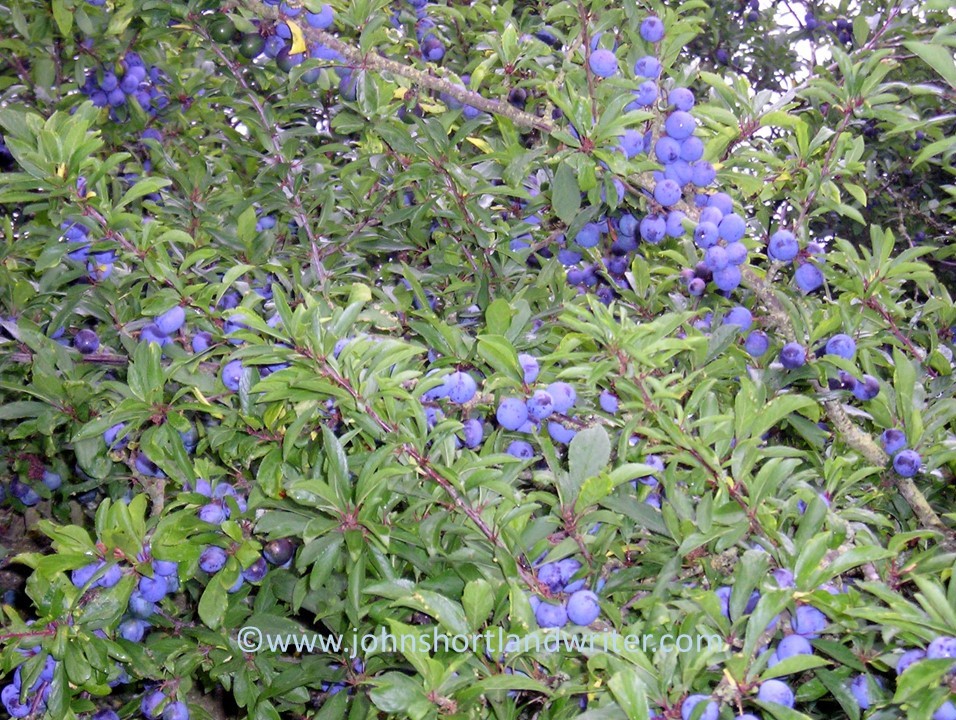
blackthorn-sloes-copyright

Sloe Berries

Footnote:  according to the British Meteorological Office, the term “blackthorn winter” originated in the Thames Valley, the birthplace of my father and where I was brought up.  It will be interesting to know many of you use the term and where in the world you are located.

The Year in Review: July – December 2016

The second half of 2016 went just as quickly, if not quicker than the first.  No sooner have the nights drawn out than Midsummer Day is upon us and, gradually at first – and then rapidly – the nights close in on us.  In England our really warm summer weather does not arrive before July and with luck extends well into October.  In bad years it never really arrives at all. blewbury-manor-copyright

In July I travelled just about as far west as is possible in the UK for a few days holiday in Cornwall.  Cornwall is a land of contrasts with picturesque, small fishing villages, spectacular cliff walks and golden, sandy beaches.  Inland, the scenery is bleak moorland with granite outcrops and the houses  appear to squat low in the landscape to shelter from the gales that sweep in off the Atlantic.  Luckily, the evening we went to the Minack Theatre was warm with only the lightest of sea breezes.  Lucky because the theatre is carved into the cliff face.  The idea of Rowena Cade, in the 1930s she and her gardener spent a winter moving rocks and to create a stage and seating.  This Herculean effort was more than worthwhile, it was… well, click here to see for yourself.169   copyright172   copyright

August saw me on the other side of Atlantic Ocean in the American State of Arizona visiting another cliff-face achievement, the Canyon de Chelly.  The houses of the Anasazi people were carved out of the sheer rock face hundreds of years ago and can only be reached by precarious toeholds.  Today it is the home of the Navajo.  The canyon is unique amongst the National Parks of America for it is the only one that is… check this link to find out what.Canyon de Chelly (3)   copyrightCanyon de Chelly (5)   copyright

There is nothing like a bit of bragging and September saw me unashamedly showing off about the small lake I created some years back.  These days, it looks as if it has been there forever and is home to numerous wild duck, fish and small mammals.  Originally a rubbish dump click here to see how it has been transformed.pond-build-3-copyrightpond-2-copyright

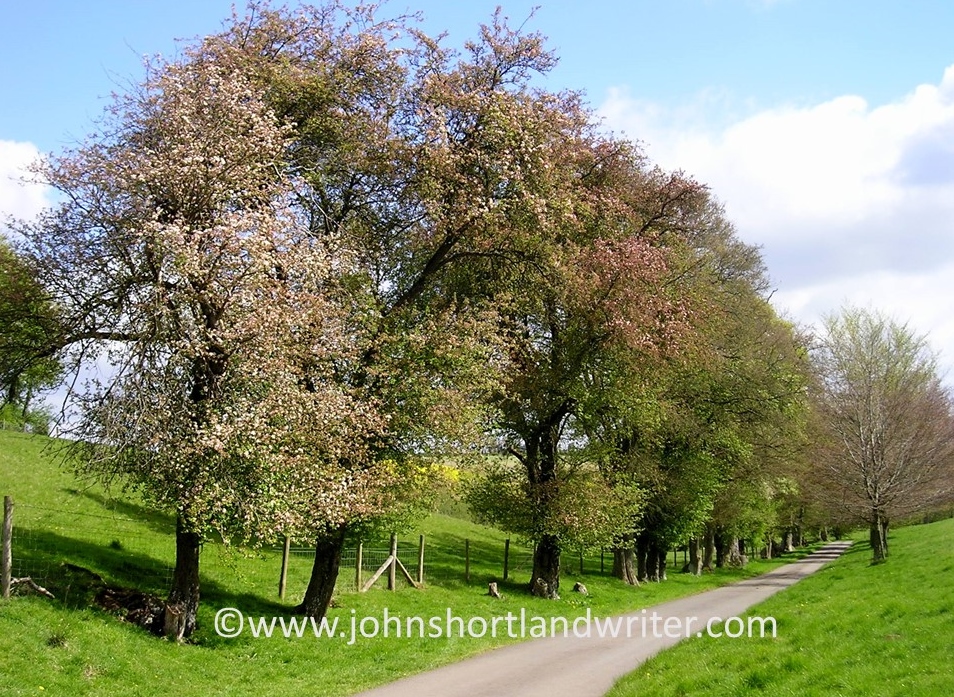
I am always telling you how beautiful our Cotswold Hills are and how lucky I am to live in the middle of the secret valley, away from traffic and houses.  In October, I took you all on a virtual tour of the valley.  The crab-apple tree lined lane leads to the wonderfully winding river that features on the blog header. After a mile of visual treats the lane narrows even more as it passes our tiny, stone cottage.  Occasionally, there is a traffic jam – but rarely by cars.  To take the tour again click here.secret-valley-2-copyrightcotswold-traffic-jam-copyright

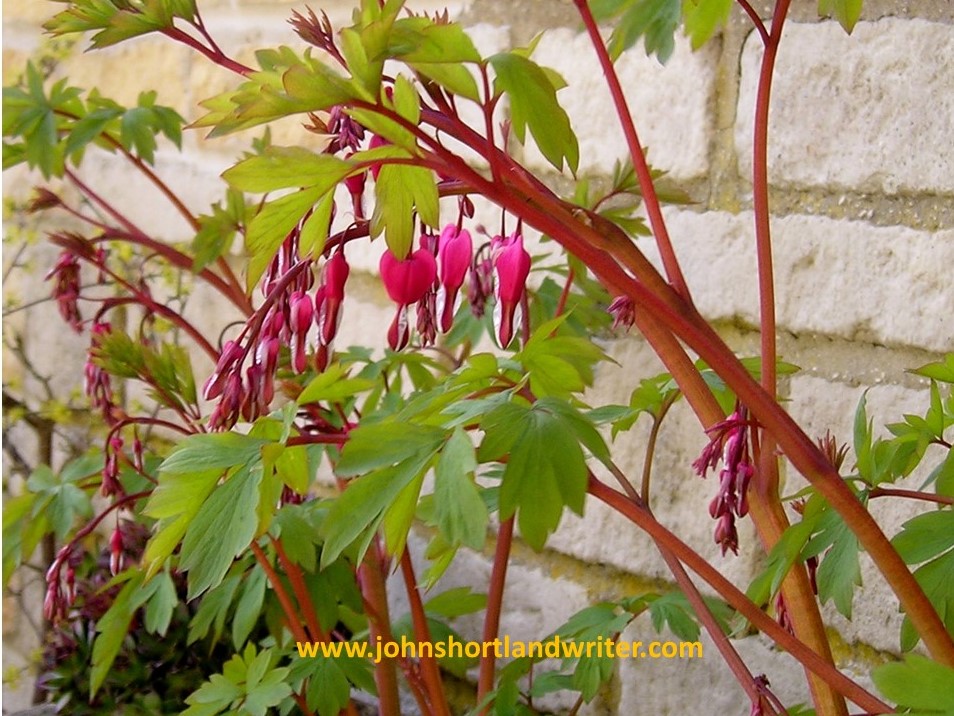
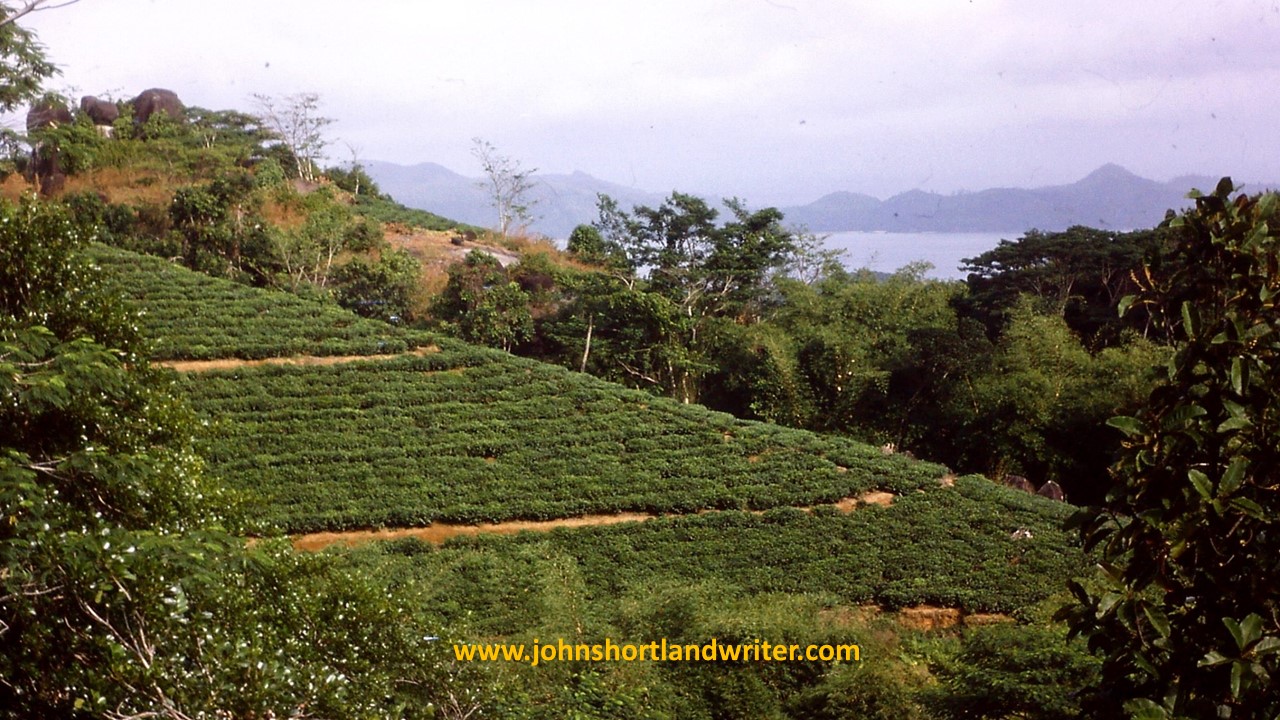
In November we went treasure hunting – looking for fortune in the garden.  We didn’t have to dig it all up, only walk around it for we were searching for plants originating in China and Japan.  The little-known story of how Robert Fortune, a 19th century dour Scotsman travelled to the for side of the world to fight with pirates before smuggling out what has become one of our most popular drinks is told here.dicentra-spectabilis-copyrighttea-plantation-copyright

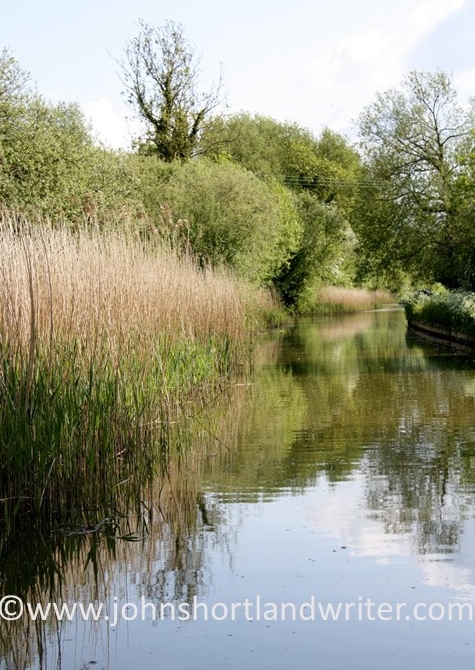
Travels  and ancient buildings in Sweden and the south of France, hidden Exmoor, and attracting butterflies to your garden all featured in December‘s review.  If that all sounds too exhausting, take a slow, slow canal longboat ride through the stunning scenery that can be found within a few miles of the university city of Oxford (here).133   copyright

2017 is seeing a lot of changes politically and culturally both here in Britain, in the USA and elsewhere in the world.  Some can’t wait for what will happen and others are dreading it.  Whichever ‘side’ you’re on, come and escape to Life in the English Cotswolds and the secret valley which will always be, hopefully, a little haven of peace.dorn-valley-copyright

Best wishes for 2017 and many thanks for your post -and future – support.

Respect Your Elders

Of all trees few can be held in as much contempt as our native elder, Sambucus nigra.  It grows almost anywhere and in such profusion that it is dismissed as a ‘weed’ and it is true that its habit of self-sowing and growing through treasured garden plants can be a nuisance.  Despite all of this, however, it is also one of the most useful of plants both in the wild and the shrub border.

This variegated form of Elder is very useful for brightening up a shady place
 
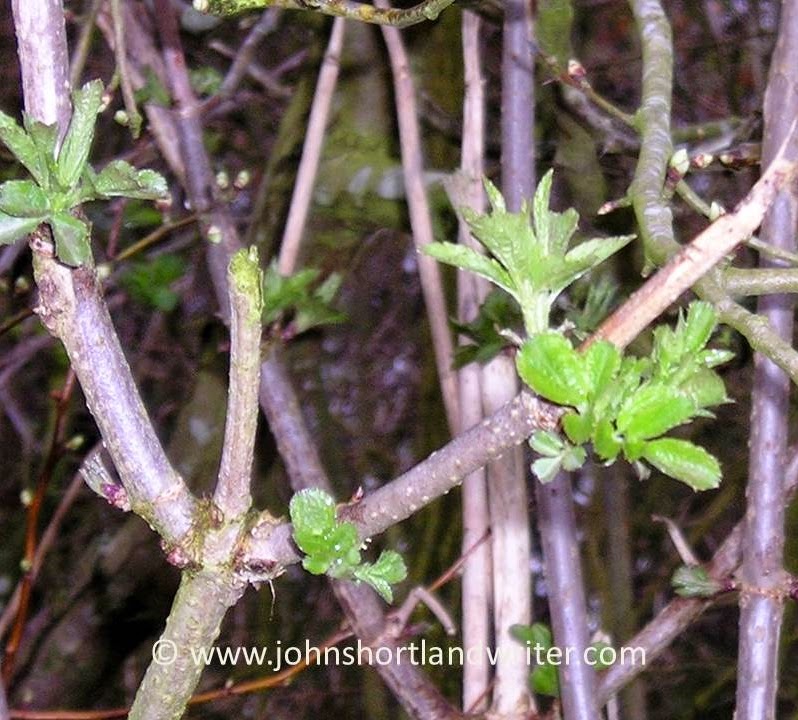
Search any hedgerow and the Elder can be found.  It is easily identified, even in mid-winter, for its bark is dull, dry and scaly, with prominent pairs of leaf buds; these are some of the earliest to open in the spring.  Young leaves can even be found during mild spells in the winter although these are replaced if damaged by frost.  Perhaps the simplest way to identify a leafless plant is to break off a stem for the centre is hollow and filled with whitish pith. Generations of country children hollow out these stems to create ‘cigarettes’ to smoke; in fact I can claim only to have smoked elder – and that stopped once a spark burnt the back of my throat!

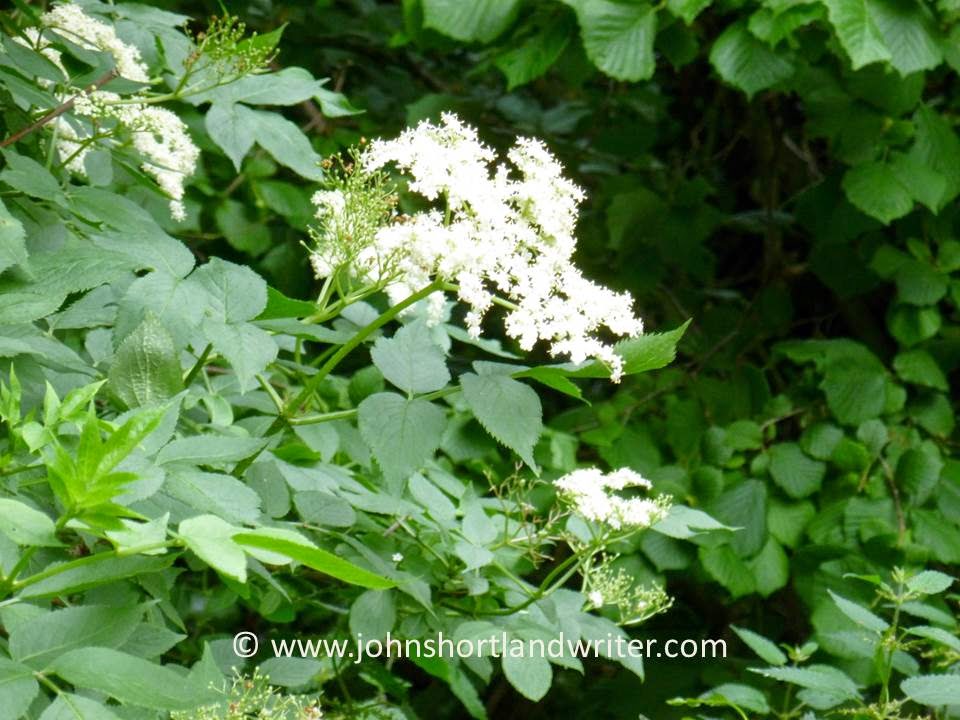
Perhaps the glory of Elder comes in spring when the trees burst into flower. Large, flat heads (corymbs), consisting of hundreds of tiny scented flowers smother the plants and for a short while the countryside carries their pungent odour.  These have traditionally been the first crop to be harvested, their flowers steeped in water to make Elderflower cordial or ‘champagne’, these days now sold commercially. Elderflowers can be used dried in herbal teas or, when fresh, swirled in a light batter and dropped into hot oil to make delicious and unusual fritters.  Adding the flowers to stewed gooseberries or when making jam is a very old method of counterbalancing the tartness of the fruit.
Within weeks the flowers which were held upright will have faded and drooped as berries form.  Even when green, streaks of colour hint of their ripeness to come.  By late summer, the clusters have turned almost black and make a welcome addition to fruit pies or, used on their own, in jam and wine making.
The medicinal uses for Elder are equally varied.  According to the herbalist Juliette de Bairacli Levy all parts of the plant can be used: roots for kidney problems; bark against epilepsy and the leaves, when mixed with geranium and garlic, to soothe eczema and rashes.  The flowers and berries are used for relief of coughs and colds and it has also been claimed that the flowers can restore blindness.  As with all herbal treatments caution and common sense should be used – I’m not brave enough to suggest that you try any of them out!
The dark berries  of the elder – the red ones are hawthorn
For a tree with so many uses that has been part of country lore for so long it is not surprising to find it has many names.  A widespread alternative is Judas Tree for tradition states that it was the Elder that Judas Iscariot hung himself from.  It is from a derivation of the name Judas that Jew’s Ears fungus which commonly grows on elder gets its common name.