An Arty Family?

Eighteen months ago I was contacted by a gallery in Cheltenham about their researching an artist for they had acquired four watercolours of London street scenes painted during a ten-year period from 1885.  They were by Edward Angell Roberts who had lived with Mary Ann Shortland, an ancestral cousin of mine.  Although they described themselves as husband and wife in official documents, Edward was already married to the exotically named Josephine Bartolozzi Vestry Anderson.

New Street, Spring Gardens
Edward Angell Roberts, 1885

Edward was born in Kennington in the English county of Surrey in1836.  His father was a tea merchant and aspiring gentleman which presumably he became for by the age of fifteen, Edward was being educated at Christ Church Hospital, a school for sons of clergy and gentlemen.  It was a good springboard for Edward for in 1855 he was promoted to Deputy-assistant to the Commissary of the Inland Revenue before proceeding to becoming Clerk to the War Office.  In his spare time, he painted.

Old Wooden Houses, The Strand
Edward Angell Roberts, 1887

The four watercolours show great artistic detail of places within a stone’s throw of the War Office, in London’s Pall Mall.  They are New Street, Spring Gardens (1885), Old Wooden Houses, The Strand (1887), Garden House, Clements Inn (1895) and Pump Court, Temple (1895). They have since been sold at auction to a buyer in the United States.

Garden House, Clements Inn
Edward Angell Roberts, 1897

Edward had married Josephine in 1858 and the census, three years later shows them living apart.  Whether that was a temporary separation is not known for shortly after they had two children, a girl in 1864 who died in infancy and a boy in 1866. However, by 1871 he was living with Mary Ann and Josephine and the son disappear from record.  It is thought that they may have moved to Ireland for the son reappears in the English 1901 census return and claimed to have spent time there.  As for Edward and Mary Ann, they never married (or had children) for in his will, Edward leaves his estate to Mary Ann Shortland, spinster.

Pump Court, Temple
Edward Angell Roberts, 1897

I began to wonder if we had other artists in the family for several of my cousins, my sister and my father were all artistic,  I always felt that the skill had passed me by until some kind person exclaimed that through my career as a garden designer,  I paint with flowers, a description I rather hold onto.  It is true that there are some similarities for a new garden is a blank canvas waiting to be given a backwash of green and then daubed with the colour shapes and textures of flowers.  Below is a rather poor quality photo of one of my early designs inspired by a Japanese Imari plate which was, I suppose, quite any arty approach to take!!

Garden design inspired by Japanese Imari Plate
John Shortland, 1999

Another ancestral cousin painted and illustrated books on the town of Rye.  Marian Eleanor Granville Bradley was the granddaughter of the Dean of Westminster Abbey, George Granville Bradley.  Mostly remembered for her line drawings, occasionally they or paintings of hers are available for sale at auction.  An only child, born in the United States, she returned to England sometime during the 1880s.  She never married and died in 1951.  Her pencil sketches of Rye appear very simple at first sight and, like Edward Angell Roberts, belie the attention to detail that is executed.  Interestingly, a couple of her close relatives are described as ‘oil and colour merchants’ so it seems that art provided a living for my family in more ways than one…

Ship and Anchor, Rye
Marion Eleanor Granville Bradley,1920

And finally, there is Uncle Les – not my uncle at all but (yet another) cousin of my father and, in the convention of the time, known to me as Uncle.  I only met Les the once for he died quite suddenly when I was young.  However, I did get to know his widow well, so it came as rather a surprise when I was sent this little pen and ink drawing of (I think) a house in Kingston-upon-Thames many years after her death. 

Edwardian House
Arthur Leslie Shortland, 1935

A few lines on Josephine.  With a name like hers, curiosity got the better of me and so enquiries were made and she turned out, as hoped, to be ‘interesting’.  She was a close relative of Madame Vestris, a famous, if not infamous actress, contralto opera singer and theatre manager.  Madame Vestris probably deserves a full article of her own!

Madame Vestris, c1831 [Wikipedia]

Family history research is always uncovering something fascinating, puzzling or new – I wonder what it will turn up next?

With thanks to Andy Shield of Brave Fine Art , Cheltenham www.bravefineart.com }for sending me copies of the four paintings

The Beauchamp Chapel – a medieval masterpiece

Just occasionally nothing prepares you for a visual and emotional onslaught however much you might have read or seen images of it.  I had been planning my first visit to Warwick for a few years.  Perhaps it is because it is so close to home – about an hour’s drive north from my part of the Cotswolds – that it had taken me so long to actually go there for, when a place is on your doorstep, you feel you can go at any time and so put it off for another day.  As it happened, I finally arrived in the town on the first warm, sunny day of spring when the ancient black and white timbered buildings really stood out against the blue sky.

Warwick is even older than those medieval buildings for it has been inhabited since the 5th century.  However, it came to prominence when William the Conqueror built Warwick Castle in AD1068.  Today, it is possible to visit the castle and even stay there but this was not the purpose of my visit.  I had come to see a later building – the Collegiate Chapel of St Mary, most of which is only a mere three hundred years old.  A great fire had swept through the town in 1694 destroying much of it as well as the greater part of the original church.  Miraculously, the fire was extinguished saving the chancel and the Beauchamp Chapel built during the 14th and 15th centuries.  The crypt is all that is left of an even earlier church built over 900 years ago.

The Collegiate Church of St Mary, Warwick
The 900 year-old crypt – all that is left from the earlier church

I had only been standing in the church a few moments when the organ began to play; the timing could not have been better for it set the mood for the whole visit. Lovely as it was, I moved on quite quickly to the chancel dominated by the tomb and effigies of Thomas Beauchamp and Katherine Mortimer.  Both died within a few months of one another in 1369 and their effigies are unusual for they lie there holding hands, signifying not just their undying love but also their equal status for Katherine had brought land and wealth to the marriage.  The chancel is also unique for its light and graceful ‘skeleton rib’ vaulted roof simply adorned with the Beauchamp coat of arms clasped by angels.

The tomb of Thomas Beauchamp & Katherine Mortimer who died in 1369 – my ancestral grandparents
The ‘skeleton rib’ vaulting & Beauchamp crest held by an angel

From the chancel it is possible to glimpse into the Beauchamp Chapel where Thomas’ grandson Richard’s tomb stands.  I purposely avoided doing so for I wanted to enter the chapel and to see it for the first time in its full glory.  As I mentioned in this blog post’s opening sentence, I was completely unprepared for the visual feast that stood before me.  The colour, the light, the opulence, the sun-kissed, bronzed effigy of Richard lying there centre stage was pure theatre – just the effect Richard had planned when he left detailed instructions for the building of the chapel all those centuries earlier.  With the organ still playing behind me, I stood in the entrance transfixed, feeling slightly silly for being so moved before descending the steps to explore further. I had finally come to see the burial place of my ancestral grandfather.

Richard’s dramatic tomb lying in the Beauchamp Chapel

A short (but necessary!) history of Richard’s life: Richard Beauchamp was born in England in early 1382, the son of the 12th Earl of Warwick.  His godfather was King Richard II although within a very few years Richard’s father, also a Thomas, had fallen out of favour and imprisoned in the Tower of London for treason.  Fortunately for him at least, the King was deposed and replaced on the throne by Henry IV; Thomas was released and his titles and land restored.  During the King’s coronation in 1399, Richard was knighted and later succeeded to the title of 13th Earl of Warwick at his father’s death in 1401.  When Henry V succeeded to the throne in 1413 Richard became one of the new King’s most trusted advisers and given responsibility for the education of his young son, later to become Henry VI.  Richard then spent much of his time in France, part of which had been annexed during the Hundred Years War and he died there in Rouen on 30th April 1439. 

Richard’s armour is captured in fine detail
The bear and the griffin are Beauchamp heraldic emblems

Richard’s body was brought back to England and buried in a temporary grave in the church, for in his Will of 1437 he leaves detailed instructions for the construction of the new chapel to house his tomb.  No expense was to be spared for he wanted it to become one of the finest in England, in which he more than succeeded.  The creation of the chapel as one complete and new entity, using only the finest materials and highest quality craftsmanship makes it unique – all the more so, for its surviving almost unscathed by the later Reformation, attempted destruction during the Civil War, as well as the great fire. He was finally laid to rest there in 1475.

The Great Fire of 1694 stopped behind the chapel wall destroying the lower part of the wall paintings

The tomb is, of course, the central feature of the chapel as well as its purpose. Richard lies on an intricately carved and highly coloured marble chest set with fourteen gilded ‘weepers’, namely his children and their spouses. There had been a dispute after Richard’s death within the family over inheritance for Richard had been married twice with children from each. It was Ann that finally inherited the title and estates, a daughter from the second marriage (my ancestor was Eleanor, the second daughter from the first marriage) and so it was she that oversaw the completion of the chapel. Richard’s effigy is of a younger man, his eyes open, his hands outreaching, and dressed in full armour, showing the world that he is ready to enter the Kingdom of Heaven. He gazes upon the stained glass that confirms this story.

Richard’s daughters, some of the fourteen ‘weepers’ that surround the tomb
Ann, who became the 16th Countess of Warwick in thoughtful pose

The stained glass is another miracle of survival for it is mostly complete. During the English Civil War (mid-1600s) many of the country’s churches and religious icons were damaged or destroyed with the Protestant dogma that followed. The Beauchamp Chapel’s glass was spared much of this with only its lower parts damaged. Although it cannot be seen in my photograph, it was hastily repaired – perhaps a little too hastily for Richard’s head and hands were replaced with those of a woman. The imagery depicts saints and angels in glowing colours, produced at huge expense. Musicians are shown with their instruments and a banner of sheet music runs across the entire window. The notations can be clearly seen and, as instructed by Richard, this is sung in the chapel each September with prayers said for his soul, a practice of huge significance in medieval times. There is a short YouTube video of the choir singing this original music in the chapel, as well as a brief history of the windows which can be found here.

Richard, reborn, raises his arms towards Heaven
Section of the East Window surrounded by statues of saints

Within the chapel are many other delights although none overshadow Richard. Tombs of his descendants, the Dudleys (through his eldest daughter Margaret), were placed there. They are resplendent in their own right but do not form a part of this blog. Even the prayer stalls, quite modest compared to other features of the chapel deserve close attention with their heraldic emblems carved into their timbers; they are fine in quality as well as detail. They can more briefly be shown by photos but deserve inclusion.

The tomb of Robert Dudley and Lettice Knollys
Beautifully carved prayer stalls, now almost 600 years old

My family connection to the Beauchamps. When you travel back through so many centuries from the present day you are bound to uncover many ancestral grandparents. The problem is the discovering of them for in most families, as in the rest of mine, they lived very ordinary lives that were not well recorded if at all. Just occasionally, it is possible to find one that has risen to fame and this is the case with my paternal grandmother’s family. Granny Shortland’s relatives had been well-known up to the early-1900s for they held high positions within the Church of England and Government. A friend of Tennyson, the Reverend George Bradley had risen to become the Dean of Westminster Abbey. His brothers and sisters had also risen to fame in their spheres of work. These connections, known as ‘gateway ancestors’ enabled the research to progress relatively easily through time to Thomas Bradley – my 8th great-grandfather – who had been Chaplain to King Charles I and later, after the restoration of the monarchy, Charles II. From there the connections to the Beauchamps and even further back are well-researched by historians. It had always been whispered that Granny Shortland had married ‘beneath herself’ – now I know the reasons why!

Granny Nellie Shortland c 1945

Visiting: The Collegiate Church of St Mary and The Beauchamp Chapel is open to visitors free of charge. Guided tours (which are well worth doing) are available at a modest cost, as is a climb to the top of the tower to view the town and beyond. Details can be found on their website here.

Warwick Castle is impressive and a popular attraction. It was the home of the Beauchamps but was built in the 11th century by command of William the Conqueror. It is possible to stay in the castle for short breaks. More details can be found here

There is a useful website (click here) if you are planning a visit to Warwick, which is situated a few miles south of the city of Birmingham and north-west of London.

2024: A Year in Review – part 1

As we enter the new year it’s always a good time to reflect on the past twelve months as well as to look forward to what 2025 may bring. For me, 2024 has been a busy year. I remember many years ago an ‘old boy’ telling me that when you reach the age of sixty, life is downhill all the way. I was in my thirties at the time and so believed him. I’m now in my early seventies and I can’t say that I agree with his pessimism. Funnily enough, he lived well into his nineties and, for most of that time, enjoyed rude health so he proved himself wrong too! The only way to tackle ageing, I’ve decided, is to embrace its positive aspects – no mortgage, wisdom (ha-ha!) and more time to do the things that matter to you. Of course, good health is important and maintaining balance and staying active helps no end. One of the reasons why I’ve not retired completely.

John Shortland, summer 2024

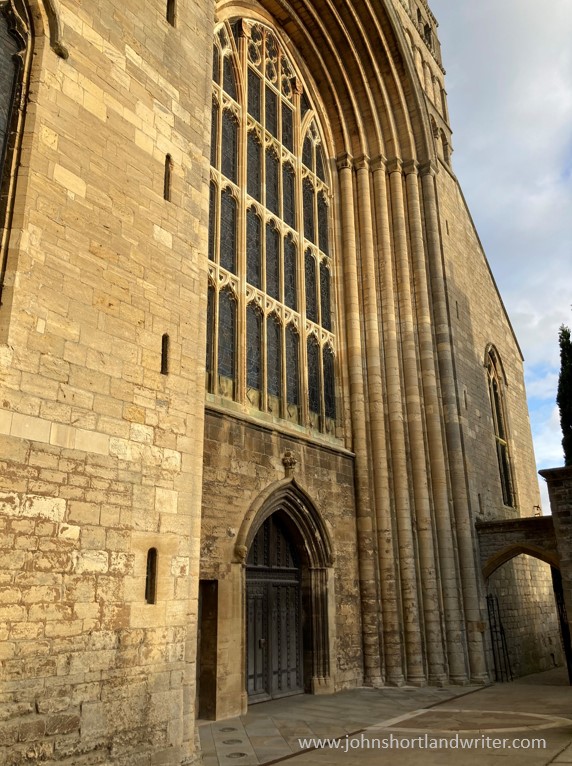
Tewkesbury, a town in Gloucestershire on the River Severn – the UK’s longest river – is just a few miles from the edge of the Cotswolds. It’s an ancient town that I have driven through dozens of times but early in the year I made the effort to actually stop and explore its narrow streets and abbey church. I hadn’t realised that when entering the church I would be staring at a suspended globe which, when standing 211 metres away from it, is the exact size and view of Planet Earth you would see if standing on the moon. When I first saw it ‘suitable’ music was being played but it was only after that had stopped that I found the exhibit strangely moving as it rotated slowly in total silence. That’s another thing I’ve noticed as I’ve grown older – how much I enjoy silence! The church is well worth visiting for it is now almost one thousand years since it was built and is one of the finest examples of early Norman architecture in Britain. Unable to visit? Then click on the link here to see lots of photos.

The abbey church looms over the ancient houses and narrow streets of Tewkesbury
Planet Earth, mysteriously beautiful

In March, we travelled north to the county of Yorkshire to watch a friend take part in the oldest horse race in the country. The Kiplingcotes Derby has been run annually since 1519. Tradition sys that if it ever stops taking place it will never happen again so all through the Covid restrictions only one horse took part! For this race, the 505th, dozens of riders took part for it is a horse race like no other: no finely maintained racecourse but a series of roads, lanes, field margins and tracks, a real test of endurance for both horse and rider. Our friend, who had never raced before was taking part to raise money in support of the local hospice. She reached the finishing post in good time and raised over ten thousand pounds in memory of a close friend. The race has one other completely bizarre quirk which makes it unique in the world of horse racing – to find out what that is you’ll need to click on this link here!

The oldest, continuously-run horse race in the UK
Safely past the winning post!

Later, in early summer we returned to Yorkshire for a week’s holiday spent in the pretty village of Austwick. We had planned to spend our time walking for it is excellent hiking country. However, my partner was nursing a broken foot and, later, during a hill walk on my own there, I hurt my knee badly so we were both hobbling about instead (what was I saying about staying active?!) There is always a positive outcome to everything, I find, and so we explored by car instead where we discovered the Courtyard Dairy. To misquote Paul Whitehouse, “if you like cheese, you’ll like these” for we’d stumbled across one of the top, award-winning artisan cheese makers in the country. With a restaurant, small museum, ice-cream and wine shops as well as a huge selection of cheeses, we were in our element. For lots of photos of the trip – and not just of blocks of cheese, click here.

The Courtyard Dairy – one of England’s finest artisan cheese shops
There are beautiful walks around the Yorkshire village of Austwick

I have been very fortunate in not just living in a beautiful part of the country but also being able to make my living from being in the midst of it. However, that hasn’t always been the case for before I embarked on my horticultural career I spent twenty years in the world of retail fashions. When I left school I spent some months on a sheep farm on Exmoor – the remote, hill country, now a National Park, in the West Country. That short time farming changed my life for I met some wonderful and inspirational people there who left me with a yearning for the outdoor life, However, I was dragged away by my parents to work in the small department store which had been central to my family for the best part of a hundred years. Fortunately, I had a happy time there but the desire to be spending my days outdoors never left me. This spring it was thirty years since I sold the business to follow my dream and so it seemed a good time to reflect on those retailing years.

How the family store began in 1904
The family store in 1994 when it was sold

A few months later the blog post (link here) had developed into a full-blown illustrated talk to over seventy people followed by press interviews and a printed history of the store which had been started by my great-grandfather. I am delighted that the story of the family’s endeavour has now been recorded for posterity. By complete coincidence, I was also contacted by Exmoor Magazine and my memories of farming at Brendon Barton have been included in an article on Dick and Lorna French who were the couple who welcomed me into their lives – and changing mine by doing so.

Recorded for posterity – the history of my family’s department store

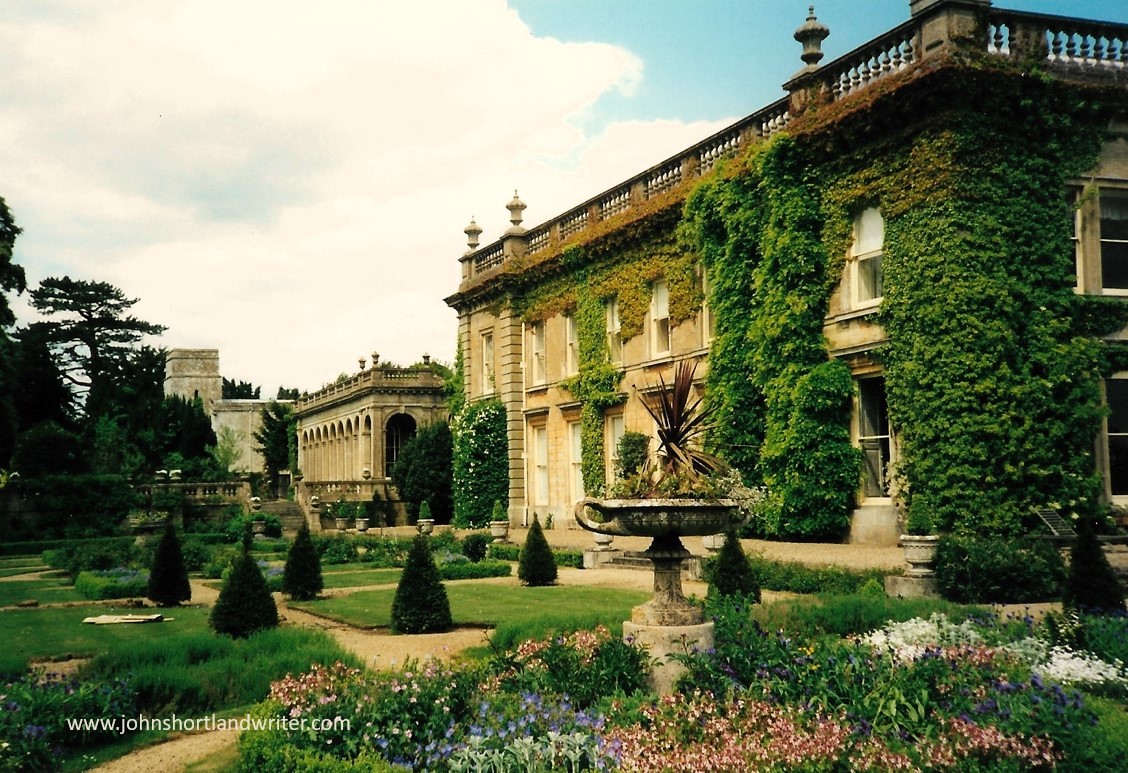
At the age of 42 I took myself off to study landscape and estate management for two years at agricultural college. It was a huge gamble and one that fortunately came off for I found employment as Head Gardener to the European Youth Parliament, an educational charity that brought teenagers from all over Europe to debate world affairs. With some Polish blood in me I liked the idea of being part of the organisation. Next, and still in England, I spent some happy years working for a delightful Swedish family – even after my role as Head Gardener had ended I maintained contact with them as Consultant overseeing projects such as the creation of a lake and an arboretum. My next move was to the Cotswolds to manage an historic garden, Kiddington Hall, designed by the architect who had created the Houses of Parliament. It was after that, that I decided to go freelance which culminated in the career in designing and creating gardens as well as the commission to write the gardening book.

The historic gardens at Kiddington Hall

Little did I think, when I began college that my career would include a stint at the Chelsea Flower Show, Channel 4 Television, creating a new literary festival and a study tour of Hungary. My latest – and final – garden project has been the most exciting to date. How fortunate have I been?! As before, the press picked up on the thirty year career change and a double-page spread in the Bucks Free Press newspaper followed. To read more about the gardens I’ve created, or just to enjoy the photos, click on the link here.

The newspaper article

Related links/websites

Tewkesbury Abbey Church
Gaia
The Courtyard Dairy, Settle, Yorkshire
Yorkshire Dales National Park
Exmoor Magazine
Exmoor National Park
John Shortland
Berkshire College of Agriculture
European Youth Parliament

Viewing Planet Earth

I think it would be fair to say that the chances of my viewing Earth from the Moon is so improbable that I have never even considered it. That changed when, with an hour to spare en route elsewhere, I decided to explore the Abbey Church of Tewkesbury, little knowing that I would leave having had an out-of-space experience.

Tewkesbury Abbey

The name Tewkesbury Abbey, as it is usually called, is really a misnomer for the church has been the Parish Church of the Gloucestershire town of Tewkesbury for centuries. When, in 1087, Robert Fitzhamon was gifted Tewkesbury by his cousin William the Conqueror, there had already been a monastery on the site for four hundred years. However, in 1102 the building of the present church commenced, its stone coming from Caen in Normandy, France and floated up the River Severn which passes just yards from the door. For the next four hundred years, as part of the Benedictine monastery, it really was Tewkesbury Abbey.

Ancient buildings line the streets that lead to Tewkesbury Abbey

I’ve driven through Tewkesbury dozens of times. It’s an interesting town with some beautiful old buildings and I’d always intended to stop and explore. With limited time, the town would have to wait for another day. I entered the Abbey church expecting to be overawed by it for it for several reasons: it is now almost a thousand years old, it is one of the finest Norman buildings in England, it has the largest Romanesque cross-tower in Europe and contains more medieval monuments than any other church apart from Westminster Abbey in London. I hadn’t however expected to be be confronted, upon entering, by a large, hanging globe – our Planet Earth.

Planet Earth as seen from the Moon

Rotating slowly, the seven metre diameter Earth sculpture is as seen from the Moon. As Luke Jerram, who created this Gaia exhibit states, “man has been gazing at the moon for Millenia but it was only in 1972, with the Apollo 17 mission, that man was able to see our planet floating through space – a sight that changed our perception of Earth forever.” When standing 211 metres away from the globe, viewers see the Earth to scale, exactly as it was viewed from the Moon.

The Abbey, of course, has many wonders of its own to be viewed. For me, an unexpected delight was the chantry chapel built as a memorial to Isabella, Countess of Warwick and her two husbands, Richard Beauchamp, Earl of Worcester and, later, (another) Richard Beauchamp, Earl of Warwick. Erected in 1430, Isabella’s first husband was killed during the Battle of Mieux and she died in 1439. It was her second husband, the Earl of Warwick, that excited me the most. For his first marriage to Elizabeth de Berkeley (who died in 1422) is part of a long line that I can trace back to in my family tree: Richard and Elizabeth were my 15x great-grandparents. Over the generations, the women in my ancestry have often been rebellious and married against their parent’s wishes (see A Rebel in the Family for an example) – hence the fact that I am just a plain old commoner! Grandfather Richard commissioned another, more splendid brass tomb for himself in Warwick – another place on my list of ‘must visits’.

The Beauchamp Chantry Chapel
Bronze effigy of Richard Beauchamp who died in 1439 [Wikipedia: Robin Stevenson]

So what caused the Abbey Church to become just a Parish Church? It was, of course, due to the desire of Henry VIII to divorce and remarry brought about his separation from the Church of Rome. His subsequent Dissolution of the Monasteries swept away the buildings and created the spectacular ruins that we find dotted around the English countryside today. A similar fate would have happened to the church in Tewkesbury if it had not been for the argument, fortunately won, that to demolish the church would leave town without a place of worship. How fortunate for us today, for the architecture, history and splendour of the building makes it an almost unique example of early Norman ecclesiastical buildings.

The tall Norman arch is unmatched for size in England

Tewkesbury, as has been stated, is built along the banks of the River Severn, England’s longest river which is subject to tidal bores and rapid changes in it’s flow height. As a result, the town is often flooded. Despite being built so close to the river, the floodwaters have only entered the church on two occasions, in 1760 and, more recently, in 2007. It is often shown in news features totally surrounded by the flood waters.

Modern stained glass at Tewkesbury Abbey

The Gaia exhibit has now ended at Tewkesbury. It is being shown as an ongoing exhibition in the UK at UCL, London; International Centre for Life, Newcastle; Dynamic Earth, Scotland. In Ireland: Trinity College, Dublin. In Canada: Canadian Museum of Nature, Ontario. American readers have the opportunity of seeing it in the USA at Houston Museum of Natural Sciences 12-28 April 2024.

To find our more about the Abbey church, its history and other topics in this blog follow the links below:
Tewkesbury Abbey
Gaia / Luke Jerram Isabel, Countess of Warwick Dissolution of the Monasteries


Discovering the Five Senses in Lockdown

It sometimes takes a crisis to make us re-evaluate what is of importance in our lives and the present one of Coronavirus/Corvid-19 surely has to be the greatest that we will collectively face. Now, several weeks into lockdown we have all been developing new patterns to our daily regime, one of which may well be taking more exercise. Never before have we placed so much value on fresh air and being able to walk freely whether it be in our parks, gardens or open countryside.

Marlow watermark

                           Riverside path, Higginson Park, Marlow (before social distancing).                                 The river is the River Thames in Buckinghamshire

Living where I do in the Cotswolds surrounded by fields and with woodlands and the river close by it is relatively easy for me to enjoy the open space. For others able to take advantage of their enforced free time, it may involve a longer walk and I have certainly noticed an increase in the numbers of walkers and cyclists here in the valley. I have also noticed that for many of them one aspect of their lives hasn’t changed: as they walk their eyes are glued to the screen of their mobiles and headphones are clamped to their ears, seemingly unaware of their surroundings. It has made me think all the more of our five senses and how we use (or should use) each one of them when out exercising.

Nr Fingest copyright

Cycling in the Chiltern Hills

SIGHT For those of us blessed with the gift of vision, perhaps sight is the most important sense we use and perhaps the one we most take for granted.  Without it, it is still possible to enjoy one’s surroundings for the other senses become heightened but I doubt if anyone would deny the pleasure of seeing the beauty that surrounds us on our daily walks. Even within cities there is much nature to be enjoyed although I admit that sometimes it has to be sought with more vigour and awareness.
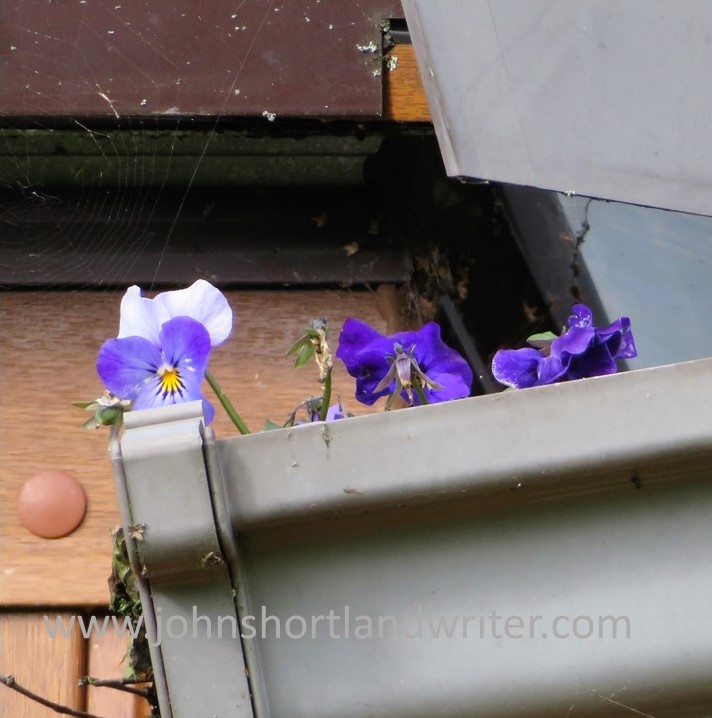
Viola watermark

Look everywhere – self-sown violas peep out from overhead guttering!

At this time of year, more than any other season, there is much to see. Tight leaf buds unfurl into an explosion of vivid green foliage, iridescent wherever sunlight filters through; young ducklings tumbling into the park pond to take their first swim. But it isn’t just the natural world to be seen anew, there are other things too. Although it had been there for more than a hundred and forty years (and I’d walked past it very day for twenty) the date scratched into the stone on this wall had gone unnoticed.

Date stone watermark

Who scratched this date into the old stone wall and why?

HEARING Along with sight the second most important sense we use on our daily amble. Apart from the glory of birdsong there are other sounds that bombard us when out walking. The wind flurry that makes the catkins tremble and shed their pollen, the stronger breeze that make the twigs and branches clatter gently against one another. Then there’s the rustle in the undergrowth. Stop and wait silently and with patience you may be rewarded by the sight of a little field mouse going about its daily chores or a rabbit venturing out to feed.

Field Mouse watermark

patience was rewarded when this little field mouse ventured into the open

Altamont Gardens (8) watermark

… and also this rabbit

The sound of the river alters constantly. The smooth, barely audible glide of the water changes to a tinkling of soft musical sounds, its flow interrupted by a fallen branch. A few yards further downstream they rise to a crescendo as they crash and tumble over the old millrace before returning to silence as the flow stills in the calm of the millpond.
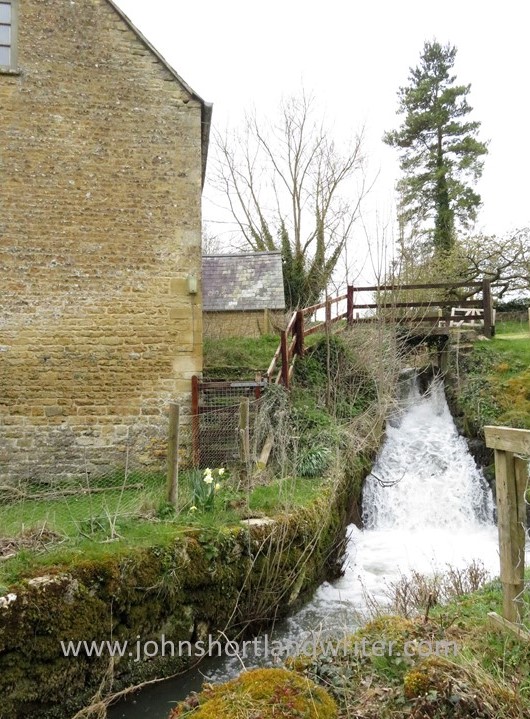
Radford Mill (1) watermark

The old millrace 

Radford Mill watermark

the calm of the millpond

TOUCH   In the present crisis we are sensibly being discouraged from touching things unnecessarily. Out on walks perhaps care may be advisable when opening gates or climbing stiles but, if you do, take a moment to think about what you feel. Heed the cold steel of the metal five-bar gate and the way it slowly warms beneath your hand; feel the rough timbers of a stile worn smooth from much use over the years. Of less concern health-wise – and all the more pleasurable for that – become aware of the softness of new horse chestnut leaves; later in the year they will become as harsh as sandpaper. Run your fingers across the twisted, grooved bark of the sweet chestnut tree and stroke the furry softness of the aptly named ‘Lamb’s Ears’, the favourite garden herbaceous plant Stachys byzantina.

Sweet Chestnut 4 watermark

The deeply grooved bark of the Sweet Chestnut tree

Stachys byzantina  Lamb’s Ears

SMELL   The scent of spring is everywhere at the moment and to be delighted in. However, the sense of smell is also a powerful trigger of long-forgotten memories. In a few weeks’ time the sweet scent of drying hay in the meadows may recall childhood farm holidays but for now there is the unique smell of new-mown lawns. Both start off as freshly cut grass yet their scent is so surprisingly different. Likewise, compare the subtly differing fragrance of apple and cherry blossom, both in their full-blown glory right now.
Drying hay before baling

The smell of freshly-mown grass…

Without even leaving home, squeeze the leaves of the herbs on the kitchen sill and notice their variation in scent, their colours and textures too. Early morn in the woodland, especially after warm rain, the delicate perfume of bluebells quickly disappears as the sun becomes stronger. Half-close your eyes and glory in their colour, in the silence and in their perfume and leave all cares behind you – if only for a while.

discover the different textures & scents of herbs

The vivid greens & blues of an English beechwood in spring

In town, the scents are also there just waiting to be noticed. Rain falling on roads and pavements or scorched by hot sun both produce delightfully tarry smells, one mild, the other strong. In the formal beds of the local park flowering bulbs stand in regimental rows; each have a unique scent which rises in the air to mingle with the vanilla fragrance of wallflowers. The wallflowers, their dull green foliage barely noticeable throughout the winter, now shout out the arrival of spring through the colours of their flowers of brick red, orange and yellow.

Tulips & wallflowers – a favourite park bedding combination

TASTE   In shaded places where the soil stays moist you may be greeted – even before you arrive – by the pungent scent of wild garlic. A prolific carpeter of the woodland floor its leaves and flowers make a useful ingredient to spring salads. Wild garlic or Ramsons to give it it’s country name, is fickle where it will grow. In some places that would seem suitable, not a single plant can be found. A less common member of the onion family to be found in the wild are the chives of our gardens, they grow along road edges and field boundaries locally. It is thought that they were spread by the old drovers of centuries ago so that they could harvest them along the way to liven up a bland meal. There is no doubting its identification, disturb the tubular green leaves and the familiar scent is immediately released.

Ramsons grow in damp, shaded places

It is not only the onion family that can be nibbled en route. Richard Mabey in his book Food for Free, published many years before foraging became a ‘craze’, suggests nibbling on the half-open buds of hawthorn. Many a country child has done so over countless generations and perhaps that is how they got their old name of Bread and Cheese. To me, they only have a slightly nutty taste and texture.

Hawthorn leaf buds are not really worth eating!

As a boy, brought up close to the River Thames, the hollow stems of the common reed were a regular source of pleasure for the soft pithy centre could be drawn out by pulling the stems through clenched teeth. Close to my present home there is also a small reedbed. These tall reeds have something to offer every one of the other senses too: sight – the pleasure of watching petrol-blue damsel-flies sunbathing on the stems; hearing – as they sway and rustle with the slightest breeze; touch – the coarseness of the leaves, a contrast to their smooth stems; smell – those of the river as it seeps around the roots, a heady mix of wet mud and wet greenery.
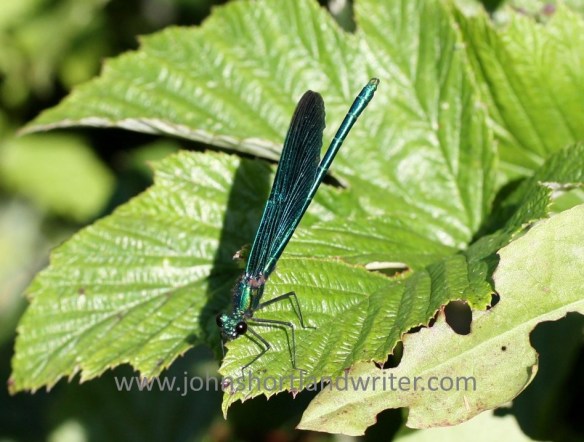
Only the male of the Beautiful Demoiselle damsel-fly has petrol-blue wings & body

So, within the bounds and restraints of the Covid-19 advice when out on your daily exercise, remove the earphones, place the phone in your pocket and use, really use, every one of your senses. Not only will you notice more, you will wonder how you never managed to notice them before. Stay safe, stay alert and take this unique opportunity to discover a new world on your doorstep.

Finally, one word of warning. Only try tasting wild plants if you are confident they have been identified correctly. If you decide to forage, do so responsibly and only pick a few leaves at a time. Make sure that all plants for consumption are free of pesticides and other contaminants, especially those growing in or near water.



Conceived on Exmoor?

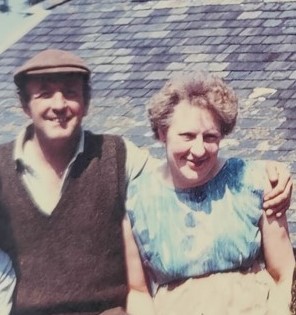
There used to be a standing joke between my mother and I that I must have been conceived on Exmoor as it has such a magnetic hold on me.  My parents had honeymooned there, staying at Ye Olde Cottage Inne at Barbrook in the mid-1940s – the fact that I was born in the early 50s and had an older sibling we conveniently overlooked.

Mum & H wedding photo watermark

Wedding Day

When I first came across Exmoor, in the summer of ‘68, I thought I had stumbled into a paradise, if not unknown to others, certainly unknown to members of my family.   “Stumbled” is an accurate description. My intention had been to cycle further west into Cornwall before returning south to Exeter for the train journey home.  Poor map reading skills took me instead to the North Devon Coast at Westward Ho!.   During my final term at school we had studied the novel Lorna Doone and now seeing Doone Valley, Exmoor marked on the map it seemed logical to visit despite it being way off to the east.

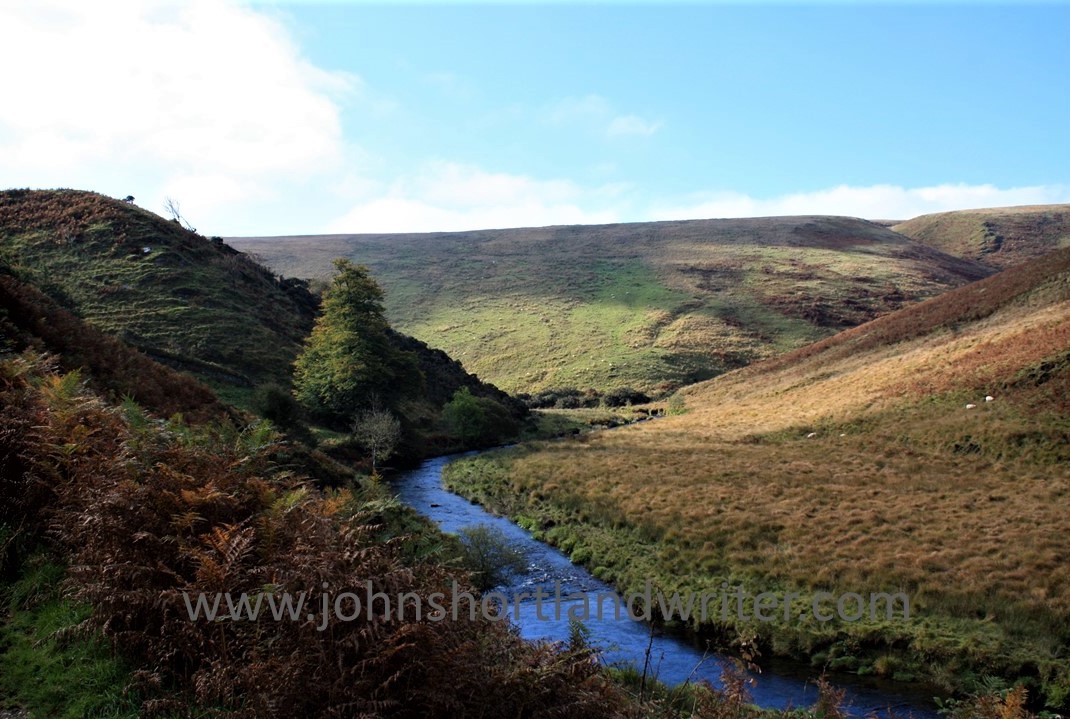
Badgworthy Water watermark

Badgworthy Water, Doone Valley

Brought up in the Chiltern Hills, I was used to a hidden landscape of narrow lanes, high beech hedges and dense and extensive beech woodlands.  Rarely, was there an unbroken view of far-distant places and, almost as rarely, large expanses of sky and cloud.  Cycling across Exmoor with its open, rolling landscape ablaze with heather and gorse and views across the sea to the Welsh coast was unlike anything I’d ever experienced.  Sometimes the lanes would pass between high banked hedgerows or descend into well-wooded coombes reminding me of home.  I came across a farm where I pitched my tent intending to stay two days before leaving for Exeter.

Nr Fingest 2 watermark

A Chiltern lane winds its way through dense woodland


River Barle watermark

The open views of Exmoor

Helping on the farm, two days turned into weeks and then into months by which time I had moved into the farmhouse and embraced Exmoor life.  I occasionally telephoned my parents, or sent a postcard, always being evasive about where I was staying and only telling them I was working on a farm and being well cared for.  With the benefit of maturity, I sometimes wonder how they coped with their sixteen-year old son, on his first lone holiday, disappearing for so long in an era of no mobile phones or credit cards for them to track my progress.  They only succeeded in finding me after I foolishly reversed the telephone call charge and soon after arrived on the doorstep to drag me away, kicking and screaming.  It was time to get “a proper job” but Exmoor and the farm had completely changed my outlook on life as well as the direction it would ultimately take.  After twenty years of “a proper job” I finally escaped to agricultural college and a life of outdoor work.

Brendon Barton 1968 (4a) watermark

Brendon Barton 1968

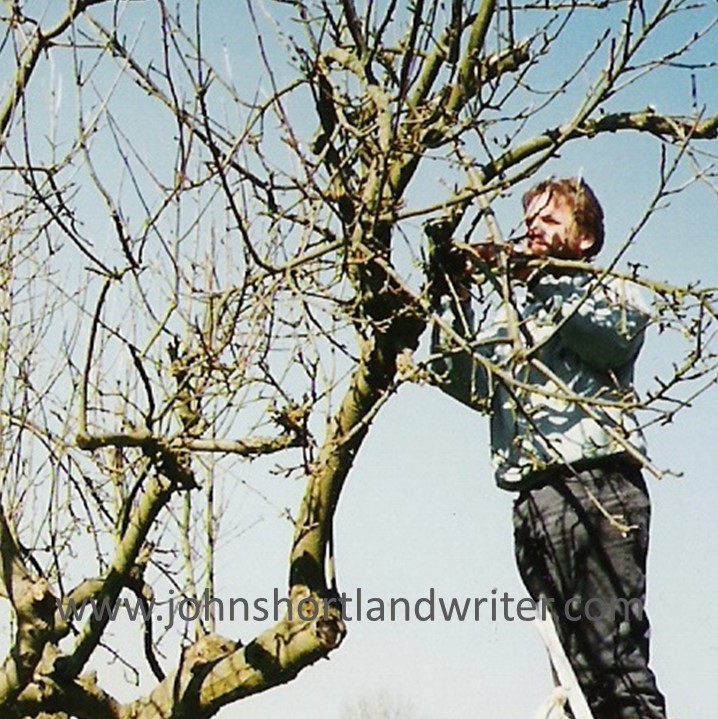
Pruning watermark

At agricultural college 1994

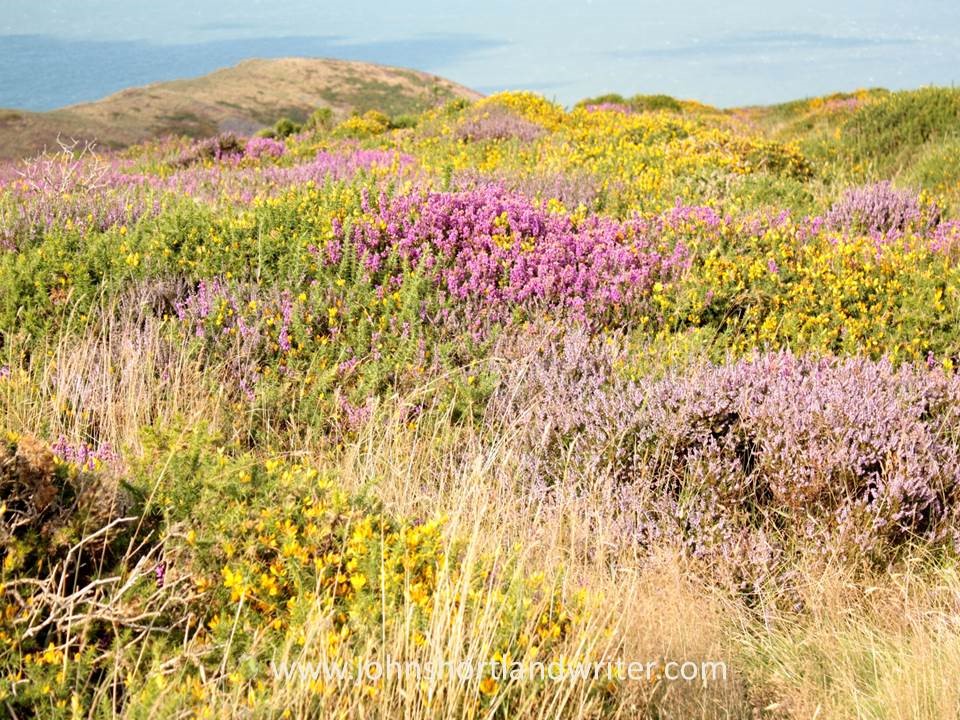
I had been surprised and a little disappointed when I first discovered my parents also knew Exmoor.  Despite not having been conceived there, my attachment to Exmoor has never waivered and more than fifty years later I regularly return.  Upon entering the moor the same emotion of discovery, as if seeing it for the first time, remains.  Many of the old friends that I made in those early years and their unique way of life that I was privileged to be part of, albeit in a small way, have gone but the landscape remains remarkably unchanged.  The heather and gorse are still a carpet of purple and gold, the sea (at least, on a fine, sunny day) still blue.

Countisbury (15) watermark

Countisbury Common, where the moor falls into the sea

Very recently, through researching my family history, I have found that an earlier cousin, at a similar age to myself, had also discovered Exmoor.  He too had never settled in school and life on Exmoor changed him.  He also chose to write about his time on the moor, something else we have in common. Although I was surprised to learn of his life and his book, this time I am delighted!

002

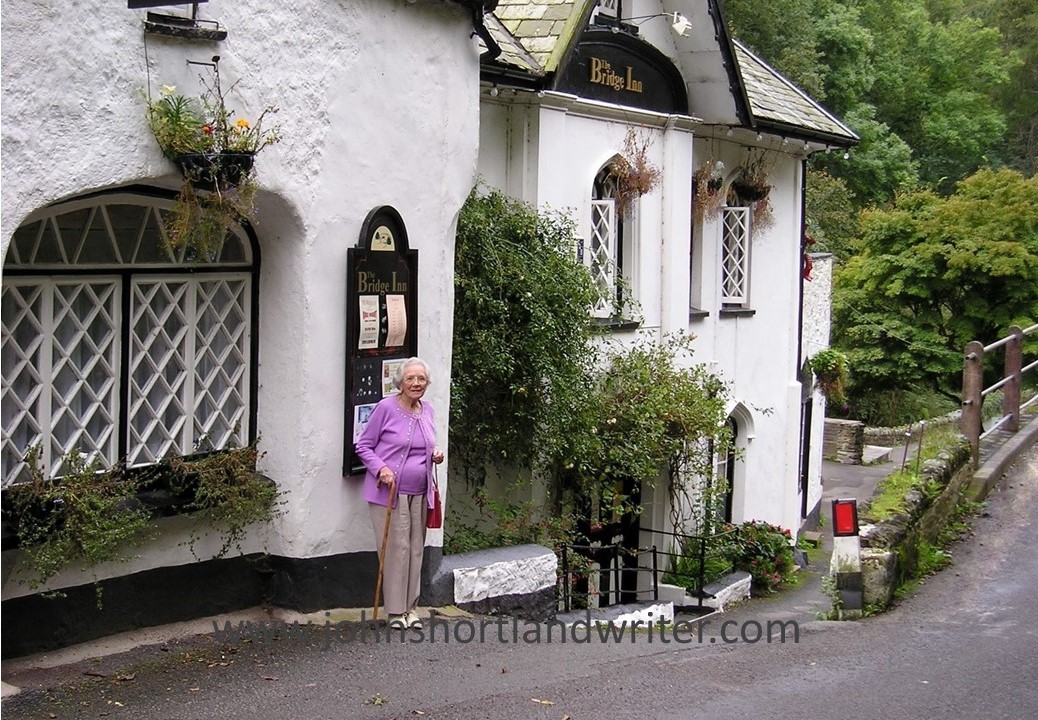
PostscriptJust a few years before she died at the age of 93, I spent a few days on Exmoor with my mother and took her to revisit the honeymoon hotel.  Long widowed, the day must have been a mix of emotions.

Honeymoon Hotel watermark

At Ye Olde Cottage Inne, renamed The Bridge Inn


A Thunderbolt and a Broken Cross

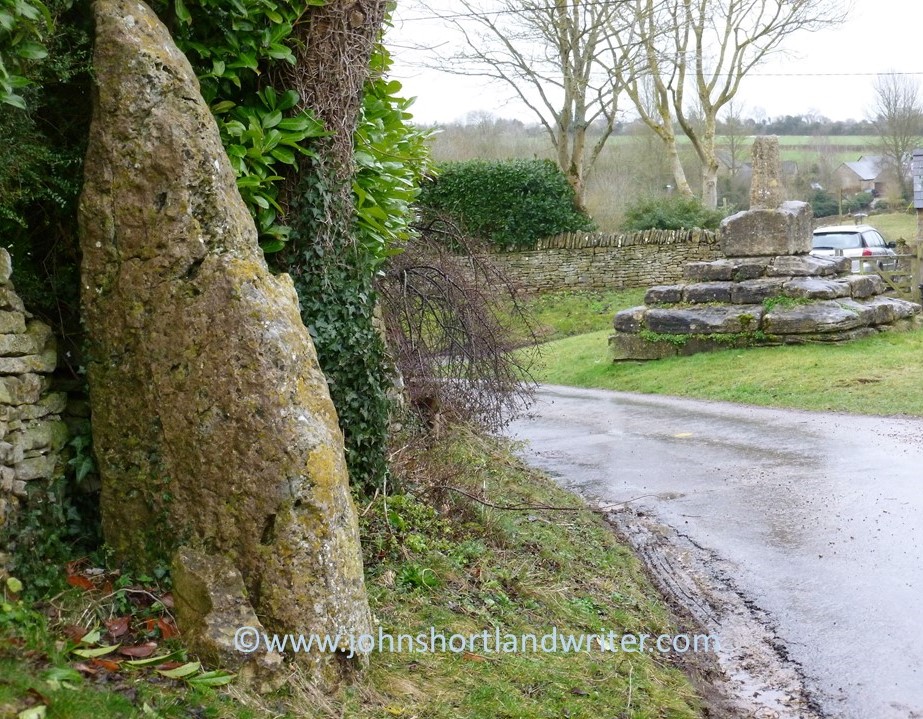
For so tiny a place, the Cotswold village of Taston, or more accurately ‘hamlet’, has more than it’s fair share of interesting features.  None can be so dramatic – in the most understated of ways – than the lump of rock hurled in rage by the Norse God, Thor and now wedged between the roadside and a wall.Taston (1) copyright

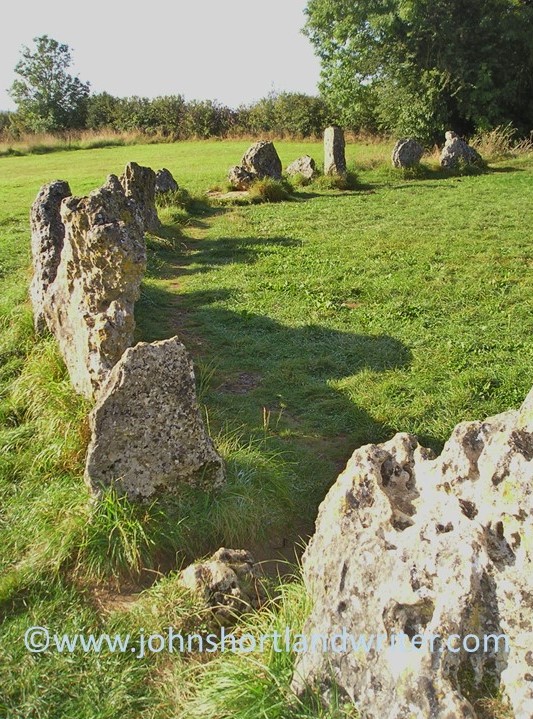
The Thorstone (from which the village’s name is derived) is one of a number of standing stones that litter this part of the Cotswolds.  They range in size from the extensive Rollright Stone Circle to the single unnamed stone that can be found in the town centre of Chipping Norton.Rollright Stones (5) copyrightChipping Norton Stone copyright

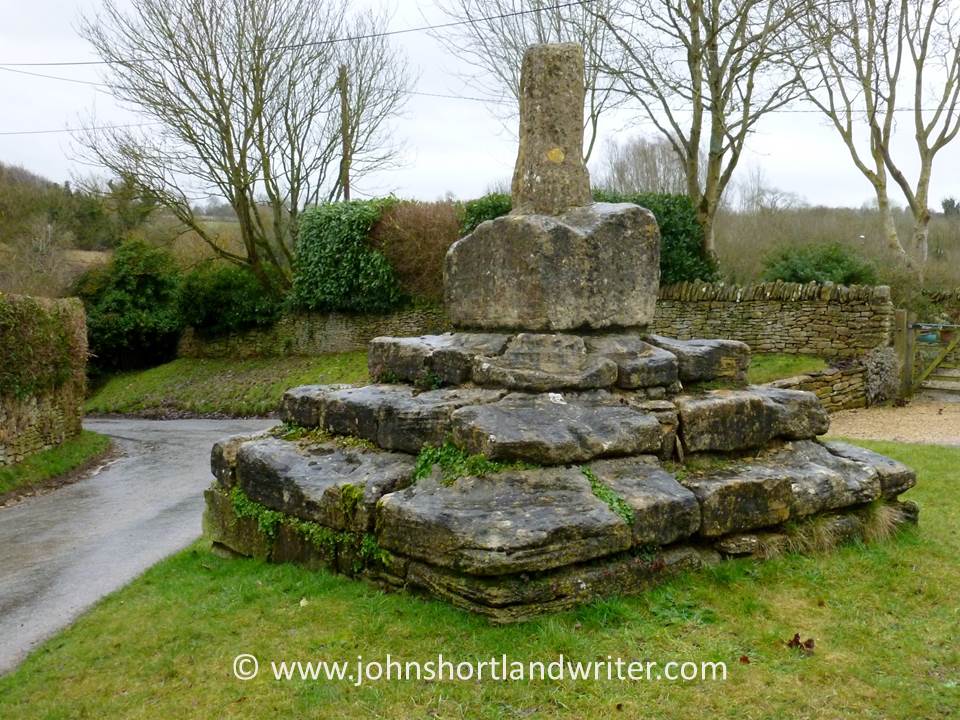
Close to the Thorstone are the remains of a medieval preaching cross.  Many were destroyed during the Puritans time of Cromwell (mid 1600s) but their base, as here, still remain.Taston - Broken Cross copyright

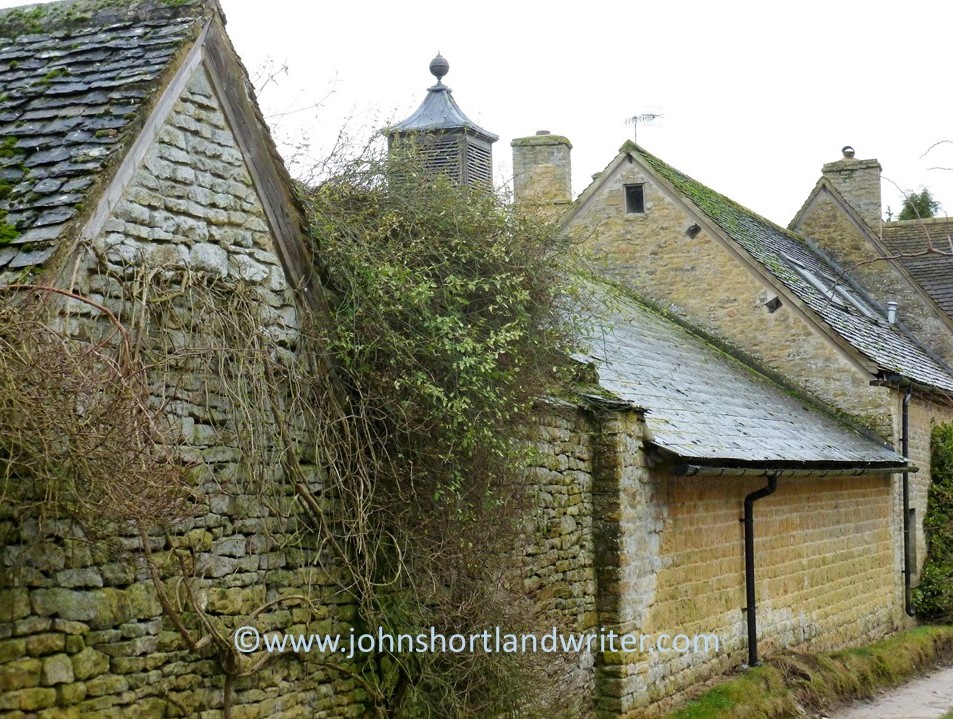
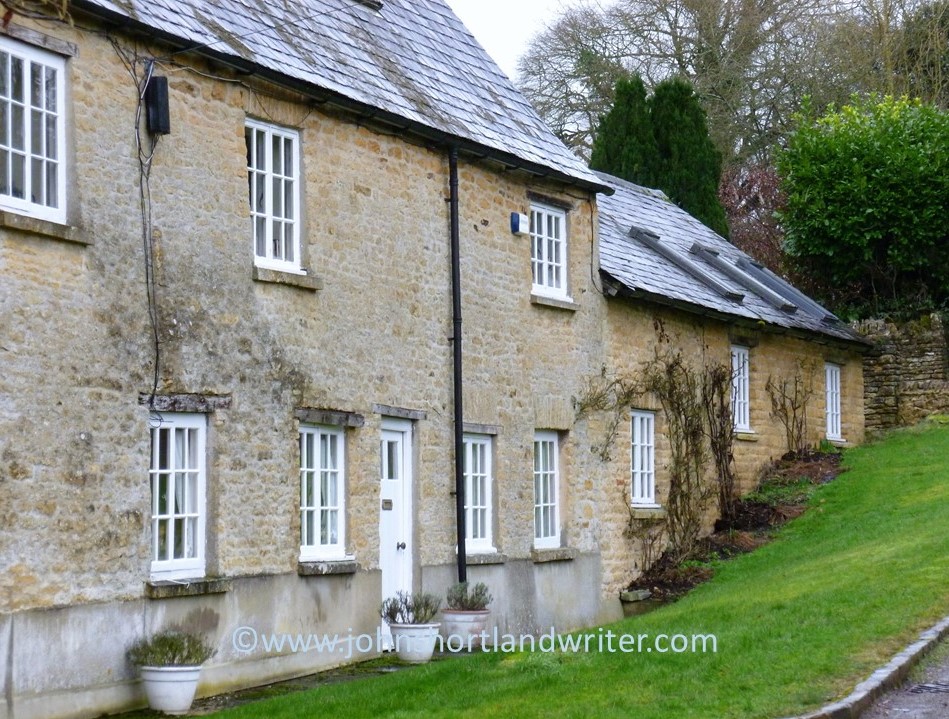
Ancient stone houses, many of them listed by English Heritage, line the three narrow streets of Taston.  Exploring on foot is the best way to see them and to absorb the villages tranquil atmosphere.  It is highly unlikely that you will meet others doing the same! Taston (2) copyrightTaston (4) copyright

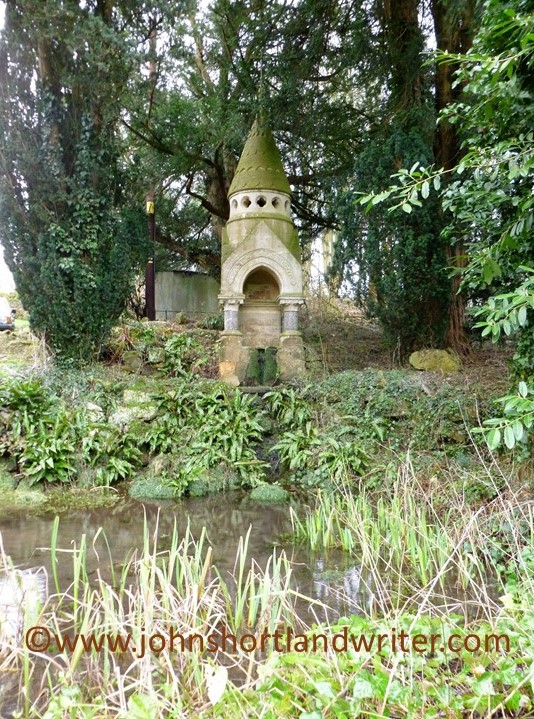
It is on foot, that you will find, tucked away beneath the trees, the memorial fountain to Henrietta, Viscountess Dillon.  Built in 1862 of limestone, granite and pink sandstone, it has the words In Memorium in a decorative arched band beneath its spire.Taston (5) copyright

Taston lies 4 miles southeast of Chipping Norton and 1.5 miles north of Charlbury.

A Day on the Oxford Canal

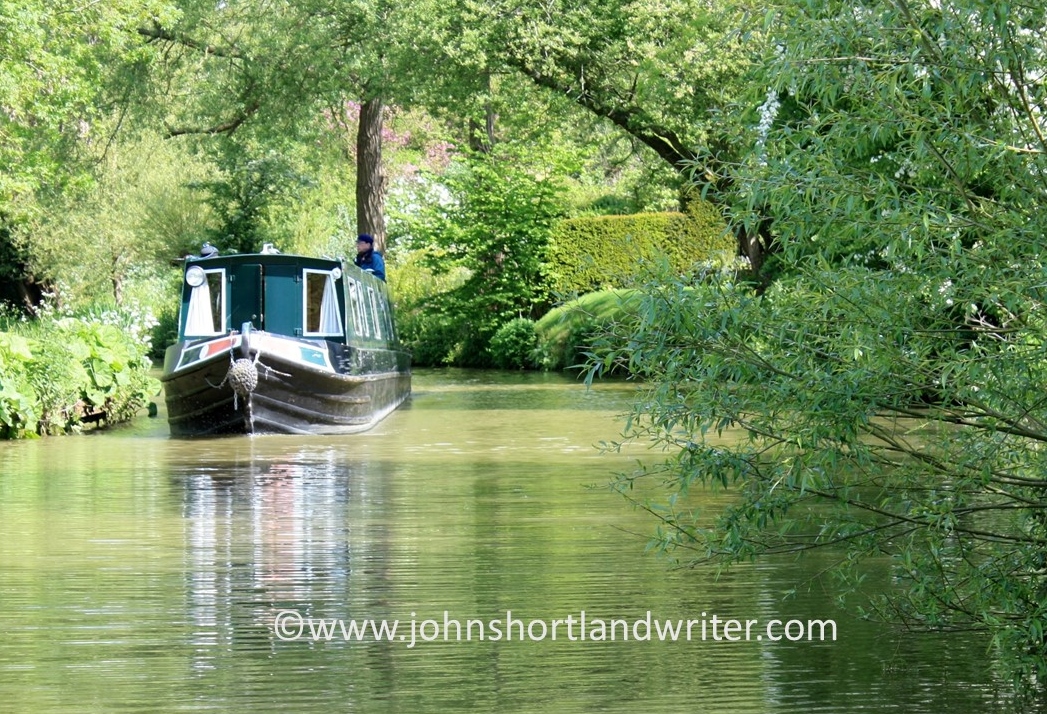
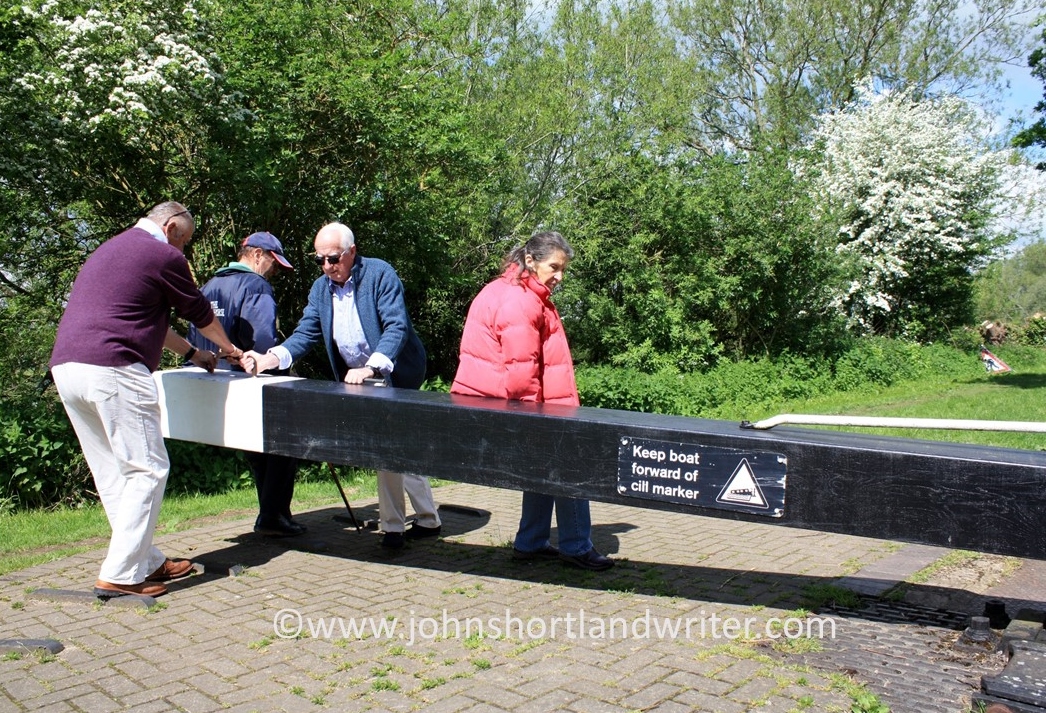
There’s nothing like messing about in boats on a warm, late spring day…

The building of the Oxford Canal was first brought into action with the passing of an Act of Parliament in 1769.  Beset with difficulties – mostly financial – its total 78 mile length wasn’t completed until 1790.  Linking the industrial Midlands region of England with the south of the country, the cost-cutting that was required has allowed the canal to claim it is one of the most scenic.   This is partly due to the canal following the contours of the land giving the canal numerous bends, rather than the more usual (and more expensive) building method of cutting a straight line through the landscape.

003   copyright

Although the northern section from its start at Coventry to Napton was straightened in the 1820s, the southern section to its end at Oxford where it enters the River Thames (giving access to London) remained unchanged.

016   copyright

Once completed the canal became one of the busiest and most profitable in England and, unlike many others, prospered even after the coming of the railways.  Barges carrying coal to London were still plying their trade as late as the early 1960s.  Today, the railway rules and often follows the same route.

058   copyright

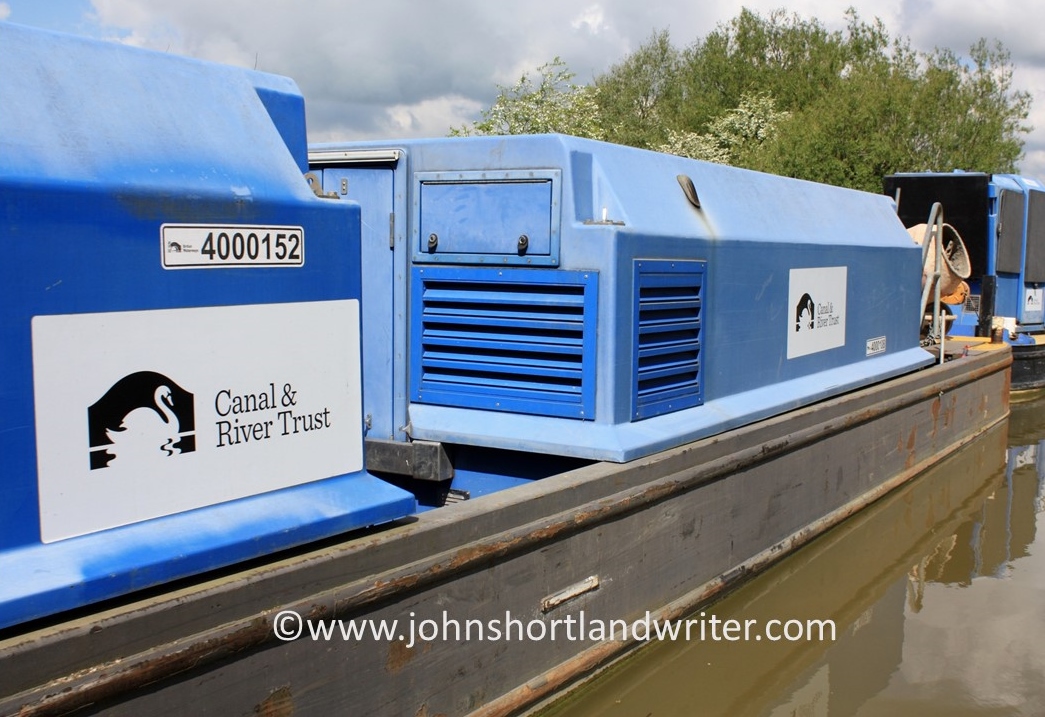
However, the Oxford Canal is still one of the busiest waterways in the country, only now with leisure traffic.  On the day of our attempt at barging it was pleasantly quiet and we shared the canal with few others. The only hint of an industrial past was the working barges of the Canal & River Trust, the charity responsible for maintaining the two thousand miles of waterways in England and Wales.

025   copyright


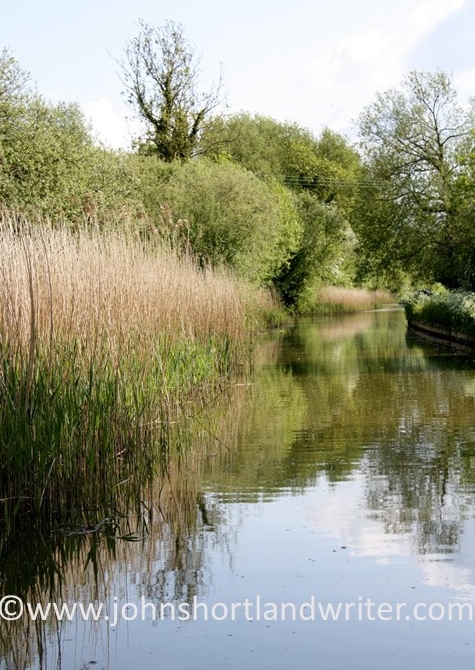
Travelling at a speed slower than walking pace isn’t for everyone – I found it a little frustrating – but it does give ample opportunity to admire the scenery, buildings and wildlife.  The tithe barn at Upper Heyford, built around 1400AD, is magnificent.  More images of the barn, which is privately owned, can be seen by clicking here.


130   copyright

076   copyright

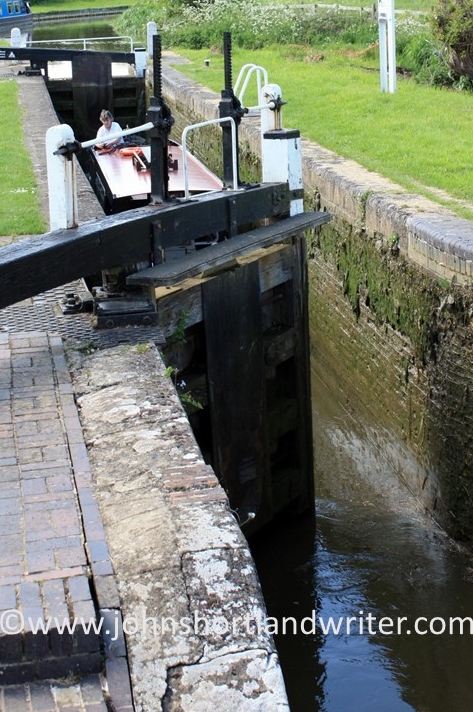
One of the cost-cutting methods used in construction was to incorporate a section of the River Cherwell into the canal.  The problem that this created with variable water flow is still an issue today.  Another saving more readily visible are the locks: fewer in number and deeper, many have single gates instead of the more usual two.

096   copyright

023   copyright

Manoeuvring such a large boat is a surprisingly quick skill to master but there are always other, more savvy boat people around that are happy to assist or advise when needed.  Our boat was hired from the yard at Little Heyford and we travelled north, meeting up with friends for a bankside picnic before returning to the marina.

101   copyright

A daytrip – or perhaps a longer holiday on a barge – is definitely to be recommended even though I found the pace a little too slow.  The next time I am on one I shall remember the words of Pooh, that wisest of bears:  “Rivers know this: there is no hurry.  We shall get there one day.”

133   copyright

Click on any of the photos to enlarge

Links:

The Oxford Canal – a more detailed history

The Canal & River Trust

Boat Hire – Lower Heyford


A Great Game?

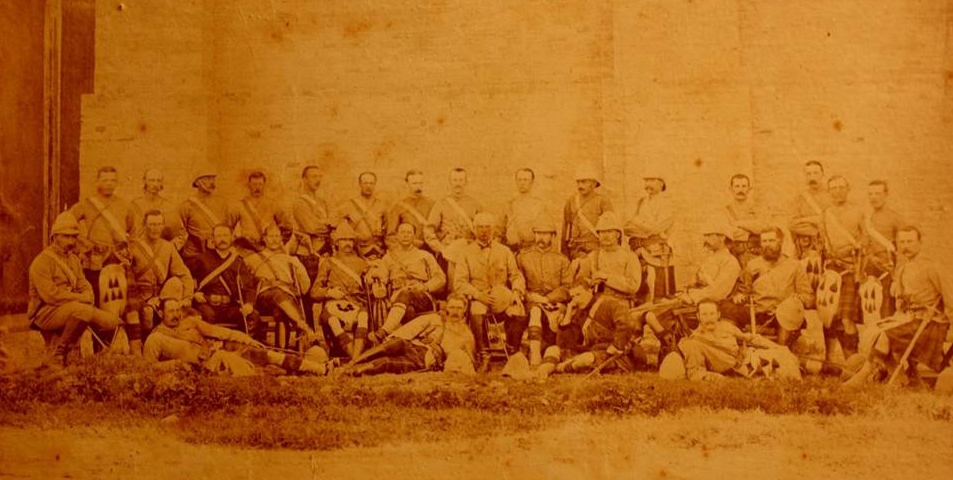
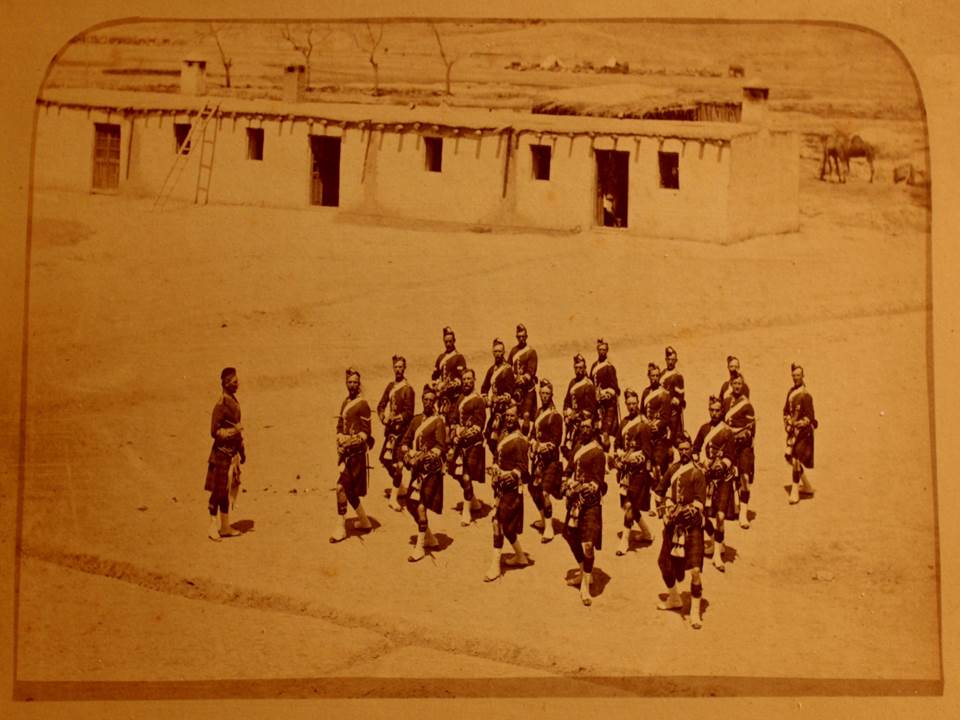
A series of faded, sepia photographs have always been a mystery to me, just something else put into a cupboard and forgotten.  Handed down through the generations they recently came to light once more and looked at with renewed interest.  Who were these people and what connection might they have to my family? Two of the images were signed and with this name as my starting point the tale of their origin began to emerge.  The story that is unfolding only deepens the mystery for they were part of the ‘Great Game’, a term I hadn’t come across before.  Now, for me, it has two meanings: warmongering and my struggle to seek out the truth behind them.

003   copyright

Rudyard Kipling brought the ‘Great Game’ into everyday circles by using it in his novel Kim, published in 1901, although the term had been in use for many years before that.  It described the cat and mouse rivalry between the British and Russian Empires that lasted throughout the nineteenth century.

006   copyright

copyright   005

Britain, alarmed at Russia’s expansion southwards, feared that Afghanistan would be used as the gateway to an invasion of India.  To avoid this, troops were sent to install a puppet government in Kabul but within four years order was breaking down and the garrison was forced to retreat.  Caught in a series of ambushes, Afghan warriors slaughtered all but one of the 4500 troops and 12000 followers. By 1878 the British invaded again following the Afghani’s refusal to allow a diplomatic mission to visit. A treaty was signed and the army withdrew leaving a small staff in Kabul: in the autumn of the following year they were killed leading to full-scale war – the Second Anglo-Afghan War.  Travelling with the British army was a freelance photographer, John Burke, and it is his signature that appears on my photos.

007   copyright

copyright   004

History, as we all know, has a habit of repeating itself and sadly the rivalry between Russia and the West over Afghanistan has continued.  Inspired by John Burke, the war photographer Simon Norfolk has carried out a new series of images.  Intriguingly, he lists all of Burke’s plate numbers – the two of mine that are numbered are left blank so perhaps this is the first time they have been seen; rather an amazing thought.

copyright   002

008   copyright

All that is left now – and no mean feat – is to identify the places and the regiments and to find out where (and if) my family fit into all of this. I have been helped along the way by enthusiasts from a Facebook group.  One of them, Arnie Manifold, has an ancestor that fought there and it is his medals that are shown in the image below.  Wouldn’t it be extraordinary if we discovered his face on one of these old photos?

copyright   001

copyright   Second Afghan War Medals copyright Arnie Manifold

To view Simon Norfolk’s website and more information on John Burke, click here

To find out how a series of colourful postcards, brought back by my father from WWII, led to the discovery of a German fairy-tale castle, a love affair and an epic poem, click here.