Hide That Ugly Wall

We nearly all have one – or, at least, if we haven’t, we have an unwanted view that needs disguising.  Now is the perfect time to deal with it for, if you decide to plant some screening, the soil is moist and still retains some stored summer warmth.  Wait until spring – which you can do – and you run the risk of summer drought and the need for more careful and regular watering.  In the perfect conditions of late autumn/early winter the plant’s roots begin to establish even if you’re unaware of anything happening above ground.

However difficult the position, there is almost always a way to enhance an ugly wall

There are several questions to ask before rushing to the garden centre.  The first is to decide which way the wall faces for the amount of sunlight hitting it will influence the choice of plant – more about that later.  Other factors to consider are will the plants need to be tied into place with strings and wire, and will they need regular maintenance to keep them looking nice and within bounds?  If you’re already beginning to think this sounds like too much hard work or is too complicated, don’t despair – there’s a list of planting options below.  Still baulking at the thought?  An alternative question is, would some sort of decorative screen do the job instead?

A decorative screen masks this unwanted view

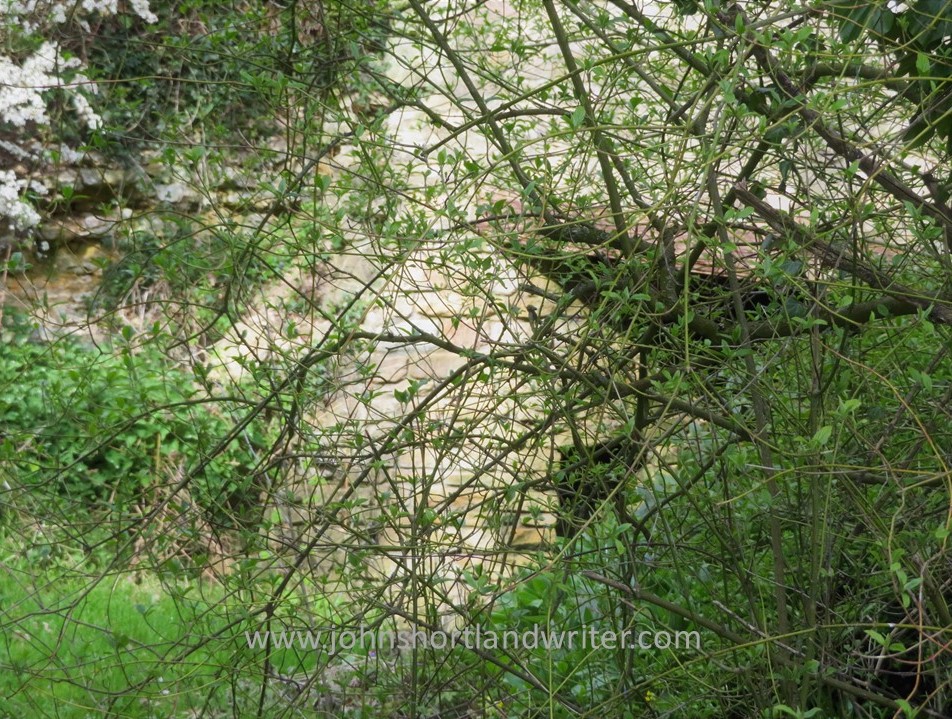
One more option to consider is planting in front of the wall, rather than against it.  If there’s room a low maintenance shrub border might be possible.  If space is really tight, then one or two well-chosen plants may work just as well.  For example, trees trained to grow flat against a wall are readily available and can make a statement without hiding the wall completely. Some shrubs will also do this; they are a much cheaper option and usually grow quite rapidly.  In the photo below forsythia, an unusual choice, has been grown against an ugly garage constructed from concrete blocks.  Although it loses its leaves in the winter its dense network of twigs continues to disguise the wall.  For a few weeks in the spring, it looks both exotic and stunning.

Flowering forsythia suddenly looks exotic grown against this ugly garage wall
The Judas Tree (Cercis) flowers on bare wood, its leaves will appear shortly. It has been fan-trained to remain flat against the wall
If space allows, a low maintenance shrub border can work well

For most people, the decision made is to grow a plant that will climb as well as cover the wall.  The plants available can be broken down into two groups – the true climbers (that will need wires on the wall for support), or the ‘clingers’.  These attach themselves to the wall by little sucker-like pads or by hair-like roots.  With the latter it is essential that the wall is in good condition although it is rare for serious damage to happen.  Both types can be sub-divided into deciduous (lose their leaves in winter) or evergreen.  I have found that the majority of clingers benefit from having some wall ties when first establishing to keep them in close contact to the wall.  Once they start climbing they’ll cling without help.

The climbing hydrangea clings to the wall by tiny hair-like roots
Honeysuckle is an example of a climber that needs wires to support it

One option often recommended, is to fix trellis to a wall and it does sound like a quick fix.  My experience is that the plants weave through it – which is, of course, the idea – but that makes for difficult pruning when it is required for it can be tricky to work out which stems need removing and even trickier to disentangle them.  Worse still, trellis has a tendency to rot or break after some years, usually just when the climber has reached its prime.  Replacing it involves cutting the plant back very hard or replacing it along with the trellis.  However, decorative trellis may be an alternative form of wall disguise to consider with, perhaps, just a large pot of plants standing in front of it.

Trellis helps mask this unwanted view. By creating a focal point of the attractive tree, the trellis becomes a feature in its own right and so no plants are being grown on it

Wires are normally very straight forward to fit providing it is done before planting.  I prefer to use a screw-in ‘eye’ rather than the hammer-in ‘vine eyes’ that are the traditional method of fixing.  All that is needed is a drill and a rawlplug and some very basic handyman skills.  The wires should be fitted horizontally and there is no need to create a network of wires heading off in all directions.  The golden rule is to stretch the wire taut and make the plant grow to the wire, don’t add random wires that follow the growth.  Stems should always be tied to the wire rather than pushed behind it and use ties that will stretch or perish in time otherwise they will become strangled as they grow.  It is all much easier in practice – writing down every step makes it sound more difficult than it really is!

A well-trained rose growing on supporting wires. I have enhanced these for clarity they want to be stretched horizontally and spaced about 18″ (45cms) apart
This poor plant has been strangled by its tie; all the upper growth has died

When it comes to planting, whatever the type of plant it is, make a generous planting hole and mix a good quality compost in with the soil.  Often the ground by a wall is dry and full of builder’s rubble or compacted so having a good planting medium around the new plant will set it off on a good start.  At planting, keep the base of the plant at least a foot (30cms) away from the wall if there’s room.  That way it will receive more water when it rains.  One major cause of failure is planting too deep – make sure that the soil is at the same level as the top of the compost that the plant is growing in.  Standing the plant pot in water for a few hours before planting is a good idea too so that the plant is well-watered before it is disturbed – and, if you’re a real beginner to gardening, don’t forget to remove the plant from its pot keeping its soil intact around it.

Solanum crispum (blue) & Clematis montana (white) hiding a garden shed

A list of plant suggestions:
E=evergreen, CL=clinger, N=will cope with north facing wall, Sh=shrub, T=tree

Large walls:
Carpinus (Hornbeam) – N, T, buy pleached or ready shaped
Cercis- T, more tricky to find and you may have to train it yourself but lovely flowers in pink or white and good autumn leaf colour – see photo
Clematis montana – clip back the growth immediately after flowering to keep tidy and within bounds
Ficus (Fig) – N (but won’t fruit), if you like Figs to eat, Ficus is worth considering
Fremontodendron – E, Sh, colourful yellow saucer-like blooms
Garrya – N, Sh, dark green leaves with long green catkins in late winter
Hedera (Ivy) – Cl, E, N, easy to keep under control and provides late nectar sauce for bees and other insects.  Make sure that wall mortar is sound before planting
Hydrangea petiolaris – Cl, Sh, prune after flowering if necessary
Jasminum (Jasmine) – both evergreen and deciduous types are available with scented flowers.  The evergreen (sold as Trachelospermum) needs a warm wall for best results
Magnolia grandiflora – E,Sh, for a high, warm wall.  They need lots of space to thrive
Parthenocissus (Virginia Creeper) – Cl, magnificent autumn color
Prunus lusitanica (Portuguese Laurel) – E, Sh, T, can be grown as a shrub or purchased as a trained tree (see photo)
Solanum crispum – blue or white clusters of flowers.  Vigorous but easily pruned
Vines – prune in winter if necessary
Wisteria – prune twice yearly, midsummer and midwinter

Medium walls:
Actinidia kolomikta – Sh, pretty multi-cloloured leaves best when avoiding strong sunshine
Azara – E, Sh, for a warm wall
Berberis – E, N, Sh, very spiny branches are a good reason for not growing it!  Magnificent red or yellow berries in autumn, much loved by birds
Campsis (Trumpet Vine) – orange trumpet flowers and attractive leaves for a sunny wall
Ceonothus – E, Sh,  smothered in powder-blue flowers during summer
Chaenomoles – E, Sh, white or pink flowers in late winter/early spring
Clematis – plenty of varieties to choose from including evergreen ones – check labels for size as some can require a lot of space
Forsythia – Sh, prune after flowering which takes place in early spring – see photo
Jasminum nudiflorum (Winter Jasmine) – N, Sh, flowers throughout winter
Osmanthus – E, Sh, early-flowering, scented – clip immediately after flowering ends to keep flat against wall
Rhamnus ‘Argenteovariegata’ – E, Sh, variegated foliage, prune to keep flat against wall in spring

Low Walls:
Daphne – E, Sh, very scented flowers but very slow growing
Euonymus – E, N, Sh, Cl, can be grown a sa shrub or clipped flat against a wall, some are self-clinging
Fuschia – Sh, varying heights, the smaller-flowered varieties are more suited for growing against walls
Helianthemum – E,Sh, very low growing but smothered in flowers through summer, clip after flowers to keep tidy
Lavender – E, Sh,likes sunshine for best flowering
Nandina – E, N, Sh – trouble-free, needs no  pruning
Perovskia (Russian Sage) – Sh, silvery foliage and blue spires of flowers from mid-summer.  I’ve grown it successfully on a shady wall although not usually recommend for this.  Prune back by half in late autumn and then again in early spring to keep bushy
Potentilla – E, Sh, bushy long-flowering plants in varying colours

I recommend looking up these plants on Google to see more detail.  Also, there are many roses that can be considered including some that are fine for north walls.  Apples, pears and plums fruit well when grown against walls of any aspect, as do apricots and peaches if the wall is warm and sunny enough.

For similar information on how to make both your garden and gardening more pleasurable, why not take a look at my book Why Can’t My Garden Look Like That? It’s written for newbie gardeners as well as those with more experience and covers everything from design to planting and maintenance.  In it, I reveal some of the secrets that I used when Head Gardener to large, country estates with gardens open to the public, where the garden had to look great all the time.  All written in an informal, no-nonsense approach.  Makes a great gift and is available from bookshops and, of course, Amazon.


Where No Priest Will Go

“Culbone, Oare and Stoke Pero – places where no priest will go-o” says the old Exmoor rhyme about three of the moor’s remotest churches.  That’s not totally surprising for they must be some of the most isolated in England and all involve considerable effort to reach even with today’s modern transport.  Or, perhaps, it was because of their association with witches, bandits and lepers that made them reluctant to go. In his book, Exmoor Memories, A(rthur) G(ranville) Bradley writing of his time spent on Exmoor in the 1860s, tells of how the parson of Simonsbath church wouldn’t stay on the moor during the winter, leaving his parishioners to spiritually fend for themselves.  With no roads at that time crossing the moor, one can hardly blame him.

even today, Exmoor is a wild and rugged place

I recently visited Culbone church which can still only be reached on foot.  Whichever of the two routes you take, a very steep climb is involved but the effort is well worthwhile when you finally get there.  The deep wooded combe opens up just enough to allow room for the church and two houses.  It is a very tranquil spot and, resting there in an attempt to recover breath, it did feel very spiritual too – perhaps because records show that it has been a place of worship and meditation for over sixteen hundred years.  The present church was mentioned in the Domesday Book so is just a mere one thousand years old!

Culbone has been a place of worship & silent contemplation for over sixteen hundred years
the private box pews where only the gentry would sit

Claiming to be the smallest parish church in England – it is only 35 foot x 11 foot in size – it can seat about thirty on its hard, wooden pews.  It also has a small box pew where the family of Ashley Combe House once sat.  Like many of the buildings that must have once populated the area, Ashley Combe House has long since disappeared.  Entering the church through its thirteenth-century porch two things are immediately noticeable: first that it is still lit by gas and secondly, the ancient, stone font, now also well over a thousand years old.

the church is still let by gaslamp
the one thousand year old font – how many baptisms has it seen?

Despite the hardship in reaching the church and its very few houses, it is still very much a living church with services held there fortnightly.  However, the priest, perhaps mindful of the old rhyme or the lepers that once roamed the woods lives elsewhere.  To visit Culbone it is possible to park the car by the sea at Porlock Weir and climb 400 feet to reach it or, as we did, park at the top and walk down.  If that sounds the easy option, remember there is still the steep climb back!  Either way you’ll be rewarded with breathtaking sea views and the chance to glimpse a way of life (and worship) now almost totally past.

the church is hidden in a deep, wooded combe
Porlock Weir

Oare church, these days is by far the easiest of the three churches to reach for it is just a short drive down a narrow lane from the A38 Porlock-Lynmouth coastal road.  Famed for its association with Lorna Doone, the novel by R D Blackmore, Lorna was shot at the altar on her wedding day by the wicked outlaw Carver Doone.  A pretty, riverside walk through the stronghold of the Doones, the Doone Valley, is possible from nearby Malmsmead where there is camping as well as an art gallery and coffee shop named the Buttery.  Overlooking the picturesque bridge and ford, it also serves great food and is well worth a visit.

Oare church is easily approached by a narrow lane
the bridge and ford at Malmsmead

Compared with the church at Culbone, Oare is a relative newcomer having been built in the 1400s and then partially rebuilt four hundred years later.  Inside, it is light and airy with memorials to Blackmore and also to the Snow family who feature in the novel.  Blackmore tended to use local family names and traditions in his writing and mixing fact with fiction.  Ridd is another local name; its variation Red is recorded on many of the gravestones at Culbone. For those not too familiar with the tale of Lorna Doone, or to see photos of the Doone Valley take a look at my earlier blogs, The Story of Lorna Doone – just a myth? and A Walk in the Doone Valley.

the interior of Oare church is very light and airy
the window through which Carver Doone shot Lorna on her wedding day as she stood at the altar

There are wonderful, albeit rather long, walks to Stoke Pero church from Horner Woods (car park at Webber’s Post or in the village of Horner), taking in the ‘four corners of Horner’ and distant views of Dunkery Beacon, the highest point of Exmoor. It is well worth the effort for apart from the views there is a good chance, providing you walk quietly, of spotting red deer, the largest of our wild deer and for which Exmoor is now one of its few remaining strongholds.  There is plentiful wildlife to be seen along the river too – Dippers and Kingfishers and with Buzzards soaring overhead.  You may even be lucky enough to see Red Kites or even White-tailed Sea Eagles which are becoming ever-more frequent visitors to the area.

Dunkery Beacon from Webber’s Post
wild red deer hind with its calf half-hidden in the deep woodland

It is possible to drive to Stoke Pero although the lanes are long, winding and narrow.  The road even passes through a working farmyard which confuses many, especially visitors from overseas who find our narrow lanes scary enough at the best of times! If you choose to reach the church this way you will fully understand why a priest might not want to be bothered to travel there. Below is an Ordnance Survey map showing the three churches; I would strongly advise to carry a paper, rather than digital, version of the map for phone signals can be a bit erratic in such remote countryside.

the three churches – a good map and equally good boots are essential if travelling by foot

We’ve had lepers and bandits with our previous two churches which only leaves witches as a possible reason (other than the journey) why Stoke Pero might have been clergy-less.  Look closely at the old oak door and scratched into its surface are a series of lines: witches marks.  ‘Apotropaic’ marks to give them their correct name are symbols carved into buildings to ward off witches and protect people from evil spirits.  They are usually found wherever there is a point of entry such as doors, windows or chimneys and usually date back many centuries when belief of the supernatural was commonplace.  It is not known when the marks at Stoke Pero were made or what they mean but they may well have literally put the fear of God into any visiting priest.

witches marks – apotropaic marks – on the church door at Stoke Pero

The church at Stoke Pero lays claim to being the highest on Exmoor for it stands, isolated at over 1000 feet above sea level.  Although much of the building is only a couple of hundred years old, the church tower dates from the 1200s, as does a list of the rectors which rather belies the story of lack of clergy.  Like Culbone, an earlier church here is mentioned in the Domesday Book and, also like Culbone, services are held here lit by candles or gas lamps.

old sign staking its claim as highest church!
Stoke Pero church sits high on a bank

I blogged about Stoke Pero over fifteen years ago (link here) and mentioned how simple its interior is with its whitewashed walls, the only colour being the splash of red from the altar cloth.  Revisiting recently, unsurprisingly the place hasn’t changed, and the barrel roof is as spectacular as ever.  However, this time I noticed other things too such as the delicate ferns growing inside the window of the ancient bell tower and the contrast between the rough-hewn stone windows and the smooth white plasterwork.

the magnificent barrel roof of Stoke Pero church
ferns grow in the cool shade found inside the ancient bell tower

If you have the opportunity to visit Exmoor, now protected by its National Park status, there is much to see – but only if your pleasure comes from the joy of being in wild, open places for it remains remarkably uncommercialised.  It has much to offer apart from the moorland (spectacular at this time of years smothered in purple heather) for it has the sea, rugged cliffs, fast-running boulder-strewn rivers and the unspoilt little towns of Porlock, Lynton and Lynmouth. It is a walker and nature lovers paradise.

the heather moorland tumbles away to the sea
Lynmouth

Regular readers of my blog will know of my love of Exmoor which I discovered now nearly sixty years ago.  They may even recall how through a chance meeting it changed the direction of my life, giving me an outdoor career as well as many Exmoor friends.  More remarkably, I have found numerous family references to the moor, unknown at the time, for A G Bradley was my grandmother’s cousin and other family members lived and are buried at Luccombe, a village not too far from Stoke Pero.  An uncle was involved with the rebuilding of Lynmouth after the devastating floods and loss of life in 1952 and a few years prior to that my parents honeymooned on the moor.  A small world indeed and one in a small way I have been privileged to be part of.

my first night spent on Exmoor – many, many years ago!
old postcard of the cottage in Luccombe where my ancestors lived in the early 1900s

Mentors – part 2

In my earlier post on mentors, I asked the question “what makes someone a mentor” and do they realise they have actually become one. Of course, the answer will vary for there are many reasons why people do it, and equally a number of reasons why someone needs it.  My experience is that it is only with hindsight that I realise I had four mentors in my life and all would be amused at my describing them as such. 

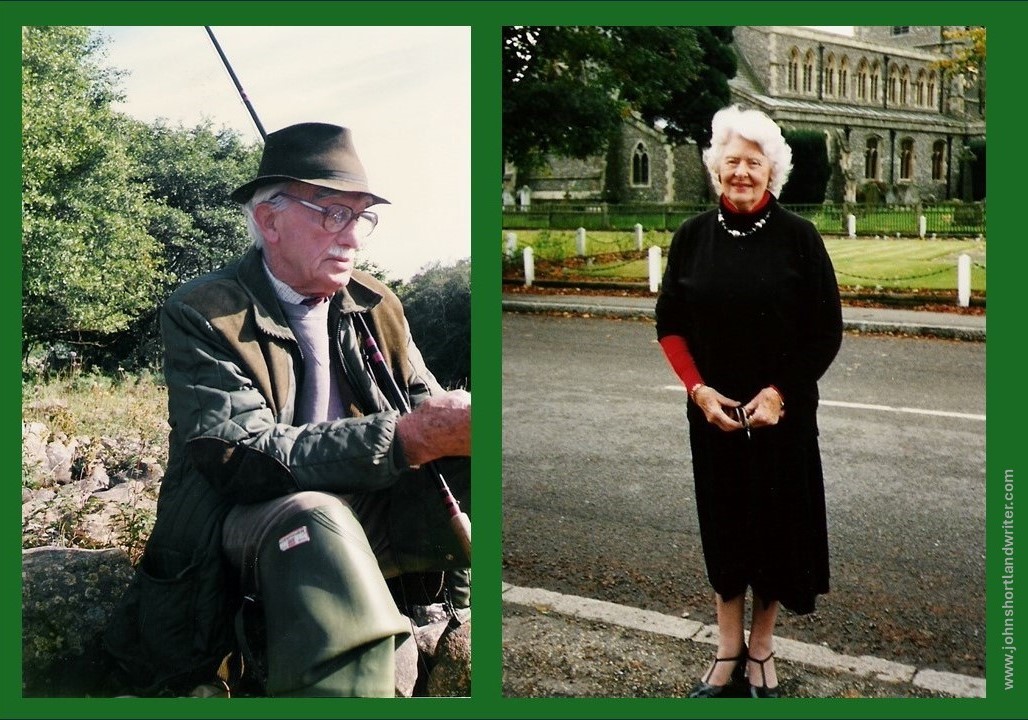
Lorna Dick French, Cyril Pamela Heber Percy

In part one I told of how I met, quite by chance, Dick and Lorna French who had a remote hill farm on Exmoor, a National Park in England’s West Country.  I was aged sixteen and, despite our age differences (essential for mentoring) a close friendship developed that lasted until their deaths many years later. [Their story can be found here] Fifteen years after that first meeting, I met another couple, Cyril and Pamela Heber Percy, and although of a very different background from Lorna and Dick, they too took on the role of mentor.

Woodlands Cottage, the Heber Percy’s home

In 1983 I had moved house to a small village in the Chilterns.  Although I consider myself a ‘Chilterns man’ I had always lived at their foot, first by the River Thames and, later, by the steep escarpment to the west.  Now I was living in one of the highest villages, surrounded by wonderful bluebell woods and prone to quite different weather than seemingly, everywhere else.  Like many hilltop villages it was a straggly affair, a mile long but with the houses scattered first one side of the road and then the other.   Our house sat opposite the common – a wide, open piece of land although by us it had been invaded by bracken and hazel scrub where Dormice could be seen climbing amongst the branches.   Wild cherries and raspberries also grew there and with a small pond that had once been the village’s only source of drinking water, it was very quiet and very lovely.     

There was a small pond amongst the cherry trees, once the village water supply
The village was surrounded by wonderful beechwoods awash with bluebells each spring

Soon after our arrival, there had been a knock on the door. Standing on the doorstep was an elderly gentleman, very upright and with a clipped moustache he looked every part the retired army colonel which he was.  With no introduction he barked, “what religion are you?”   Before I could answer, he continued, “Of no matter, we need bell ringers.  I’ll see you at practice tomorrow, 7pm.”  Of course, I didn’t go!  Our next meeting was one evening when out walking.    Hearing a lot of shouting and cursing I could see a man of similar age to me having difficulty with ‘boxing’ (loading) his horse to transport it back home.  No matter how he tried the horse refused to walk up the ramp and into the lorry.  As I drew level, the Colonel holding a whisky in his hand also appeared ready to give advice. The young man looked very dismissive at his suggestions but that changed after the Colonel took hold of the reins, jumped onto the horse’s back with an agility that belied his years and cantered away before turning and riding it straight into the lorry.  “Don’t stand any nonsense in future” was all he said as he tied the horse securely.  Turning to me, he said, “must be time for another whisky.”    Both the rider and I had learnt a valuable lesson that evening – never judge someone’s abilities by their age.

Boxing – or in this case, unboxing – a horse

The Colonel and I spent the rest of that evening in his home drinking whisky and discussing all manner of things, Pamela, his wife, joining us.  Sitting back in a comfortable armchair, I took in my surroundings, my eyes landing on a small photograph sitting on a shelf.  It was of two army officers on duty outside Buckingham Palace.   Cyril noticed my interest immediately – another thing I was to discover: he was exceptionally alert and noticed everything.  He explained that the photo had been taken many years earlier and featured in the national newspapers.  It was of him and his brother, one in the Welsh Guards the other in the Grenadier Guards acting as Colour Bearers at the Changing of Guards ceremony, the first time that two brothers had had that honour.

Changing of the Guard at Buckingham Palace 1927 [copyright British Newspaper Archive]

Over the years that followed, Cyril would tell me of his military career, of his escorting Queen Wilhelmina of the Netherlands under enemy fire during her evacuation, of dinners in England at the Palace with the King. (Pamela complained of how tedious all the formalities were!).  Of even greater interest was to learn of his Edwardian upbringing for he had been raised at Hodnet Hall, a large country estate in Shropshire.  He lived on the top floor in the nursery and each evening Nanny would bring him down to say goodnight to his parents where he would recite a poem and dutifully kiss his mother and shake his father’s hand.  Surrounded by liveried footman and other house staff, he preferred the informal company of the gardeners and gamekeepers.  Through them he developed a deep love for the natural world and keen observational skills which he passed onto me.  Walking together, he would point to a barely visible gap in a hedge and ask me if a hare, fox, badger or deer had made it.  Of course, I got it wrong but he persevered until I was able to tell the difference.

Hodnet Hall, Cyril Heber Percy’s childhood home
The Colonel taught me to recognise the different paths wild animals make (in this case, a badger)

During this time I was still working indoors in the retail fashions business but he taught me a lot about gardening too for the gardens at Hodnet were considered one of the finest in Europe.  You have to think big, he would say, immediately followed by “and you have to think small”.  To prove the point he would get me to lie down staring up at the undersides of large leaved plants, and then, on my knees, examine the different shades of green that could be found in the tiny leaves of wild thyme.  To get me to understand the wonders of the natural world he would say, “think like a child but always act like an adult”.  Years later, in my present career, I remember this advice and concentrate on elements of surprise as well as leaf texture when designing gardens.

When you look up at a plant you see a quite different world….

Pamela, also would tell me stories of her life.  Born into Irish aristocracy she had a very different upbringing to her husbands for there was the insecurity that the fight for Irish independence would bring.  There were stories of hiding in secret passageways within the house ready to escape if a violent attack took place, Fortunately, this never happened, perhaps because her mother took her social duties very seriously and would visit the poor and the sick to make sure that they never went hungry.  Pamela would accompany her mother on these visits and so from an early age saw how frugally ‘ordinary’ people lived.  It also gave her the ability to empathise with people from all walks of life and to treat them as equals.

Pamela Heber Percy

Over the years, the Heber Percy’s taught me many things, one of which was to cast a fly.  Both the Colonel and Pamela were expert salmon and trout fishers.  When I mentioned how much I enjoyed spinning for pike, Cyril had shaken his head and joked that it was very poor sport.  Venturing out onto the lawn he pointed to a fallen leaf – “that is your trout” – and he patiently watched and corrected me as I tried to get the line to drop close-by,  After I had mastered that he made life more difficult by pointing to leaves under low hanging branches and from there, to leaves floating on the surface of the swimming pool.  Unaware at the time, they gave me lessons in accuracy and perseverance as well as a useful fishing skill.

The Colonel: Cyril Heber Percy

It was a sad day when I heard that the Colonel had died.  He was buried, with full military honours at Hodnet, his childhood home.  We had always planned to visit the house and gardens together one day and now we were, although not in the way we had planned.  I felt surprise, pride and honour when I was ushered to the front of the church to sit with the family.  As the Last Post was being played from the top of the church tower I felt my lower lip tremble only for it to be controlled by hearing the Colonel’s voice whispering, “not very British!”.  Soon after his death, Pamela moved house and although not too far away, I saw less of her, and not many years after she also died.  I had lost two very dear and good friends.

Stained glass window at St Luke, Hodnet

And one final thought – I did learn how to ring the church bells!

Have you had a mentor or mentored someone?  What does it take for someone to become a mentor?  Our parents have probably the greatest influence on our lives so why does a mentor s role take on such importance? Let’s hear your story either in the comments below or, if you prefer, by using the Get in Touch tab at the top of this page.  Thanks to Diane Highton for posing the question that triggered this blog!

2024: A Year in Review – part 2

In Part 1 of my review I began by saying words to the effect of life is for living – and when you become older there’s even less time to waste! The result of following my own advice is that part 2 of the review is a couple of weeks late in being published. than I would have liked

Keeping active was also part of the theme of a couple of my blog posts last year, specifically about England’s network of public footpaths. Although we Brits just accept them as part of our historic right to walk across privately-owned land, it seems that for a great part of the world, this would not be an option. My American friends and readers in particular find it hard to comprehend that we can walk across someone else’s property at will (assuming a public footpath crosses it) without confrontation. Many of our footpaths link villages and farms and so, on occasion, you may find yourself walking through someone’s garden or farmyard. The history behind the right to walk and what you can and can’t do was discussed in November’s post which can be found by clicking the link here.

Walking on designated footpaths across privately-owned land is a basic right in England and Wales

A few month’s earlier in August, I wrote of a walk that I had taken across fields, through woods and down country lanes back to my home in the secret valley. It was a lovely walk with the first signs of autumn colouring the trees and hedgerows which were laden with wild fruits and berries. After the noise and bustle of harvest, the fields were quiet and I met no-one for much of the walk. I prefer it that way for it is then, walking in silence, that you are likely to come across the wild birds and animals that also share this space, To follow the route that I took and to see the beautiful creatures I encountered click here.

When walking quietly you come across the wild creatures that live there

I have lived in the country all my life and my father was very much the epitome of the ‘English country gent’. My mother remained a ‘townie’ all her life (she had been brought up in the West End of London) and we both teased her mercilessly about her lack of knowledge of country ways. When she met and married my father it must have come as quite a culture shock to find herself living in a small, close-knit community where everyone knew one another and one another’s business. Neither of my parents were walkers but as a child they would drive my sister and I out to Turville Heath. Over time the heath became my place of refuge whenever I was in need of comfort or in need of re-charging the batteries. It would also be the place for summer walks, playing cricket and picnics. Of equal importance as the heath itself was the car journey out to it – past miniature farm and other magic moments that we children couldn’t get enough of. Click October’s link here to find out more.

My father, very much the country gent despite not liking guns!

Looking back even further in time, I explored the lives of ancestral aunts, uncles and cousins. They had been born, married and died in a village very close to the where I had been raised for our family have lived in the area for at least five hundred years. Discovering their stories had been quite a revelation – for my 3rd great-grandaunt had been about to marry in the local church when she gave birth to a child. The repercussion of this – for the child was obviously not that of the grooms – was far-reaching. Devastated Thomas cancelled the wedding and did something rather surprising shortly afterward, as told in September’s blog post. What happened to disgraced Ann? And what happened to poor Henry, the baby boy, who lived with the stigma of his birth? Was it this that took him down the path of self-destruction and a young death many thousands of miles from home in ….. – well, you’ll need to click on the link to find out what, when and where!

The village church where Thomas & Ann were to wed in 1809


So, what will 2025 bring, I wonder? World politics seems to be on the news with constant and often seemingly bizarre twists and turns unsettling many of us. I’m quite good at not getting too worked up about things that I have no control over. Fortunately, I live and work in stunningly beautiful countryside and my interest in family history has taught me that life carries on regardless of turmoil all around us. I shall continue to write about my adventures (if that isn’t too strong a word to describe them). I also have a couple of writing projects to see to, and of course, there are my garden projects too. In dues course, they may appear on these pages. As with all my blogs, there are lots of photos to view so why not take a look and please do comment as appropriate.

Rights of Passage – England’s Footpath Network

Since the start of writing my Life in the English Cotswolds blog, now over fifteen years ago, overseas readers have repeatedly commented on our network of public footpaths. Mostly it is one of surprise that we can seemingly wander at will over privately owned land and clear any obstruction that may be blocking our way.  In this post I hope to clarify what this civil right, now enshrined in law, is all about.

A footpath crossing privately-owned land in the Cotswolds

Many of our footpaths are ancient in origin dating back 5000 years or more.  Of course, in those days, these paths were the main highways across a wild and untamed land.  Even in the relatively recent past much of the road system was a dusty, uncomfortable route to take in summer and not any better later in the year when winter rain turned them into a muddy quagmire.  Over many centuries the network of paths was created, usually by local people on foot or horseback taking the most direct and dry route to work or market.  This is one of the reasons why paths often pass through farmsteads and gardens.

This public footpath passes close to Lower Dornford Farmhouse

Today, the public footpaths of England and Wales (Scotland has a different system) are much loved and well-used, mostly for recreational purposes.  There are several organisations and charities (see list below) that help to protect the paths and walker’s rights to use them for there are several threats, such as land development for roads and houses, as well as the occasional, unscrupulous landowner.  Landowners seem to fall into two categories: those that maintain the paths to allow ease of access and those that allow the paths to fall into disrepair for it is the landowner that is responsible for the path’s maintenance.  A well-maintained path is clearly defined across the landscape, its gates and stiles giving ease of access whilst remaining stockproof.  By statute, where a path crosses a road, the local council must signpost it.

This farmer has mown a strip through his crop to define the footpath
Where a path meets a road it must be clearly marked

After many years of campaigning, England created its first long-distance path, the Pennine Way, in 1965.  It is 268 miles in length and runs down the spine of northern England passing through spectacular countryside.  Today, there are many of these long-distance paths as well as shorter, circular paths.  However, with a good Ordnance Survey map (paper or app) it is possible to create your own route whether it be for an hour’s stroll or for much longer.  In 2010 the Slow Ways network linking various paths and lanes, villages and towns, across the whole country was created, one of the few benefits to have arisen from the Covid-19 lockdown when walking alone was one of the few permitted activities.  The routes listed are all tried and tested by local people who walk them regularly.

The rugged landscape at Jacob’s Ladder, part of the Pennine Way long-distance path
Ordnance Survey map shows the public rights of way (the solid red line is a main road, the solid yellow line, a country lane [Copyright Ordnance Survey]

In the Ordnance Survey map illustrated above the footpaths are clearly defined using red dashes.  The short dashes show footpaths (walkers only) whereas bridlepaths (walkers, horses and bicycles) have long dashes.  The broken short-long dashes mark those tracks that can be used by horse-drawn vehicles (“restricted byway”).  Some paths have signs along their routes showing not just the route but also the path’s category.

As mentioned, paths frequently cross farmland or other enclosed land. A way through a fenced or walled area must be maintained at all times.  Below are illustrations of some of the different types of barriers you may come across although none must prevent you from continuing along your route.  If it’s a route for horses the rider must be able to open the gate without dismounting.

Wooden gate to pass through easily or wooden stile to scramble over
Not all stone wall are so tricky to get over!

Visitors to England often spend far too much time in the major cities or tourist hot-spots (the Cotswolds have lots of those!) returning home not realising that they have missed the opportunity to see parts of the country that never feature in the travel magazines – the homes and villages, the woodlands and old drover’s tracks that can be found all over the country.  You may choose to walk alone but when you do meet someone, they are often local and happy to exchange greetings and share a few minutes in dialogue.

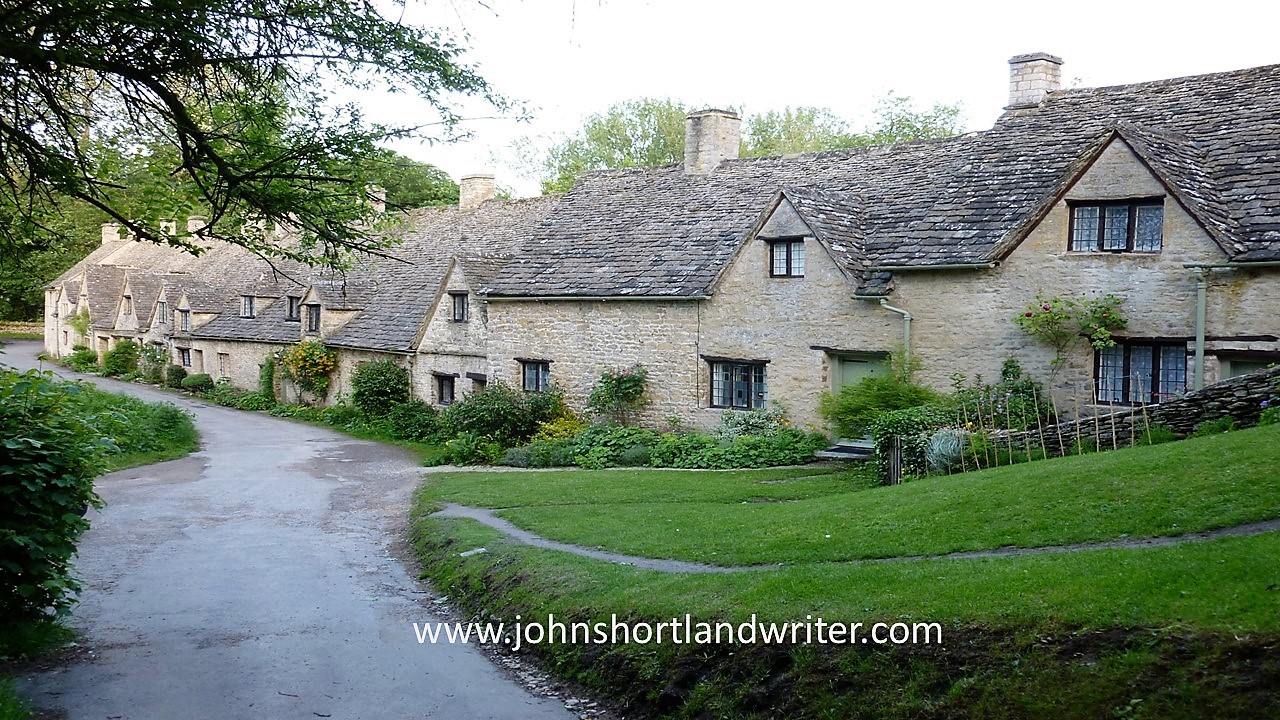
Bibury – one of the most visited villages in the Cotswolds. To see it like this you need to arrive soon after dawn!
Get away from the crowds by exploring the peace and quiet of the English countryside

Not everyone, of course, feels comfortable walking by themselves, especially in an area unknown to them.  Fortunately, there are a lot of local groups or larger organisations such as the Ramblers Association that will welcome you on a regular or one-off basis.  Occasionally you may even find an individual who’ll be happy to share with a visitor a favourite walk or place – I’ve done it myself and made some good friends along the way.  That is one of the best things about walking, the walks can be short or long, easy or arduous, solitary or in company but it is the interesting conversations you have, the beautiful scenery you pass through, and the wildlife you encounter that make such a memorable experience.  Why not give it a try?

Walk quietly and you’ll be surprised who accompanies you!

Useful Links
click on the organisations below to visit their webpage

Cotswold National Landscape – Guided Walks
National Trust – walks in Gloucestershire and the Cotswolds
Ordnance Survey
Ramblers Association
Slow Ways
The Cotswold Way – a 102 mile trail that takes you through the heart of the Cotswolds to the Roman city of Bath, a UNESCO World Heritage Site.
The Long Distance Walkers Association
Walking in the United Kingdom

A Good Walk Home

Both my partner and I like walking but, more often than not, we walk alone.  Somehow it just works out like that and there is no doubt about it, that when you walk without company you do see and hear so much more.  It isn’t that we chatter away non-stop – we’ve been together for  far too long for that!!  It’s just that with no-one to speak to, or alongside, one becomes far more aware of all that’s around you.  And with only the sound from one pair of walking boots the wild creatures are less aware or concerned of your presence.

Walking quietly it’s possible to get quite close to wildlife

Usually, from necessity, our walks are circular – either back to the car or back to the house if we’ve started from home.  Recently I cadged a lift to Duns Tew, just outside the Cotswolds but still in Oxfordshire and not that far from home and the secret valley.  The village is an interesting mix of houses and makes use of their local ironstone as well as the Cotswold limestone.  I find it fascinating knowing that I live on the edge of two quite different rock formations, 0ne literally as hard as iron and the other, soft and easily worked.  The photo below shows the pretty church built of yellow ironstone and banded with paler limestone – a familiar pattern in the locality.

The thousand year-old Church of St Mary Magdalen, Duns Tew

The houses vary in style and age as well as building materials.  Some have thatched roofs; others slate and some stone tiles.  The traditional village pub has a stone tile roof made from Cotswold stone split into thin tiles.  Just to confuse the unknowing, these tiles are known locally as slates even though they are not made of slate!  The craft of making these roof tiles is centuries old – they have even been found by archaeologists when excavating Roman villas (of which there are quite a few in the Cotswolds) which means the manufacture of them has remained unchanged for the best part of two thousand years.  The pub also has a drystone garden wall, also made from Cotswold stone for which it is so ideal and makes such a memorable feature of the Cotswold Hills.

Village houses: contrasting style and stonework. The thatched house was built in the early 1600s. There are a number of these old signposts still standing locally
The village pub: this dates from the late 1600s. Note the stone ‘slate’ roof

One of the great things about walking in England is that we have a huge network of public footpaths, many of which date back to pre-history.  Now that I realise (thanks to my overseas readers) that being able to walk across privately-owned land by right is almost unique I intend to write specifically about them at a later date.  Suffice to say here, is that it is possible to walk from one end of the country to the other over thousands of miles of paths that must not, by ancient law, be obstructed.  This path is beautifully maintained by the owner. Just outside the village, partly hidden in undergrowth, were the remains of old pony carts.

A well-maintained public right of way that is also a driveway to the owner’s house
Half-hidden at the back of a semi-derelict shed

The path opened onto cornfields, the wheat harvested and the remaining stubble giving a real autumnal look to the countryside.  The hedgerow is also offering its autumnal fruits for the picking – crab apples, elderberries and blackberries; the sloes although looking good won’t be ready to collect until after the first frosts.  The squirrels have taken all the hazelnuts (you have to be quick to get them before they do – but already the embryo catkins, the male flowers, are beginning to appear.  It will be early February before they show the familiar ‘lamb’s tails’ that release clouds of yellow pollen with the slightest breeze.

The path is now gras covered passes ‘twixt hedgerow and cornfield
Crab apples, blackberries, elderberries. Tiny catkins are just forming amongst the blackberries

Although the path, now a wider track, looks obstructed here, the farmer/landowner has to leave the gate unlocked so that people on foot or on horseback can pass.  Crossing the lane it returns to being a path, this time skirting a large wood.  Now hidden by high hedgerows in the spring when the leaves are all bare, the woodland floor is carpeted with bluebells.  In the centre of the field is a stand of mature oaks.  Why were they left there?  For me, they always have a mystical look about them; stepping into their midst the atmosphere changes as if its centuries old story is being told to those that might listen.  Perhaps it’s just my imagination but the fancy is palpable.

As this is a public right of way, one of the gates must be kept unlocked by law
The copse in the middle of the fieldwas it once a sacred site?

Once again the path changes character.  Now a track crossing a small stream, the movement of a young coot searching for food catches my eye and we watch one another for a while before it decides that food is far more important than me.  At such close range I see it snatch a small water beetle before it disappears into the undergrowth.  For a while the path becomes woodland again and then opens up onto a concrete track.  The concrete is all that remains of a WW2 airfield, far inland to be out of the range of German bombers.  I stop to listen and am met with silence.  How different the scene would have been eighty years ago.

The baby coot carried on about its business…
The old wartime concrete paths make easy walking

Finally back home.  Being an Englishman through and through (if you ignore the foreign bits of me!) I sit on the old stone bench in the garden with a refreshing cup of tea and lean back against the walls of our own stone-built house built 170 years ago.  Looking out beyond the garden I can’t help feeling how privileged I am to be seeing the best views of the whole walk!

Not too bad a view from home!

.

.

.

Three Very Special Cotswold Reasons – revisited

Back in 2009 – which seems a lifetime ago now – I responded to a question posed by The Guardian newspaper and the English tourist authority: select three things that make a place very special. Naturally, I chose the Cotswolds and to my delight, my blog was just one of ten chosen and published by them to promote visits to this country. After fourteen years, I thought it time to take another look. Although the reasons still stand up well I’ve updated the photos and some of the text.

You’ll know when you arrive…

1. Space and Peace. I know this is technically two reasons but they are so interlinked that, in my mind, they only count as one. Besides, that way I can cram in an extra reason without appearing to cheat too much. The flat topped, rolling limestone hills that make up the Cotswolds offer far reaching views to the vales beyond. They free the mind and let the spirit wander – a rare occurrence in the busy world we all inhabit. This view looks north over glorious country to the Vale of Evesham and just invites you to start walking towards a distant goal.

Hidden in deep valleys, crystal clear streams create more secretive places to explore or to sit quietly by their banks to watch the water flow, sometimes gently, sometimes more noisily, by.

The River Evenlode

The King’s Men stone circle forms part of the Rollright Stones and have been a meeting place since they were set here 4,500 years ago. In early morning light they appear mysterious and brooding but when the sun strikes them their colours and markings are awe inspiring. Rest here a while, at a time when you can be alone, for the feeling of peace is palpable.

And give back to the soil an offering, (when we have taken so much away), as others have done from the beginnings of time and continue to do so. Single flowers placed at the centre of the circle have a calm simplicity…


2. Nature. It is impossible not to be aware of nature in the Cotswolds, whether it is the magnificence of old trees, the deer crossing roads in front of you or the cloud formations of our large skyscapes. This ancient ash tree has watched centuries of agricultural change take place and, despite modern farming practice, still stands proud in a hedgerow dividing wheatfields. In 2009 the fungal disease Ash Dieback was unknown. It is now thought that the majority of ash trees will succumb to it robbing the English landscape of their beauty. At present, the old pollard seems unaffected but whether it will survive only time will tell.

Since 2009 we have all become so much more aware of the value of dark skies. With so few big towns, the Cotswolds is a place where the nights are darker and the stars shine more brightly.

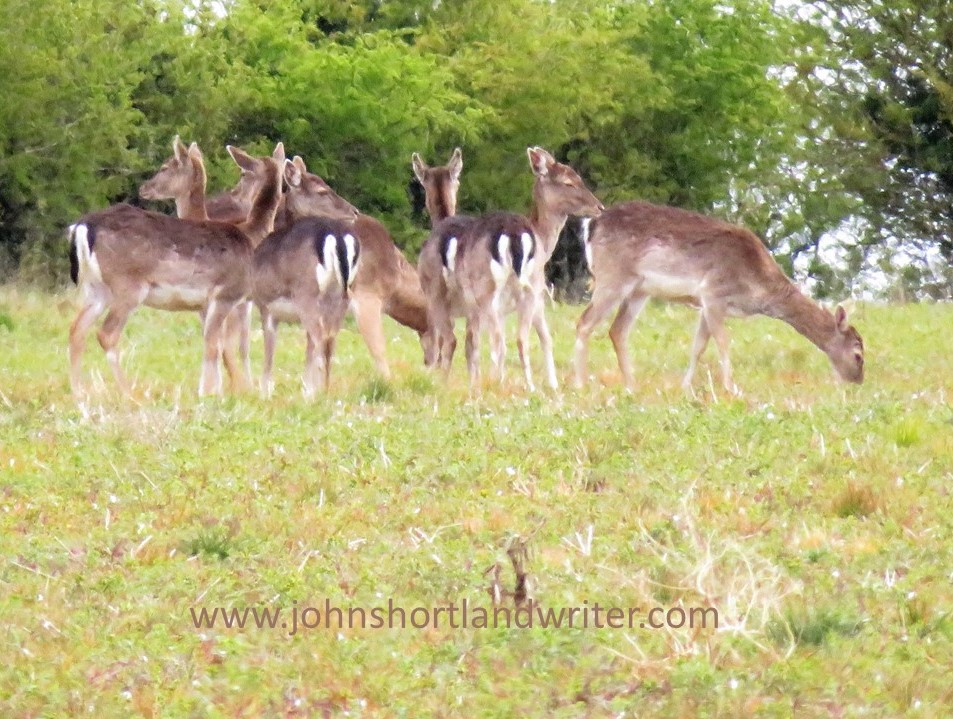
Deer are common throughout the Cotswolds. Roe and the introduced Muntjac are frequently seen but perhaps the prettiest, when in their spotted summer coats, are the Fallow.

In our rivers and streams, otters, although rarely seen, are now becoming evermore common – something else that has happened since 2009.

There are some exotic surprises too! A macaw outside a garage in Charlbury and alpaca seem to be everywhere, I wrote in 2009. The macaw has gone and even alpaca seem less common now but not far from the secret valley it is possible to see wolves and bear. I don’t think the two facts are connected!

3. History. The Cotswolds are steeped in history and it is the history of wealth and the power it brings. Sheep – or more accurately, their wool – were the originators of this wealth and the region still has a higher population of sheep to humans. But how to illustrate this when there is so much scope to choose from? Bliss Mill, in Chipping Norton, is now converted to luxury apartments but, for most of its time, produced some of the finest tweeds in Britain. I have since written in more detail of the history of the mill, the fire that engulfed it and the strike by the workers that brought poverty and starvation to the town (link here).

The churches of the Cotswolds were also a by-product of wool – the wealth it created is often shown by their huge size in proportion to the numbers of the local population. The photos I originally published were of St Mary’s, Chipping Norton. The ones below are of St Mary’s, Swinbrook; the village was the home of the famous (or, perhaps, infamous), Mitford sisters.

In 1940 the church suffered damage by a stray German bomb during WW2
…the vicar collected the ancient shattered glass which was incorporated into this memorial window

So, come and visit the Cotswolds and decide for yourself. And, in the meantime, select three things that make your special place, special.

In The Footsteps of Clare

The days have been unseasonably dry and the nights exceptionally cold for April but day after day of unbroken sunshine has meant that it has been particularly good to be outdoors.  The warmth tempered by a gentle north-easterly has created perfect walking conditions.    However, as is so often the way, the day I chose to wander along the byways that criss-cross the border of Lincolnshire, one of England’s largest counties, and Rutland, England’s smallest, there was more cloud to be seen than for weeks.

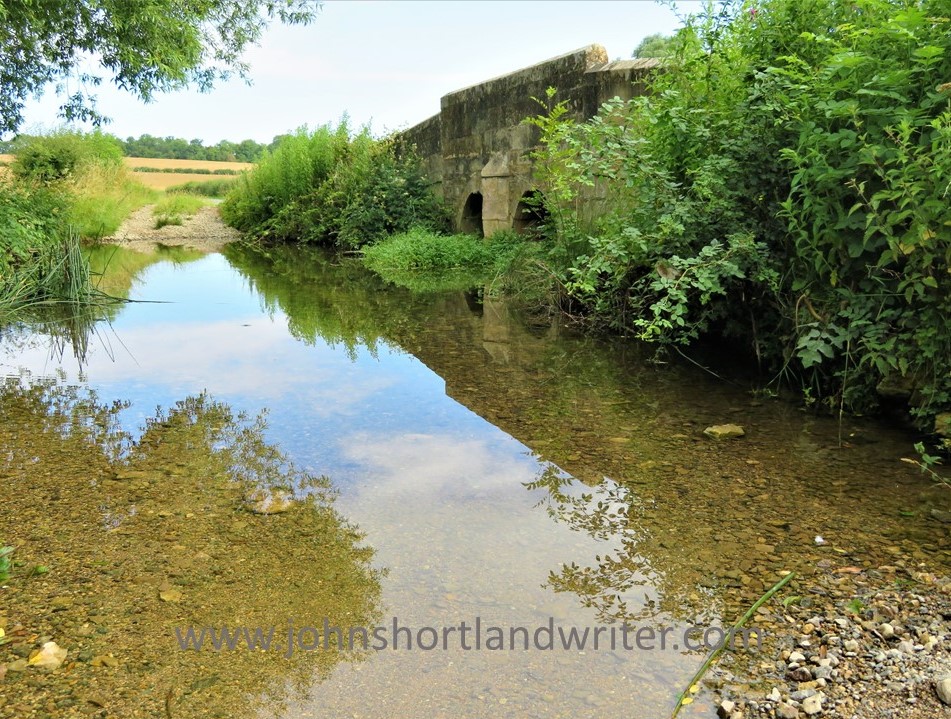
The Ford at Aunby – where the walk begins and ends

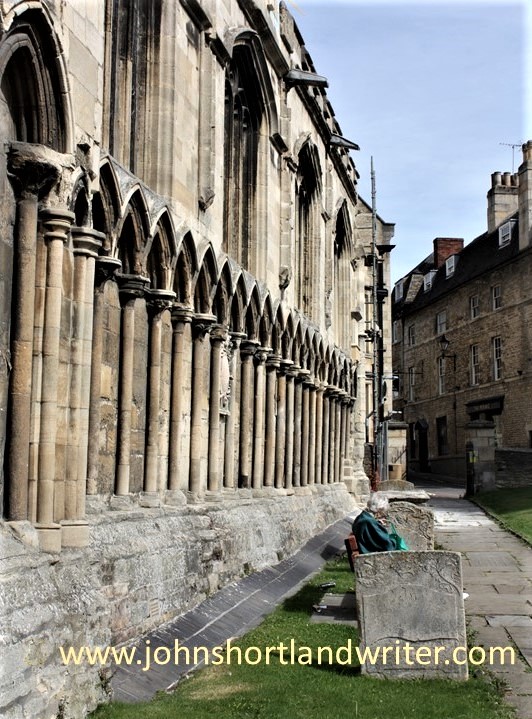
My walk began at the ford by the tiny hamlet of Aunby, a few miles north of Stamford.  Stamford has been described as “the most perfect stone town in England” as well as being voted the best place to live.  It certainly is a beautiful place to explore with numerous, fine churches as well as a great Friday market and a wealth of independent shops.  Whereas Stamford has prospered through the centuries, Aunby suffered a dramatic decline: in the fourteenth century there were numerous houses and a church; today, apart from a few cottages, they only show as cropmarks.

A quiet seat in Stanford
Stamford Market before the crowds arrive…

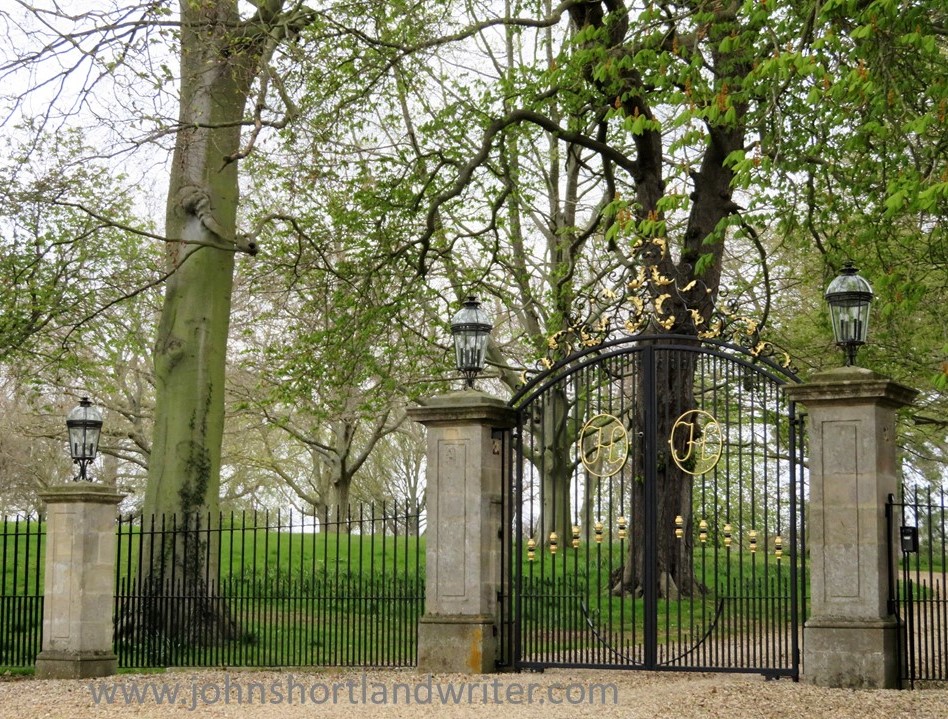
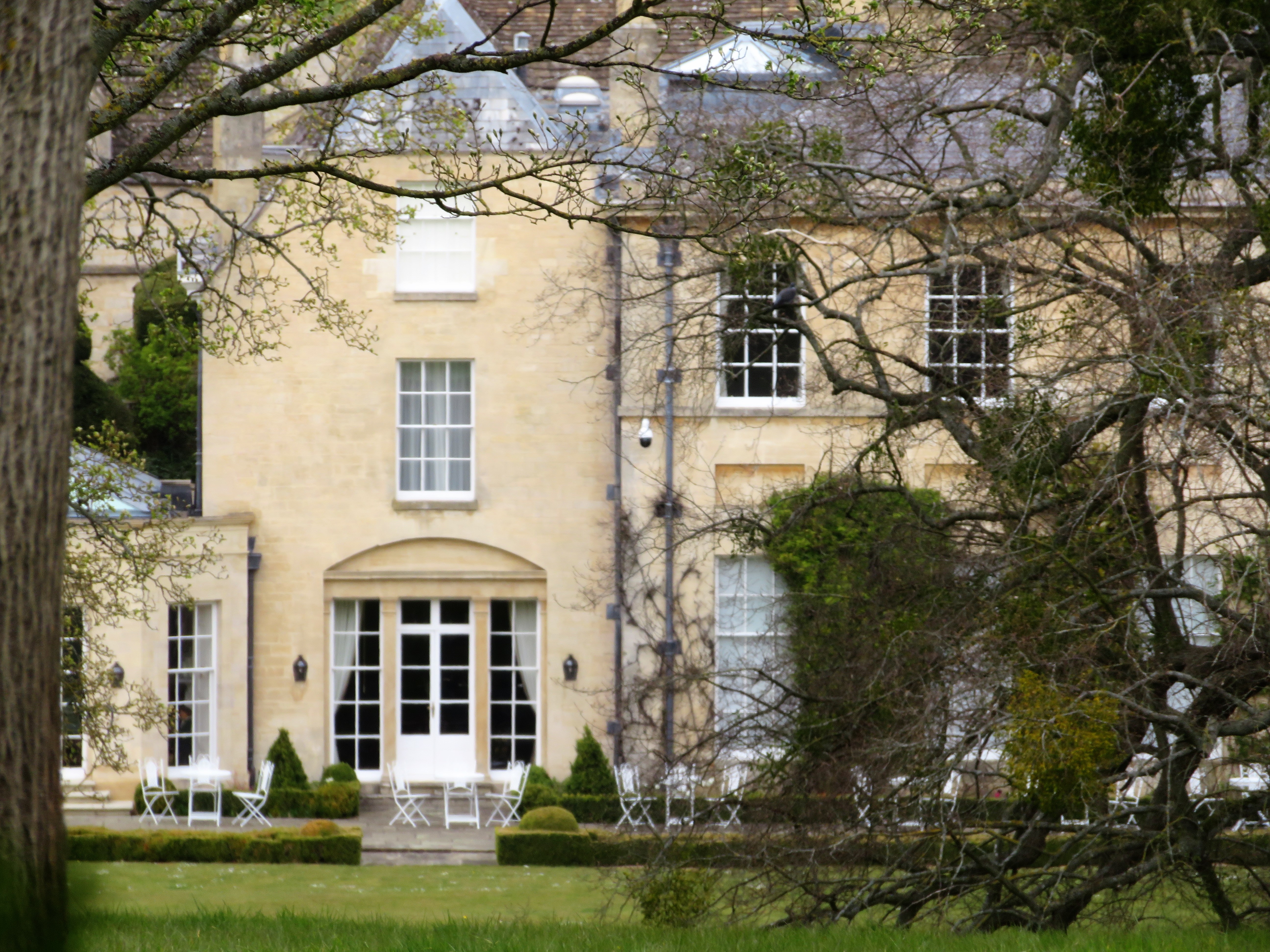
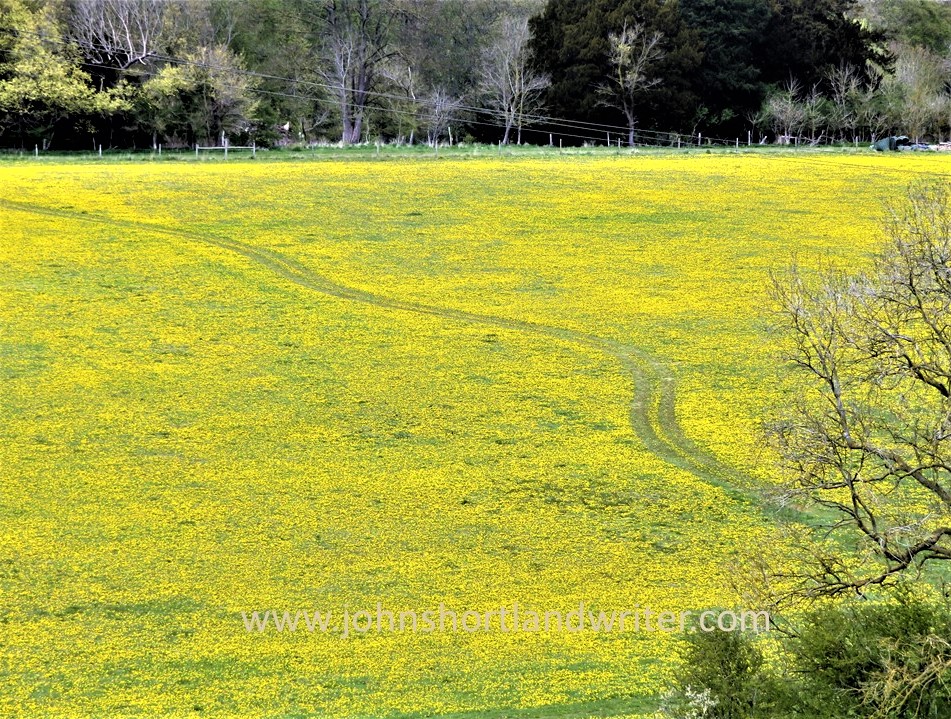
Heading north-west along a grassy bridleway, the path climbs gently until a narrow lane with wide, grassy verges is reached.  One of the many roadside nature reserves in the county, the late spring meant that the only wildflowers to be seen were cowslips which grew in plentiful splendour.  Following this lane uphill  to the elaborate, black and gold entrance gates of Holywell Hall where I turned left, glimpses of the mansion could be seen through the hedgerow that lined the lane. Both the house and grounds are immaculately cared for although I admired most of all the winding path cut through a splendid swathe of dandelions in full bloom.  Considered by many a nuisance ‘weed’ to be sprayed out rather than a wildflower to be kept, dandelions are a great source of early nectar for bees and other insects as well as looking beautiful in their own right.

The entrance to Holywell Hall
Holywell Hall
The dandelion meadow at Holywell Hall

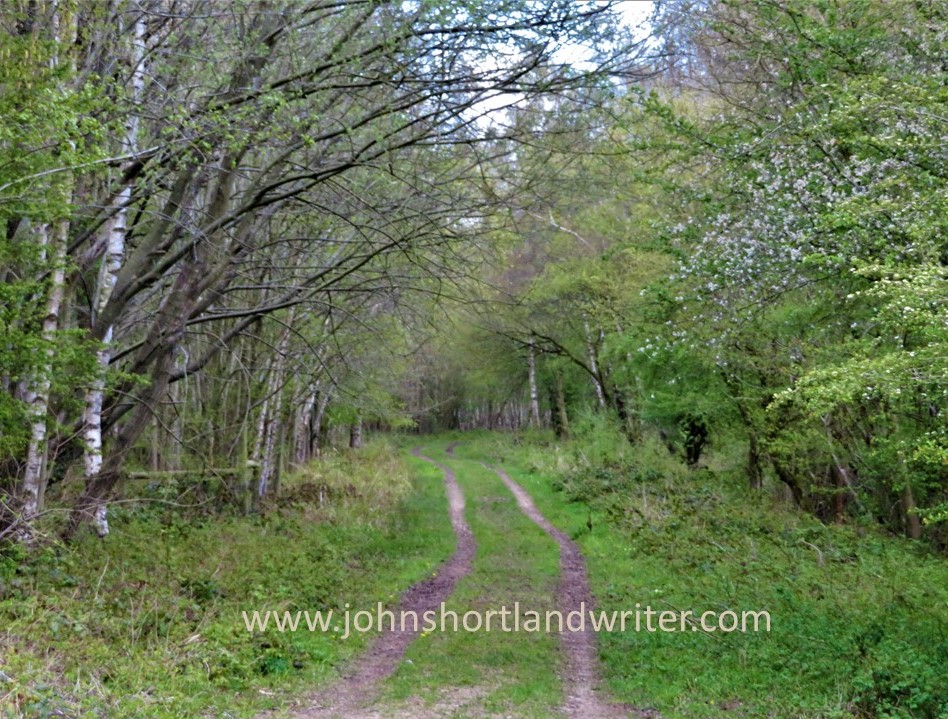
Crossing the county border into Rutland my route immediately turned left onto a forest track to take me up to Holywell Wood and into Pickworth Great Wood.  It was here that I met a local couple exercising their black Labrador dogs, the only people I saw on the whole of my eight-mile walk. They told me that the area was one of the largest woodlands locally as well as being a Site of Special Scientific Interest, designated for its geology as well as its wildlife – a fact confirmed by the NatureSpot website (click here for more information). The woodland path was lined with primroses, the trees just breaking bud and coming into leaf but, sadly, I was too early to hear the nightingales sing. 

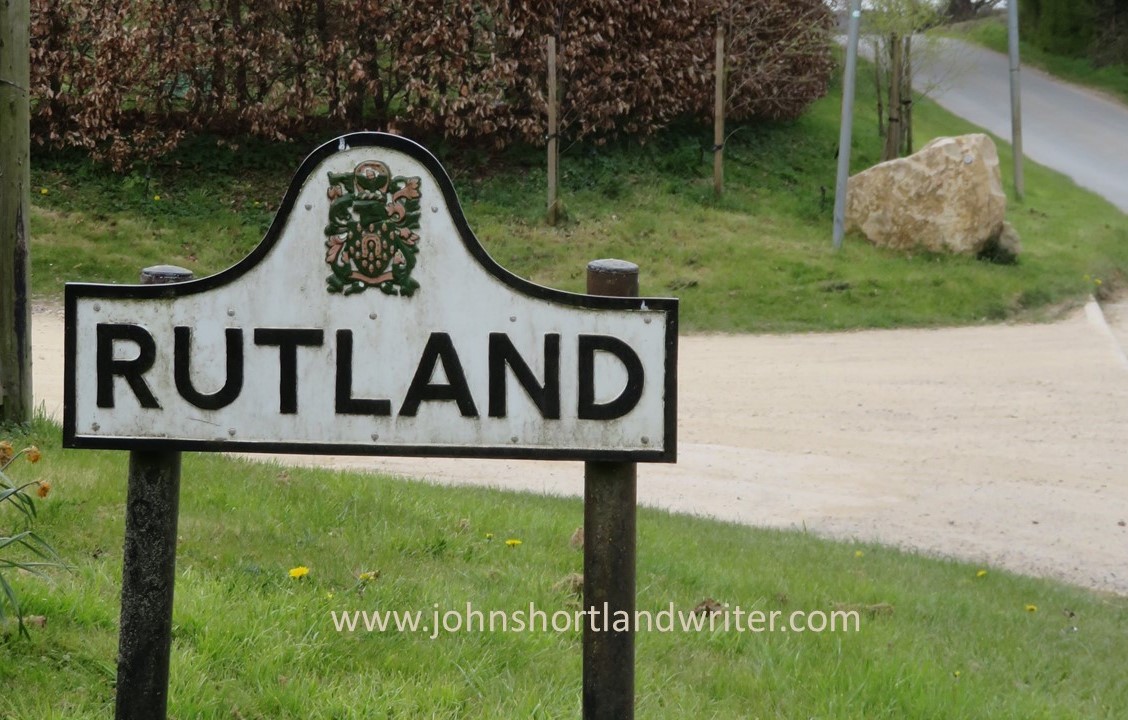
Crossing into England’s smallest county
The path through Pickworth Great Wood

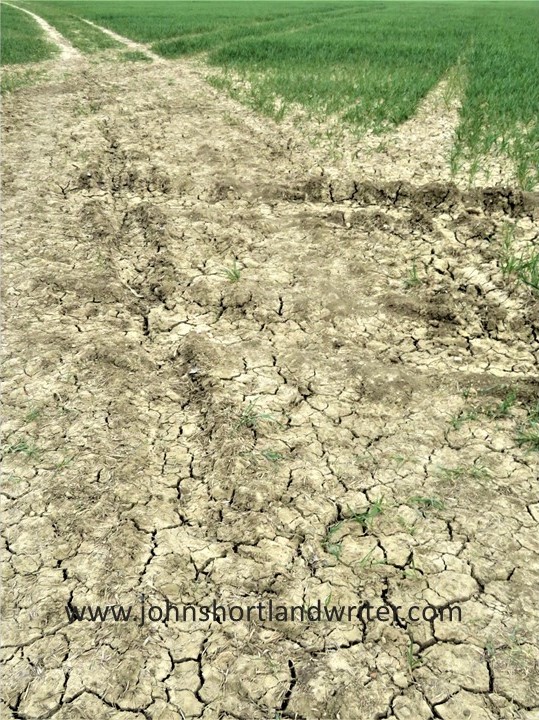
Beyond the wood, the path crossed diagonally over unseasonably dry arable land to the village of Pickworth.  It was at this point that I really felt that I was walking in Clare’s footsteps although we can safely assume that he knew most, if not all, of the paths that I would be taking that day.  John Clare, the Peasant Poet, born into poverty and distraught by the destructive changes to the countryside and its people at that time, died in 1864 in the Northampton General Lunatic Asylum.  It was at Pickworth where he laboured in the lime kiln which inspired him to write the poem The Ruins of Pickworth (click link here to read).  The lime kiln still stands although it is barely visible through a thicket of blackthorn.

No muddy boots this unseasonably dry Spring
The barely visible lime kiln where the Peasant Poet, John Clare, toiled

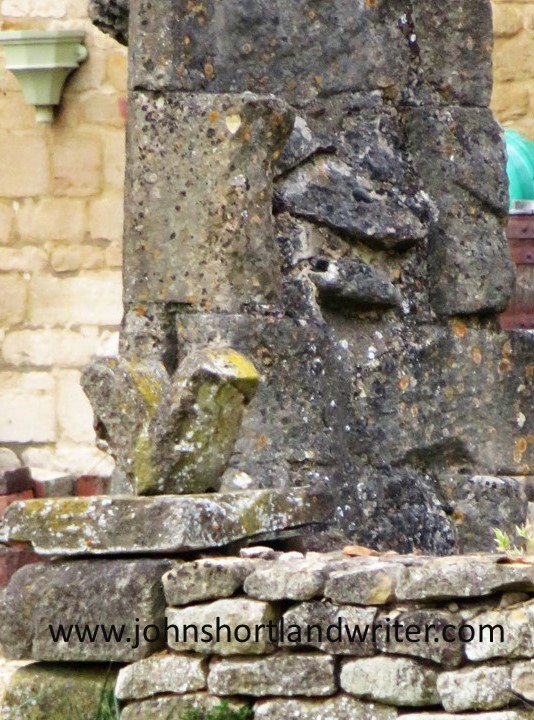
 Pickworth, like Aunby, is another village that has almost disappeared.  Thriving in the 1300s, it now has a population of less than a hundred.  The only sign of the old village is the crumbling stone arch of the church and various grassy mounds and ruts in the surrounding fields. The arch stands on private property but with the help of the camera, details of ornate mouldings and leaves could be seen. It is thought that the Battle of Losecote Field in 1470 fought two miles from the village may have been the cause of its depopulation.

All that remains of the old church at Pickworth is the 13th century arch
Pickworth Old Church – detail

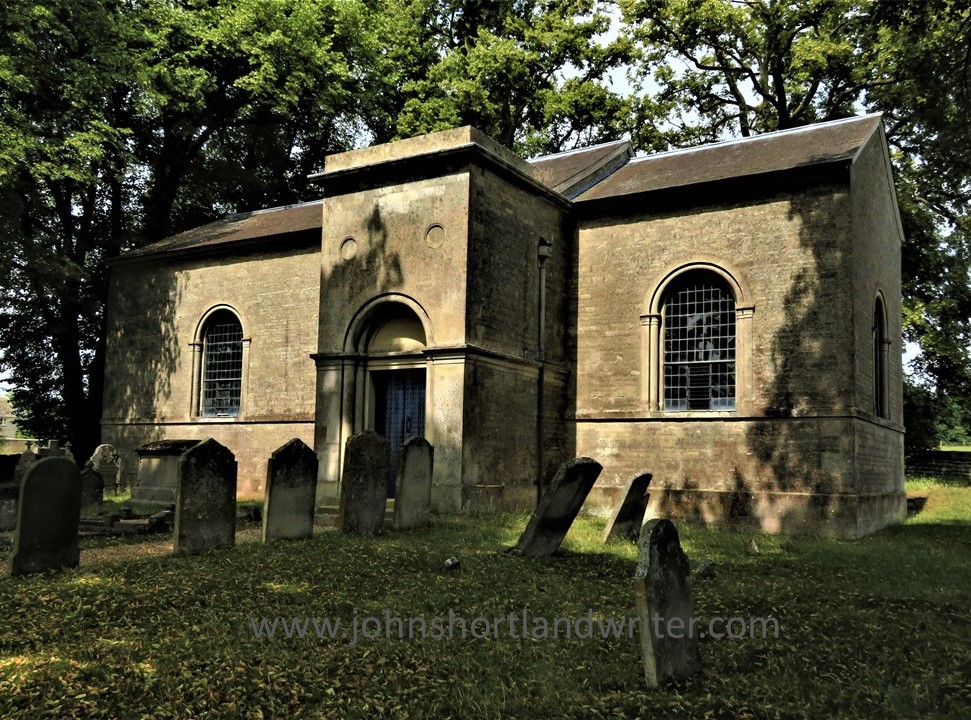
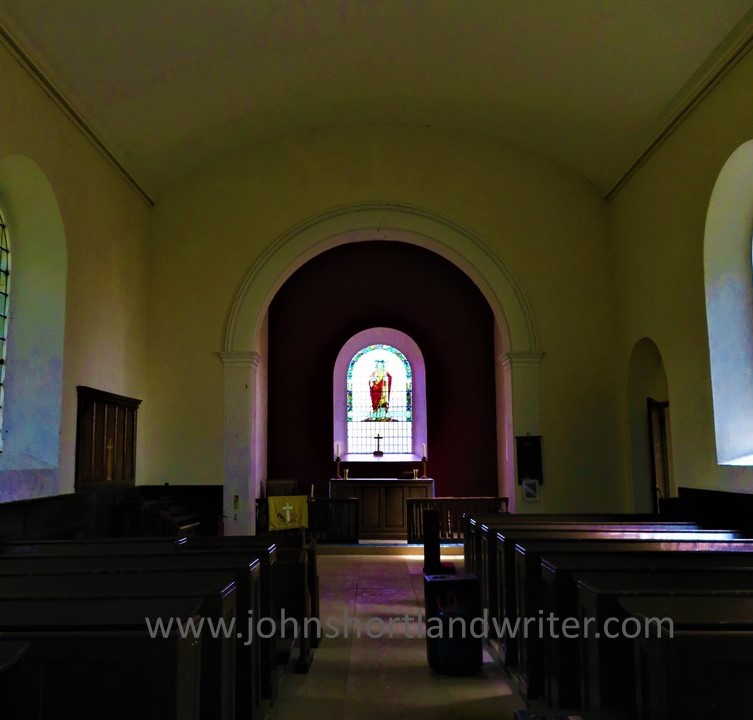
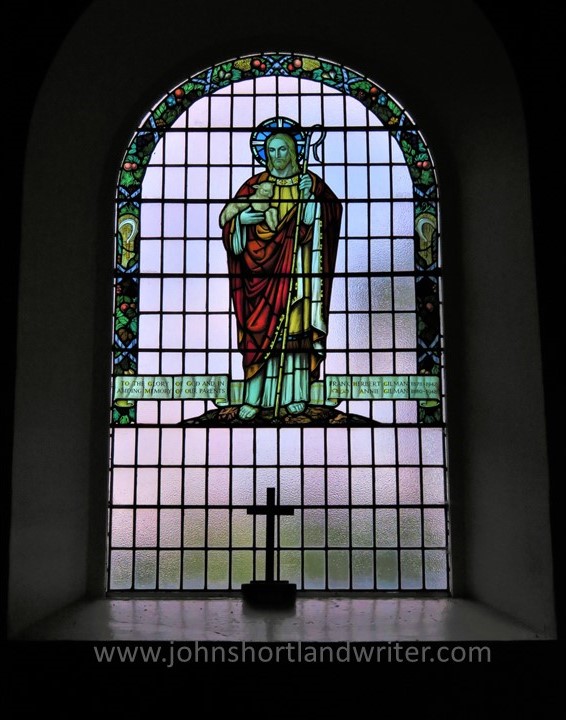
Although the association of Pickworth with Clare is important, to visit the Church of All Saints was the main purpose for my walk.  Built in 1822 at the bequest of Joseph Armitage of Wakefield, Yorkshire, it is a rectangular, stone building of plain beauty and fine proportion.  Set high on a bank and surrounded by trees, the interior is simply lime-washed, the only colour a small amount of stained glass above the altar.

The Church of All Saints, Pickworth
The simple interior of All Saints, Pickworth
The understated beauty of the only stained glass at Pickworth, All Saints

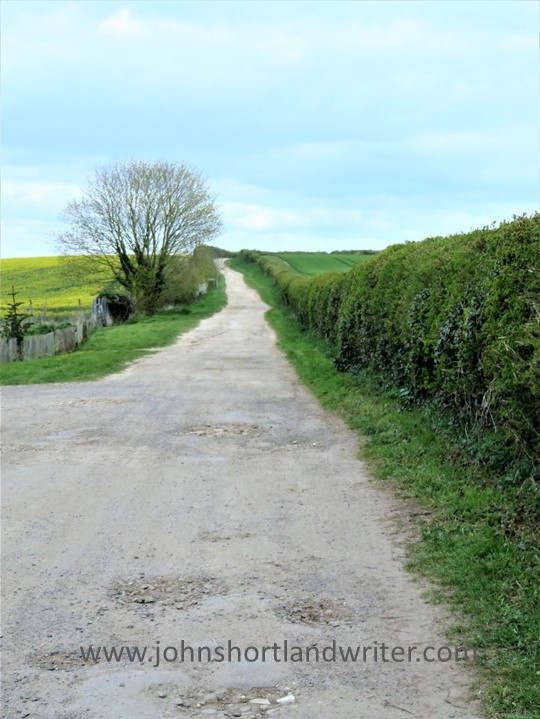
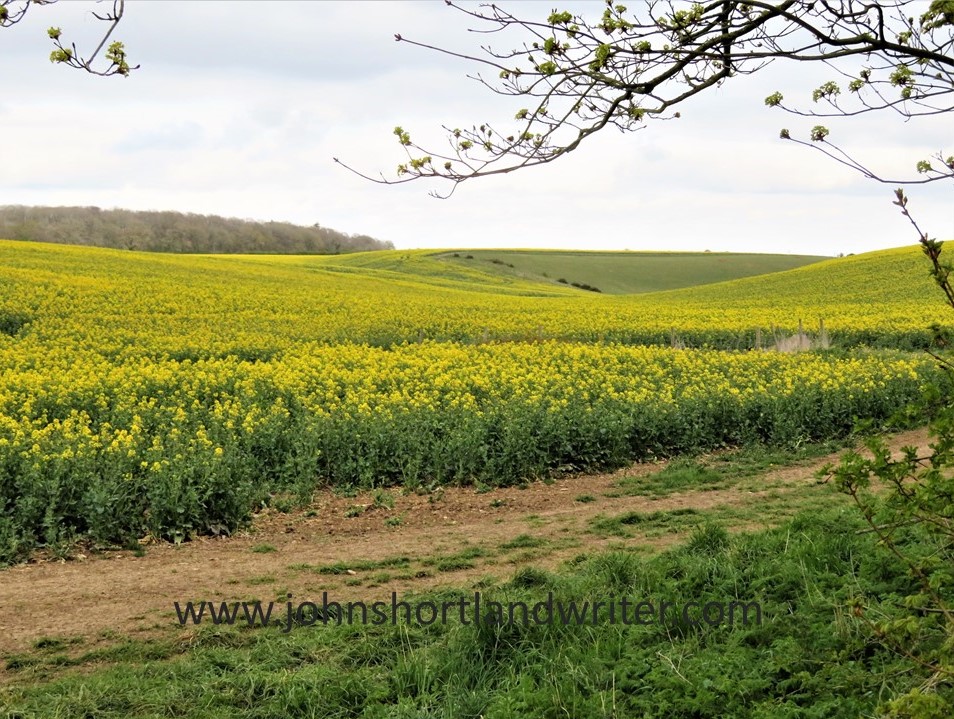
From Pickworth, an old drove road, The Drift, leads back towards Aunby by crossing Ryall Heath.  The road, now another old track, offers pleasing views across arable land, hedgerows filled with wildflowers and the sound of skylarks showering you from high with their song. The Drift ends at the junction with the road that takes you directly back to the start of the walk (turn left here).   Although the B4116 can be quite a busy road at times there are wide grass verges to make walking feel safe.  Finally, you reach the ford at Aunby, where this walk began.  Alternatively, a few yards before the ford you can take the lane that leads to Clematis Cottage, where I stayed for the duration of this oh-so-welcome-after-lockdown short break.

Pickworth Drift, the old drover’s road leads across Ryall Heath
Pickworth Drift, an ancient drover’s road

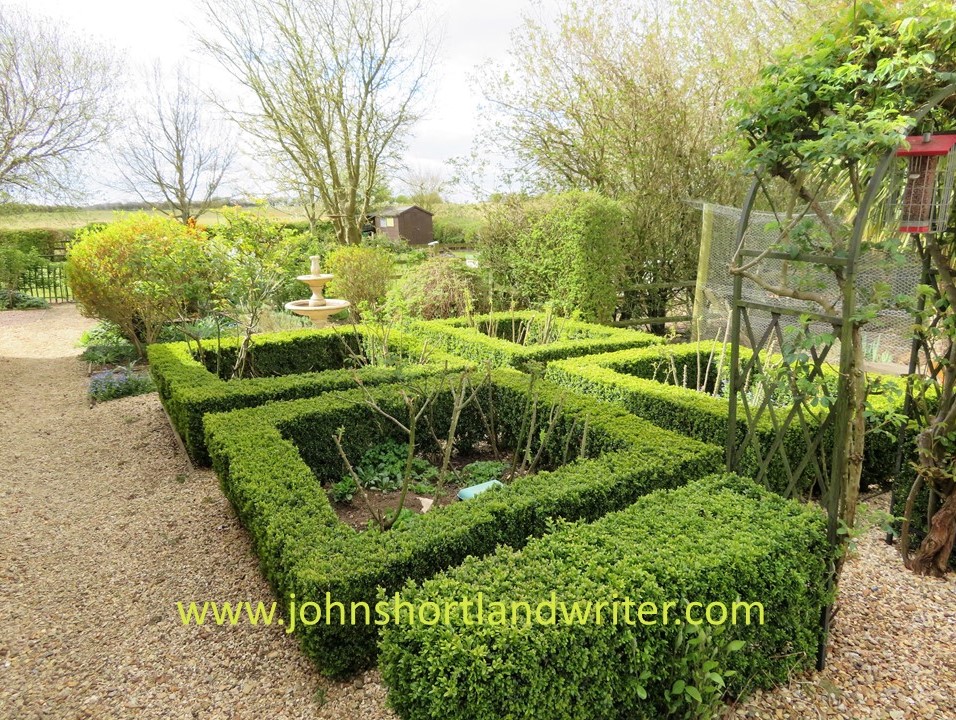
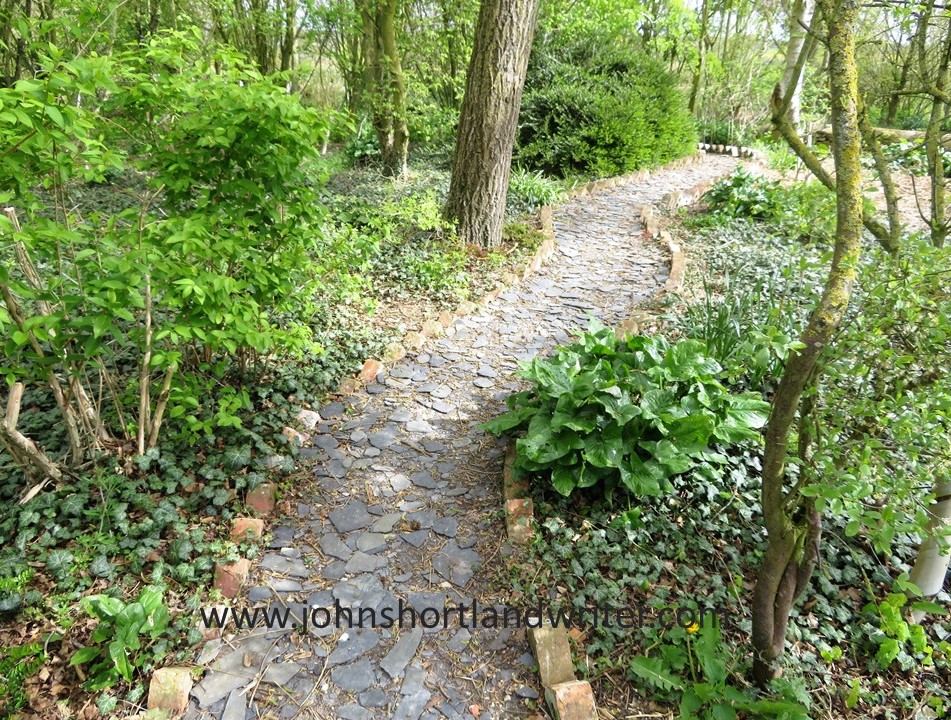
Clematis Cottages at Lodge Farm, Aunby is a small group of buildings converted into delightful, self-catering holiday accommodation.  Richard and Kaye Griffin, friends as well as the owners, live in the farmhouse where they provide every comfort to make a stay enjoyable.  Set in extensive gardens, their aim is to be self-sufficient in vegetables, eggs and honey.  Throughout the gardens there are paths and seating areas – one of my favourites is the summerhouse overlooking the small lake, a haven for wildlife.  Although set on its own and surrounded by fields, Stamford is only six miles away and the internationally renowned Rutland Water, where you can watch rare ospreys nest and fish, ten miles away.  It’s also the perfect base for the nearby Burghley Horse Trials.  To find out more about staying in one of the cottages and their range of home-produced chutneys, preserves and honey click this link here.

A corner of the pretty gardens at Clematis Cottages, Aunby
A winding woodland path in the gardens of Clematis Cottages, Aunby
Deer are frequently seen in the fields adjacent to Clematis Cottages, Aunby

Notes:  the walk is a relatively easy and gentle route mostly along roads and tracks.  In places the paths can be uneven and/or muddy but neither should deter anyone with average health and mobility.  Although there are some inclines none are prolonged or steep.  However, as always, care should be taken and appropriate clothing and footwear worn.  It is approximately eight miles in length so allow a good three hours to complete.

The Boy from London

I am a hills person.  I love walking – or even better – cross-country skiing in the mountains. I can also admire the huge skies and vistas of flat country.  However, it is with hills that I have always strongly identified with.  So, when I’m asked “where was home for you?” it isn’t the county of Buckinghamshire, or even the village I was brought up in that I respond with, it is the hills and the Chiltern Hills in particular.

A country lane in the Chiltern Hills winds its way through dense woodland

As a child, I lived on the very edge of the village and not being schooled locally and with no children of my own age nearby anyway, I learnt to spend many hours on my own during the lengthy holidays. Although our house was close to the River Thames I found fishing of limited interest preferring always to be out walking or cycling.  As I grew older I travelled further afield exploring the lanes, fields and woodlands, learning all the time about the ways of nature.  Back in the fifties and early sixties people seemed to have more time to answer inquisitive children about these things or, perhaps, it was just that in those days people were more connected with the natural world so were able to answer their questions.  Whatever the reason, I became more knowledgeable and enthusiastic about country ways than I ever did with schoolwork.  A consequence of this is, when asked the question, “where are you from?” I respond without hesitation (and with a certain degree of pride), “I’m a Chilterns man.”

A childhood spent exploring the fields and woodlands that surrounded home

It was not until I reached the ripe old age of 49 that I moved away from the Chilterns to start a new life in the Cotswolds.  Although as the crow flies, the Cotswolds are not many miles away (I can even see the distant Chilterns from the top of my lane) they are very different in character, the former being chalk and flint country, the latter limestone.  But it wasn’t the exchange of deep, wooded valleys with few, if any, streams for a landscape of far-reaching views, fast-running brooks and drystone walls that I noticed most of all, it was the language.  When I moved to this then unfashionable part of the Cotswolds twenty years ago it was still a forgotten corner of the world where, even if the local dialect had mostly died out, the twang of local accent hadn’t.  It reminded me of, for it is related to, the south-western tongue spoken by many of my country cousins and also by my friends further west still.   So, when I gave my usual response to the question, I was rather peeved to hear it acknowledged by the words, “so you come from London way, then.” 

A Chilterns cottage built using the local flint
Cotswold cottages look very different and are made with local limestone

Now, I hasten to say, that there is nothing wrong about being referred to as a Londoner.  It’s just that our capital city is as much a foreign land to me as it would be to an overseas visitor.  Ok, so that might be a slight exaggeration, but somehow, I just don’t relate to city life despite my mother being born and raised in London’s West End.  She had come to the Chilterns as an evacuee from WW2 through her war work and there met my father, a local boy – but that’s another story.  Suffice to say, that I am a child of two halves – I have country family and I have city family much in the same way as I am a child of two cultures and two religions.  Despite my relating to country ways and to complicate matters further, (although I should be used to it by now), it is to my mother’s culture and religion that I feel a closer affinity to.  It still grates, ‘though, when I’m thought of as a townie.

City girl sophistication meets country gent: my parents soon after marriage

As I mentioned earlier, school life didn’t hold much appeal and so I persuaded my parents that I should leave aged sixteen.  As soon as I could, I took myself off on my bicycle to holiday in Devon.  Leaving Exeter with tent, camping gas stove and billy cans loosely tied to the crossbar I clanked and clattered my way along the lanes of Dartmoor.   At the end of each day I would pitch my tent wherever I could and reflect with delight upon all the new experiences that had come my way.  Getting hopelessly lost, I ended up at Westward Ho!, a small seaside town on on the north Devon coast.  From there I travelled east finding the hills becoming ever steeper and the villages further and further apart.  One day, I ended up on a remote farm on Exmoor where I decided I would spend two days to recuperate before heading for home.  It didn’t happen. 
The 16 year old hits the road!
Remote hill farm, Brendon Barton where I intended to stay for only two days

Looking back, I can’t imagine what my poor parents were thinking for there were no mobile phones or credit card statements for them to track my progress or whereabouts.  I would telephone them occasionally or send a postcard always being deliberately vague as to where I was staying.  In the meantime, I remained at the farm working – at first for food then, as I became more established and with the tent discarded, for a bedroom and beer money.  By the time my parents turned up at the door several months later (after some shrewd detective work) I had settled into my new life and rapidly adopting the ways of the hard but exhilarating Exmoor life.  Dragged back home to “get a proper job” I never completely left Exmoor behind.  Every spare moment was spent on the farm and, as regular readers of my blog will know, I still spend as much time on Exmoor as possible.  Being a National Park, the landscape and buildings of Exmoor haven’t changed very much over the 50+ years since I turned up on Lorna and Dick French’s doorstep although they have, as have most of the others I knew in those early days, since died.  To my dismay, there is one other thing that hasn’t changed at all: when I respond proudly to the inevitable question with “I’m a Chilterns man”, their response remains the same: “So up-country then?  London?”  Over the years, the ‘boy from London’ has become ‘the man from London.’    And I’m sorry, Londoners, Mum and cousins – I don’t like the label!

Dick & Lorna French who welcomed me into their lives and in the process changed mine

Discovering the Five Senses in Lockdown

It sometimes takes a crisis to make us re-evaluate what is of importance in our lives and the present one of Coronavirus/Corvid-19 surely has to be the greatest that we will collectively face. Now, several weeks into lockdown we have all been developing new patterns to our daily regime, one of which may well be taking more exercise. Never before have we placed so much value on fresh air and being able to walk freely whether it be in our parks, gardens or open countryside.

Marlow watermark

                           Riverside path, Higginson Park, Marlow (before social distancing).                                 The river is the River Thames in Buckinghamshire

Living where I do in the Cotswolds surrounded by fields and with woodlands and the river close by it is relatively easy for me to enjoy the open space. For others able to take advantage of their enforced free time, it may involve a longer walk and I have certainly noticed an increase in the numbers of walkers and cyclists here in the valley. I have also noticed that for many of them one aspect of their lives hasn’t changed: as they walk their eyes are glued to the screen of their mobiles and headphones are clamped to their ears, seemingly unaware of their surroundings. It has made me think all the more of our five senses and how we use (or should use) each one of them when out exercising.

Nr Fingest copyright

Cycling in the Chiltern Hills

SIGHT For those of us blessed with the gift of vision, perhaps sight is the most important sense we use and perhaps the one we most take for granted.  Without it, it is still possible to enjoy one’s surroundings for the other senses become heightened but I doubt if anyone would deny the pleasure of seeing the beauty that surrounds us on our daily walks. Even within cities there is much nature to be enjoyed although I admit that sometimes it has to be sought with more vigour and awareness.

Viola watermark

Look everywhere – self-sown violas peep out from overhead guttering!

At this time of year, more than any other season, there is much to see. Tight leaf buds unfurl into an explosion of vivid green foliage, iridescent wherever sunlight filters through; young ducklings tumbling into the park pond to take their first swim. But it isn’t just the natural world to be seen anew, there are other things too. Although it had been there for more than a hundred and forty years (and I’d walked past it very day for twenty) the date scratched into the stone on this wall had gone unnoticed.

Date stone watermark

Who scratched this date into the old stone wall and why?

HEARING Along with sight the second most important sense we use on our daily amble. Apart from the glory of birdsong there are other sounds that bombard us when out walking. The wind flurry that makes the catkins tremble and shed their pollen, the stronger breeze that make the twigs and branches clatter gently against one another. Then there’s the rustle in the undergrowth. Stop and wait silently and with patience you may be rewarded by the sight of a little field mouse going about its daily chores or a rabbit venturing out to feed.

Field Mouse watermark

patience was rewarded when this little field mouse ventured into the open

Altamont Gardens (8) watermark

… and also this rabbit

The sound of the river alters constantly. The smooth, barely audible glide of the water changes to a tinkling of soft musical sounds, its flow interrupted by a fallen branch. A few yards further downstream they rise to a crescendo as they crash and tumble over the old millrace before returning to silence as the flow stills in the calm of the millpond.

Radford Mill (1) watermark

The old millrace 

Radford Mill watermark

the calm of the millpond

TOUCH   In the present crisis we are sensibly being discouraged from touching things unnecessarily. Out on walks perhaps care may be advisable when opening gates or climbing stiles but, if you do, take a moment to think about what you feel. Heed the cold steel of the metal five-bar gate and the way it slowly warms beneath your hand; feel the rough timbers of a stile worn smooth from much use over the years. Of less concern health-wise – and all the more pleasurable for that – become aware of the softness of new horse chestnut leaves; later in the year they will become as harsh as sandpaper. Run your fingers across the twisted, grooved bark of the sweet chestnut tree and stroke the furry softness of the aptly named ‘Lamb’s Ears’, the favourite garden herbaceous plant Stachys byzantina.

Sweet Chestnut 4 watermark

The deeply grooved bark of the Sweet Chestnut tree

Stachys byzantina  Lamb’s Ears

SMELL   The scent of spring is everywhere at the moment and to be delighted in. However, the sense of smell is also a powerful trigger of long-forgotten memories. In a few weeks’ time the sweet scent of drying hay in the meadows may recall childhood farm holidays but for now there is the unique smell of new-mown lawns. Both start off as freshly cut grass yet their scent is so surprisingly different. Likewise, compare the subtly differing fragrance of apple and cherry blossom, both in their full-blown glory right now.

Drying hay before baling

The smell of freshly-mown grass…

Without even leaving home, squeeze the leaves of the herbs on the kitchen sill and notice their variation in scent, their colours and textures too. Early morn in the woodland, especially after warm rain, the delicate perfume of bluebells quickly disappears as the sun becomes stronger. Half-close your eyes and glory in their colour, in the silence and in their perfume and leave all cares behind you – if only for a while.

discover the different textures & scents of herbs

The vivid greens & blues of an English beechwood in spring

In town, the scents are also there just waiting to be noticed. Rain falling on roads and pavements or scorched by hot sun both produce delightfully tarry smells, one mild, the other strong. In the formal beds of the local park flowering bulbs stand in regimental rows; each have a unique scent which rises in the air to mingle with the vanilla fragrance of wallflowers. The wallflowers, their dull green foliage barely noticeable throughout the winter, now shout out the arrival of spring through the colours of their flowers of brick red, orange and yellow.

Tulips & wallflowers – a favourite park bedding combination

TASTE   In shaded places where the soil stays moist you may be greeted – even before you arrive – by the pungent scent of wild garlic. A prolific carpeter of the woodland floor its leaves and flowers make a useful ingredient to spring salads. Wild garlic or Ramsons to give it it’s country name, is fickle where it will grow. In some places that would seem suitable, not a single plant can be found. A less common member of the onion family to be found in the wild are the chives of our gardens, they grow along road edges and field boundaries locally. It is thought that they were spread by the old drovers of centuries ago so that they could harvest them along the way to liven up a bland meal. There is no doubting its identification, disturb the tubular green leaves and the familiar scent is immediately released.

Ramsons grow in damp, shaded places

It is not only the onion family that can be nibbled en route. Richard Mabey in his book Food for Free, published many years before foraging became a ‘craze’, suggests nibbling on the half-open buds of hawthorn. Many a country child has done so over countless generations and perhaps that is how they got their old name of Bread and Cheese. To me, they only have a slightly nutty taste and texture.

Hawthorn leaf buds are not really worth eating!

As a boy, brought up close to the River Thames, the hollow stems of the common reed were a regular source of pleasure for the soft pithy centre could be drawn out by pulling the stems through clenched teeth. Close to my present home there is also a small reedbed. These tall reeds have something to offer every one of the other senses too: sight – the pleasure of watching petrol-blue damsel-flies sunbathing on the stems; hearing – as they sway and rustle with the slightest breeze; touch – the coarseness of the leaves, a contrast to their smooth stems; smell – those of the river as it seeps around the roots, a heady mix of wet mud and wet greenery.

Only the male of the Beautiful Demoiselle damsel-fly has petrol-blue wings & body

So, within the bounds and restraints of the Covid-19 advice when out on your daily exercise, remove the earphones, place the phone in your pocket and use, really use, every one of your senses. Not only will you notice more, you will wonder how you never managed to notice them before. Stay safe, stay alert and take this unique opportunity to discover a new world on your doorstep.

Finally, one word of warning. Only try tasting wild plants if you are confident they have been identified correctly. If you decide to forage, do so responsibly and only pick a few leaves at a time. Make sure that all plants for consumption are free of pesticides and other contaminants, especially those growing in or near water.