Mentors – part 1

Mentor.  There are dozens of words to choose from when looking for an alternative description of someone who takes on this role: life coach, guide, adviser, confidante, counsellor, influencer to name just a few.  One thing that is certain is that the four people who played such an important role in shaping my life would not recognise any of these terms, not even the word mentor.  And to be honest, it is only with the benefit of hindsight that I recognise them as being mentors at all.

Mentors: Lorna French, Dick French, Cyril Heber Percy, Pamela Heber Percy

If I had to choose just one word, I think it would be guide for that seems to describe what they were during their lifetimes. It is only since they’ve been gone – for sadly,  they have all been dead for more than twenty years – that I actually think of them even as that for their influence was subtle.  They would almost certainly find the description laughable for there was never any conscious effort to take on that role.  It was one that had come about by chance meetings leading to friendship, respect and love.

Despite the angelic appearance I wasn’t an easy child!

I was not an easy child – I know that statement is hard to believe now (laughs).  A streak of rebellion has run through our family for generations and although I wasn’t outwardly rebellious, I sometimes made life difficult for those around me.  From the age of fourteen I found school a waste of my time for I had wanted to study sciences and school insisted I did languages instead.  I’m sure they were probably right for studying French and English had come easily to me whereas I’d struggled with even General Science.  To me that was irrelevant for I had desperately wanted to learn botany and biology.  Instead, I now found myself sitting in German classes seething inwardly and resenting every moment of having to learn the difference between der, das and dem or liebe and Lieber.  I began playing truant and found that if I left school after the lunchtime register had been taken nobody seemed to notice and  I could walk the three hours back home through the woods and fields where I could practice my botanising.  I finally stormed out of school halfway through my ‘O-level’ exams before sitting the dreaded German but not before I’d sat French and English.  I passed both with flying colours but my parents were furious.

Me in my element!

More out of desperation, my parents agreed that I could take my bicycle and tent on the train to Exeter and cycle and camp across Dartmoor for two weeks.  It would be my first solo holiday and, I imagine, they agreed in the hope that it would make me appreciate just how fortunate I was to have been given the chance of a good and expensive private education.  I arrived in Exeter in blazing sunshine and armed with maps and far too much self-confidence started my journey westwards.  In those days, with no mobile phones or credit cards to monitor my progress, my parents provided me with stamps and cash so that I could send them a postcard at the end of each day.  I reached Okehampton, a small market town on the fringe of the Dartmoor National Park in a sweat and seeing from my map that I wasn’t that far from the sea instead decided to cycle northwards to Westward Ho, a beach resort on the North Devon coast.

I had reached the sea

Refreshed from an early morning swim in the sea (I’d arrived there at 2.00 in the morning) I looked again at the map and now decided to travel eastwards to a different national park, Exmoor.  I’d read the novel Lorna Doone at school and had loved it and the thought of exploring the rugged and isolated places where she had met and married John Ridd, only then to be shot at the altar of Oare church, filled my imagination.  Little did I know then that soon I would be meeting a real-life Lorna Ridd who with her farmer husband would welcome me into their lives.

Oare Church – where Lorna Doone was shot at the altar on her wedding day

Three days later, having cycled over some tough and exhausting hilly roads I ended up at Brendon Barton, a remote farm perched high on the edge of the open moorland.  It was coming towards the end of my fortnight away and so I knew that I could only stay there for one or two days before the long bike ride back south to Exeter and home.  Venturing into the farmyard I could hear sounds coming from inside the barn where Dick French, the farmer, was working with sheep.  I asked if I could camp in one of his fields but he didn’t look up and instead replied, “be a good lad and bring those last two sheep in here.”  I had never been near a sheep before and so spent the next half an hour running around the yard in circles before finally managing to herd them inside.  I was out of breath, sweating and covered in sheep shit but I found a contentment in my success that I’d not experienced before.  Years later, Dick and I would laugh about that first encounter.  I used to say that I should have just got back on my bike and cycled away to which he would respond with, “when I saw you wouldn’t give up, I knew that you’d do!”

I cycled over Exmoor’s remote, hilly roads
Preparing for a good night’s sleep, Brendon Barton 1968

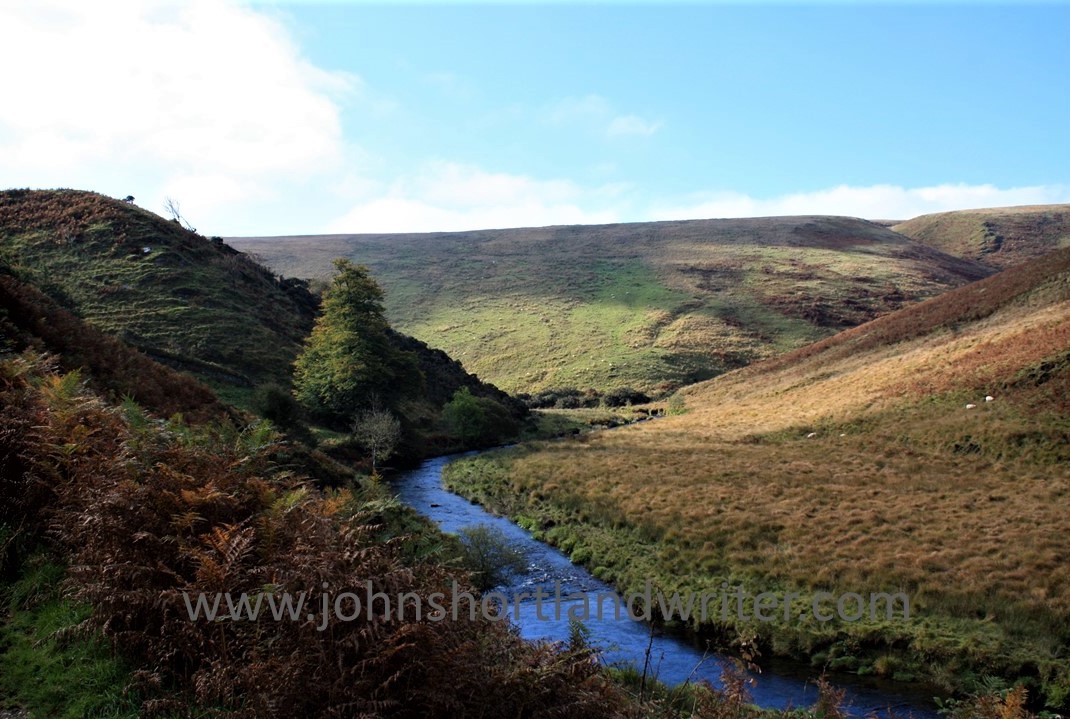
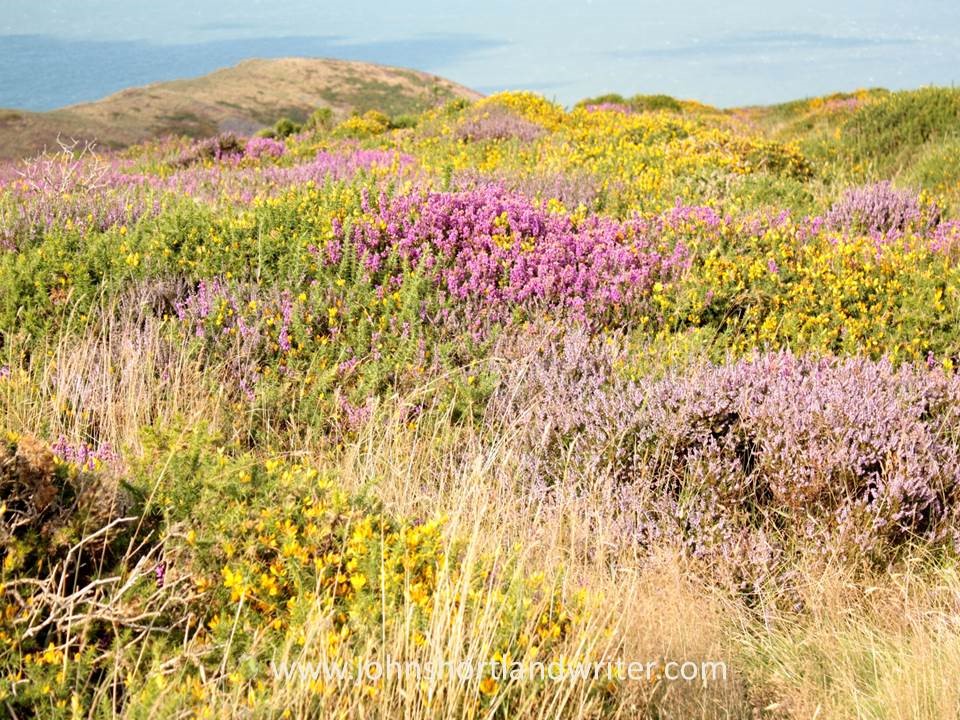
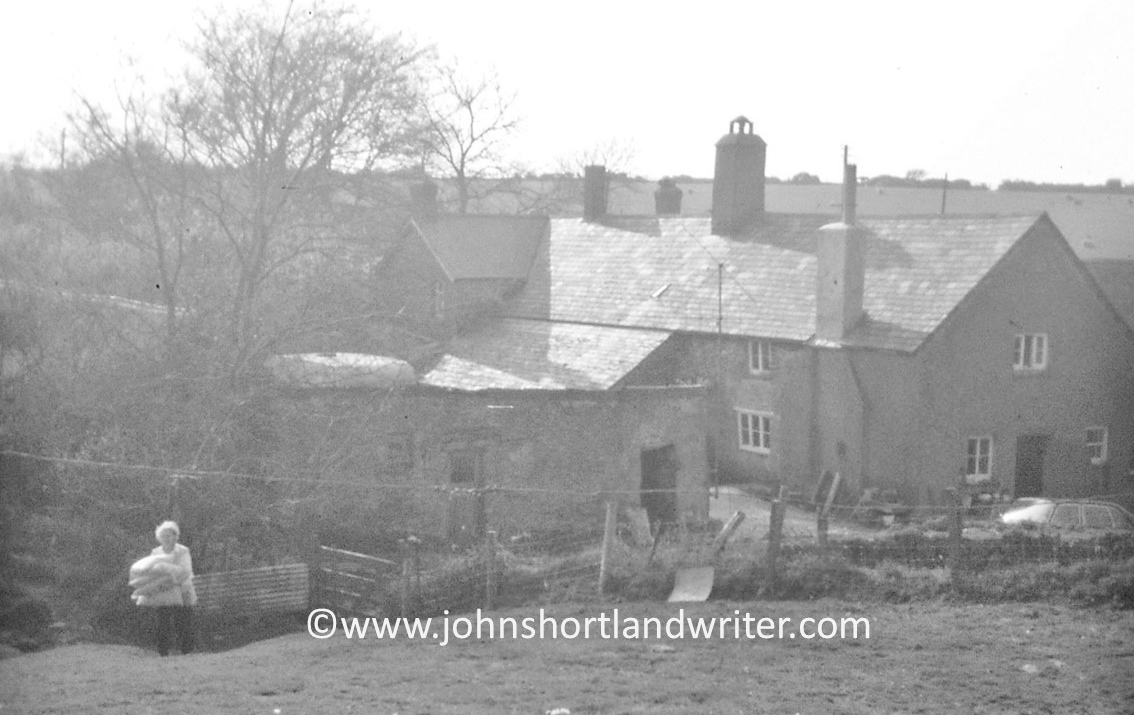
By my second day on the farm I had helped bring in the cows and Dick had  taught me how to hand milk  them.  Hearing I could ride, he suggested that I took Star, one of their horses up onto the moor to have a look around    The heather was in flower and its deep purple carpet continued to the sea.  Beyond, the coastline of Wales could be seen in the hazy far-distance.  I ventured into a deep combe before crossing a stream and climbing up a ridge.  There I spotted a deserted farm cottage* half-hidden by beech trees.  I stood entranced by the beauty of my surroundings and its all-encompassing silence.  I felt I had found my true home and with no consideration for my parent’s concern, I decided never to leave.  I sent them a postcard saying that I’d missed my train home.  I remained purposely vague as to my whereabouts, just saying that I’d kept back enough money to buy a new railway ticket.

The heather clad hills of Exmoor reach to the sea
Half-hidden amongst the trees stood a deserted farm cottage

A week later I was having my meals in the farmhouse enjoying the banter amongst the farm lads and hearing the discussions about the tasks that needed  to be done around the farm.   By the time harvest came round, my tent had been ditched and I was sleeping in the house in a comfortable bed, receiving a small wage and spending evenings in the village pub with new-found friends.  Dick had said that it would be his wife Lorna (Ridd had been her maiden name) who would decide whether I could stay or not.  She was such a hard-working woman and one more person to care for might be one too many.  Her approach had been that one more would make no difference and so she looked after me while I spent long days working at Dick’s side, listening to his tales and learning about their way of life.  Asked about my parents, they seemed content enough with my explanation that I was spending extended time away having just left school (the term gap year hadn’t been invented then!). 

Brendon Barton 1968I soon moved into the farmhouse and a comfortable bed
Harvest was still carried out the old-fashioned way

Months passed and the harder I worked the more I knew an Exmoor outdoor life was for me.  However, it came to an abrupt end when one day I walked into the kitchen to find my parents sitting there telling me it was time to return home. I was devastated and asked Dick why he hadn’t told me they were coming.  “I knew you’d hide up on the moor,” he’d replied – and he was right!  Although I was pleased to see my parents I pleaded with them to let me stay.  Dick, in the first of his subtle acts of persuasion that I can recall, asked me to help him look at a horse in the barn.  There was no horse, instead we sat and talked about our time together before he reminded me that my home was with my parents and, in time, running our family business.  Don’t forget, he’d said, there’s a room here always available so why not come down for lambing next spring.  To ensure that I did he added, “You’d be doing me a great favour, I could do with your help.”

The barn in 1968 where I had my first taste of farming
I returned for lambing in 1969

Lorna, too, had her subtle ways of persuasion.  “Your parents have said that you can come here for Christmas if you’d like to.  We’ll be on our own and some young company would be good.  It’ll be just the three of us.”  She’d also boxed up the bantam chicks that I’d been caring for so that “you can carry on farming at home.”  After that first Christmas I visited them both for many years, helping on the farm whenever I could, and exchanging letters and phone calls.  They were always my first port of call when I was having difficulties, feeling down or just wanting to celebrate with them.  Life hill-farming is hard, the weather often unmerciful and the hours long but there are also the pleasures of being part of a small tight-knit community that will help one another whatever the reason.  Leading by example, they instilled in me a love of farming and hard work, a sense of duty, generosity of spirit and kindness.  I will leave it to others to decide whether they succeeded or not!  From them, I also acquired an even deeper love for being outdoors regardless of the weather and especially in remote, wild landscapes.  Little did I know then that these skills would be put to the test when, aged forty, I began my career change to follow my outdoor dream, or that Exmoor would still play such an important part of my life today. 

The bantam chicks that Lorna sent back home with me, 1968

Dick and Lorna French died just before the Millenium and the farm was sold to another local farming family, some of whom I’ve now known for almost sixty years. Because of that, I still on occasion visit Brendon Barton and sit in the kitchen drinking tea to discuss farming and, of course, putting the world to rights.  A bonus is that Maria, the new ‘Lorna’ has been creating an extensive garden around the farmhouse, so we have gardening in common too, as well as a lifetime of shared memories.  It would be another fifteen years and then as a man, before I would meet my other mentor couple.  Cyril Heber Percy and his wife Pamela’s lives were worlds apart from Dick and Lorna’s but there were some similarities too.  Part 2 tells their story.

Lorna & Dick French

Have you had a mentor or mentored someone?  What does it take for someone to become a mentor?  Our parents have probably the greatest influence on our lives so why does a mentor s role take on such importance? Let’s hear your story either in the comments below or, if you prefer, by using the Get in Touch tab at the top of this page.  Thanks to Diane Highton for posing the question that triggered this blog!


* The deserted cottage still stands in splendid isolation hidden away behind the trees, albeit now as a ruin.  It has a fascinating history and has been the subject of much research in recent years.  Take a look at the website devoted to the story of Hoar Oak Cottage

Moving Into Autumn

The autumnal equinox has just past and with it comes those rare, clear and sunny days when the outdoors beckons, and your senses become alive to every detail.  Perhaps it is because you’re all too aware that soon there will be many days when the countryside is shrouded in a clinging, wet mist that takes hours to lift, if it does at all.  An early-start walk is all the better for several reasons: the light is extraordinary, the air clear, and there are few, if any, people out and about. Perhaps, best of all, with the shortening days, early isn’t at some God-forsaken hour 😉

Early morning sunshine…

From our little, Cotswold stone-built house it is only a matter of yards to the river.  Unlike the true days of Autumn, the river is also clear.  All too soon, the warmth mixing with the cool will see the vapours rise, often hiding the surface and sometimes blanketing the whole valley.  Today, despite the frequent rain showers we’ve been having the water levels are low, there are no birds singing and I have only a sentinel heron to share it with.  Dismayed at my appearance, he flies off lazily with a scolding, harsh croak only to settle a few yards further away to watch me as I pass.  No sooner have I done so than he returns to his favoured spot to continue his hunt for crayfish.

The heron rose with a harsh croak…

Although the sun is shining, it is still set low in the sky, casting lengthy shadows and intensifying the first changes of colour in the trees.  As it climbs higher, so the colours will appear to fade and the shadows shorten, and another part of the early-morn magic will be lost for another day.

First hints of autumn…
The long shadows of early morn…

Reaching the plantation, the sun filters through the still-densely clothed branches, diffusing the light and giving it the look of an Impressionist painting.  Perhaps this is how Monet got his inspiration when looking at his waterlily pool.  The path stretching ahead just invites you to walk onwards.  At its end, where it meets the lane, the first of the stone houses in the nearby village remain silent, as do they all, for their occupants are still either asleep or not yet venturing out.  They are missing so much but I relish the silence and glad that it isn’t disturbed by the sounds of civilisation.

Almost, if not quite, an Impressionist painting!
Cotswold stone cottages

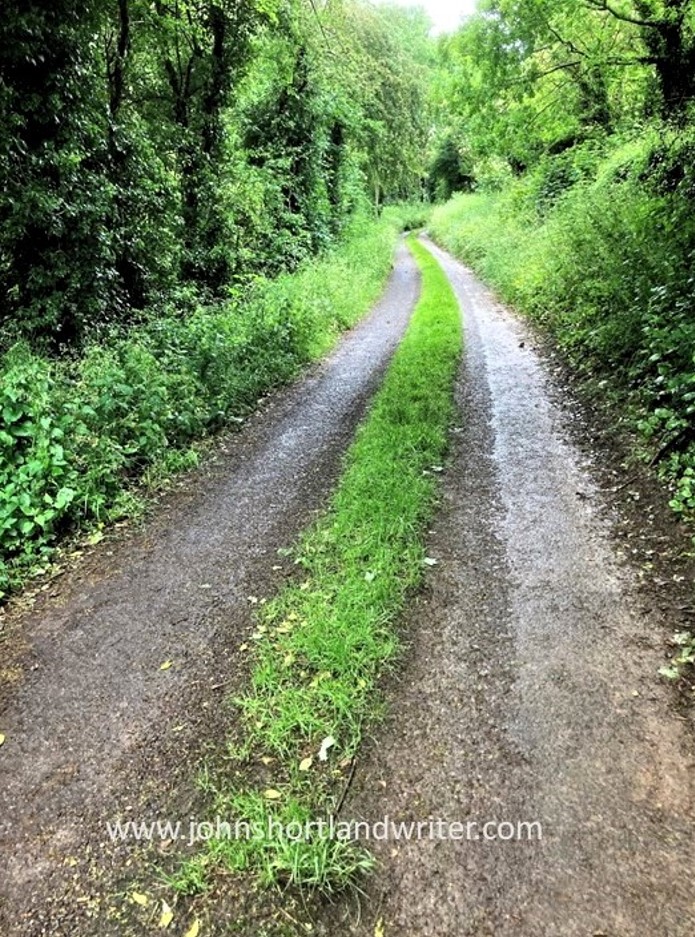
There are four lanes that lead into the secret valley.  The one that I now take is little used and the grass grows thickly in its centre.  Another is similar and, with no passing places for a mile should you meet another vehicle, only those with good reversing skills tend to use it.  Occasionally a ‘lost’ driver attempts it, thinking it will be a short cut to their intended route, only to end up traumatised by the experience.

One of the little-use lanes out of the secret valley…

All along the lanes, the banks and hedgerows are thick with berries and the fading flowers of summer.  Every year I intend to make a note of what I see but, although I never do, I can be fairly certain of seeing the same late bloomers, sometimes right though to Christmas.  These single flowers are extra-special, as they cling onto life reminding us of their glories past and giving us hope for the following year.

l-r top: hawthorn berries, crab apples, campion
l-r bottom: cranes-bill, prickly sow-thistle

I have reached the cattle sheds now at the top of the hill above my cottage.  Large and airy, they are empty and silent now for the livestock is still out in the fields and making the most of the last of the summer grazing.  By Christmas if the season is reasonably mild and dry, or sooner if not, they will be brought in to be kept dry, warm and fed.  The barns surrounding the sheds are stacked high with straw and hay, their bedding and feed – in a good year, there will be enough to last the winter however long it maybe; in poor summers extra will need be purchased for they will not be returned to the valley’s water-meadows until they have calved and the weather is right.

Enjoying the last of the good weather…

It is a short downhill walk to home now.  Within minutes I will be back, the kettle on and looking forward to a well-deserved breakfast.

Home sweet home…and breakfast!

.

.

.

Ash to Ashes?

On the farm where we keep our horses there is a venerable, old ash tree. ‘So what?’, you might ask, for around much of Britain ash trees are two-a-penny; in fact, their self-sown seedlings can be quite a nuisance. Well, firstly, this particular ash is very special.

Growing halfway along a scrappy old hedgerow dividing two fields, the ash has seen generations of farmers, farm workers and, perhaps, lovers all sheltering from the sun and the rain. It would seem the obvious place to rest when taking a break from toil in the heat of summer harvest and haymaking. Perfect, when its branches spread widely to cast shade but not when the trunk stands bare, its branches freshly pollarded. Years of pollarding have created a relatively short trunk full of cracks and fissures, the home of bats, owls and the occasional nesting kestrel. Its branches show the characteristic shape of old, abandoned pollards.

Pollarding, the removal of branches, is an ancient country method of producing straight poles. These would be used in many different ways from sheep hurdles and fencing, for building material and posts, to pegs and walking sticks. I have quite a collection of the latter, my favourite being a five-foot ash stave that I cut as a sixteen year old. Over 50 years of continual use it has become as smooth and as polished as if it had been carefully honed.

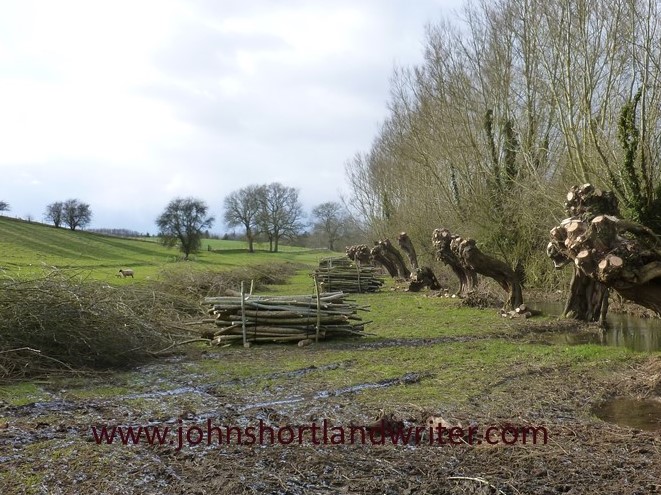
Willow coppicing. The branches, known as cordwood, stacked ready for transporting

Pollarding is carried out every few years, the time period varying with the timber size requirement and the rate of growth. Contrary to what one might expect from such drastic treatment, pollarded trees have a much greater lifespan than those left unpruned. Or they did have.

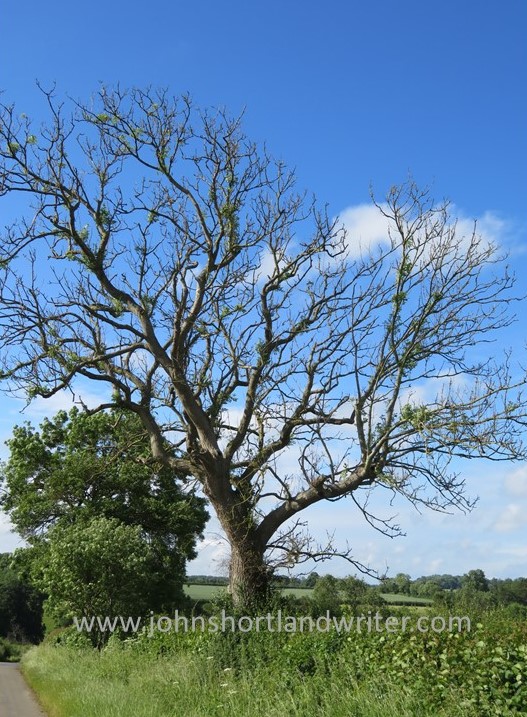
Ash Dieback disease, Chalara, was first seen in the UK in early 2012 on trees imported from Europe. A total ban on importing new trees came into force later that year but, by then, the disease had begun to spread. A classic case of ‘too little, too late’ for Chalara had been known on the Continent since the early 1990s. Now it is to be found in many regions of the British Isles. Here, in the Cotswolds, it has been slow to show its face but this year, the effects are noticeable with dead and dying trees standing alongside others that appear not to have been infected.

Stunted & sparse leaf growth on diseased ash trees
A severely infected ash tree with a healthy tree behind

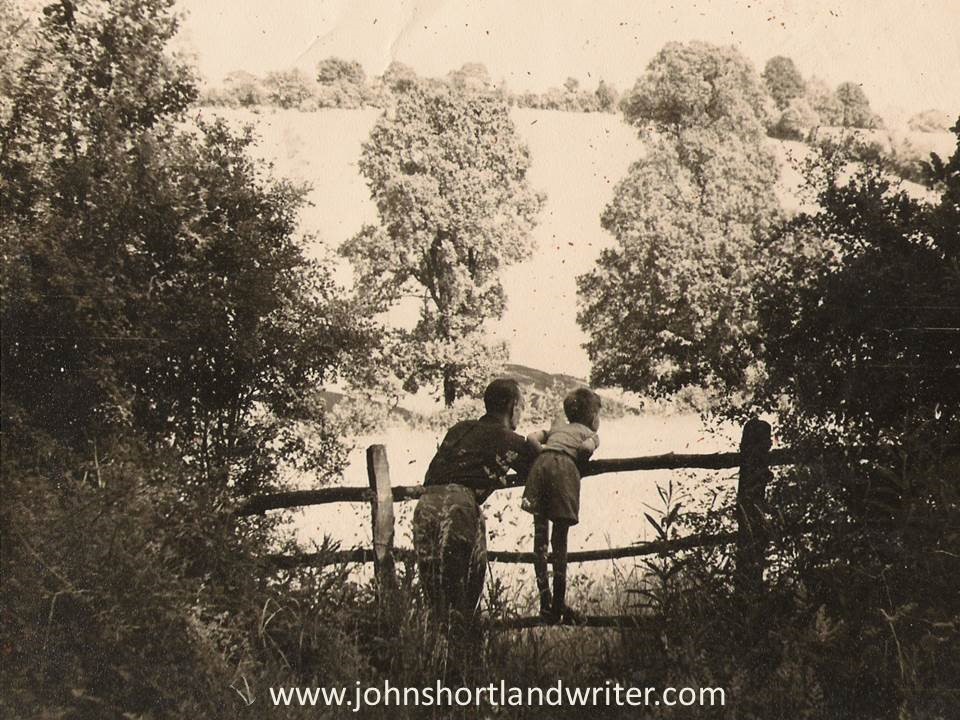
It is thought that probably 90% of all ash trees will succumb to the disease, the loss of such a great number dramatically changing the appearance of the countryside. As a boy I lived in a road that was lined with elm trees. Like the ash, those in our garden my father regularly pollarded and I would be sent up to climb onto the lighter branches to saw them off. No health and safety issues in those days! A favourite old photo of mine is the one below showing my father and I in what now looks an idyllic rural scene. It also shows how old elm trees were once the dominant feature of English lowland landscapes; all gone due to the ravages of Dutch Elm Disease that arrived in the 1970s. It is hoped that by not clear-felling the ash, as they did with the elm, disease resistant trees may be found. If not, once again our treescape will change just as dramatically.

My father & me with elm trees dominating the landscape c.1956

Ash, Fraxinus excelsior, is more often allowed to grow unchecked to its full glory. The pinnate leaves and wide-spreading branches create a light shade under which many of our native flowers thrive. It is also home to bats, birds and numerous insects including six of our rarest beetles and flies. It is especially associated with the scarce Brown Hairstreak butterfly (source: Devon Wildlife Trust) – only time will tell whether this butterflies breeding success will decline even more.

A healthy ash tree in spring

In the spring, before the leaves open, the ash bursts into flower, all too often overlooked. Make a note to take a closer look next spring, for it may be one of the last chances you have before, like the elm, it too fades into history.

Ash flowers in early spring before the leaves open

If you have a favourite ash tree in your own area why not photograph and upload it onto a nature recording website such as iRecord? That way, you will be preserving it forever and help to create an historic record for the future. Perhaps one day there will be disease resistance and ‘your’ tree can be replaced. You can find the link here.

Victory and a Brighter Future

War, it is often said, is made by old men for younger men to fight and die. Although this is true, as is the realisation that many wars are wars of vanity and/or stupidity, sometimes sadly, they are necessary. As we celebrate the 75th anniversary of the end of World War 2 in Europe, we need to reflect on the suffering it caused to the peoples of all nations. We also need to reflect that just as the First World War wasn’t ‘the war to end all wars’, neither did peace in Europe bring a future of peace throughout the world. It is with immense gratitude to our parents and grandparents that the end of hostilities in 1945 brought an enduring peace to Europe and the West. However, peace is a fragile object to be nurtured and handled with great care and the recent turn of events with Covid-19, Brexit and the tensions arising from the radical changes in USA diplomacy gives considerable rise to concern. We can only hope that our leaders remember how the rhetoric of the 1930s became the reality of the 1940s.

WW2 memorabilia (2) watermark

Like virtually every other family in the land, mine suffered mixed fortunes. My father, the eldest of three boys survived the conflict as did the middle brother. Sadly, the youngest of the three died, not by enemy gunfire but by his own hand in Austria. By the age of 23 he had already seen more pain and suffering (we can assume) than he could endure and the thought of returning to civilian life proved too much. He is buried in a Commonwealth War Grave beside his fallen comrades in Klagenfurt. For his parents it must have been very hard to receive the news when they had believed all three sons had survived the fighting. My grandmother received a telegram reporting quite simply ‘single bullet wound to head when unsound of mind.’

Jack, H, Gershom - army watermark

My father (middle) with his two brothers during WW2

Gershom with poss Bertha watermark

My father’s youngest brother in happier times

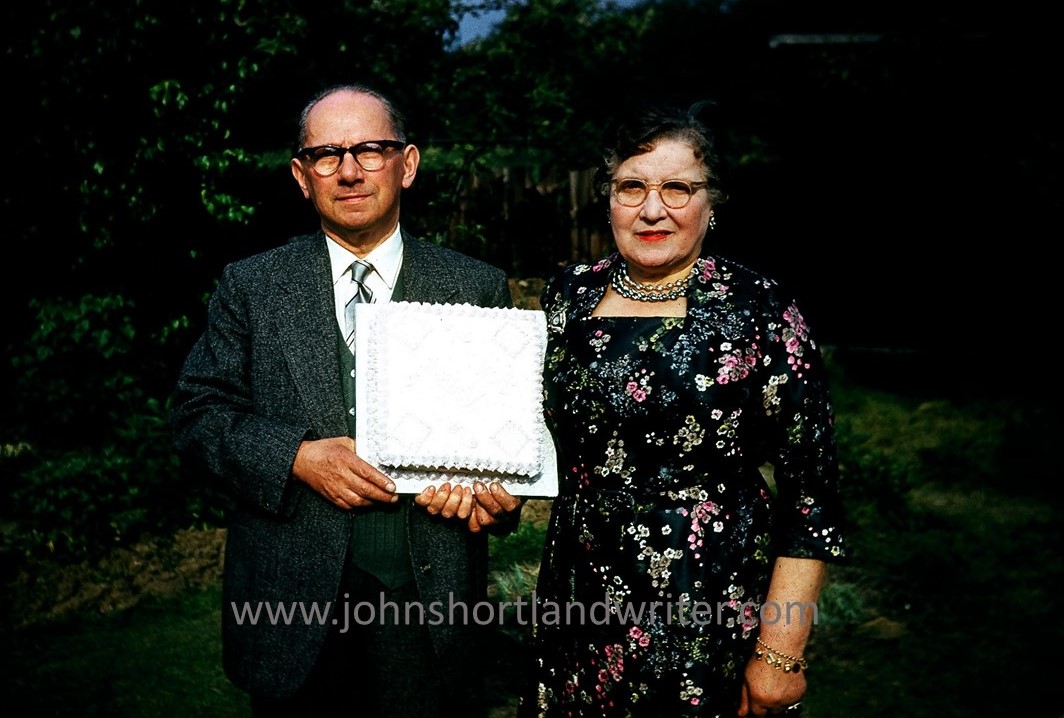
My mother’s family suffered an even worse fate. Her parents, my grandparents, were Polish Jews who had come to England around 1912 and, with my grandmother’s sister who also lived here, were spared the fate of the majority of their kin. To learn that all but three of their extended families had been killed in the Holocaust must have been an unbearable burden to be carried for the remainder of their lives. They never showed their suffering – at least, not to us grandchildren – and they never spoke of Poland or their families again.

Grandma & Papa Bon Voyage watermark

My Polish grandparents never spoke of the enduring pain they both must have suffered

If it is hard to imagine the anxiety our forebears suffered during the conflict. It is, in some ways, even more difficult to imagine the joy, excitement and sense of relief that they must have felt as the news of impending victory circulated, followed by the reality that victory had finally been achieved. No more black-outs, no more uncertainty and, within a few short years, no more rationing. In our family no-one ever discussed such emotions but the retaining of various memorabilia stands as the record of their feelings. The letter from Field-Marshall Alexander and the Service of Thanksgiving booklet that my father kept and the left-over furniture ration tokens of my mother’s perhaps show how their priorities differed for it was always down to the womenfolk to ensure that there was food on the table and a comfortable home to return to.

War Notice watermark

The letter foretelling victory from Field-Marshall Alexander, April 1945

WW2 memorabilia (2) watermark

Thanksgiving for Victory in Europe order of church service

WW2 memorabilia - Utility furniture tokens watermark

Ration stamps – everything was rationed, even furniture

This week, while acknowledging the pain and hardship of war, there is much to be celebrated on this 75th anniversary. Not only have we as a family and a nation, survived and thrived there is also much that unites the world. The internet has given the ‘ordinary person’ a much greater and louder international voice, mostly for the better. For me, it means I keep in touch with cousins scattered across the world, descendants of the Polish family that hatred had so very nearly completely wiped out. Through my blog and through Facebook I am in conversation with and have ‘met’ people from all walks of life and cultures – something that would have seemed unlikely if not impossible only thirty or so years ago. So, as we move forward from the celebrations, let us all strive for a world where peace, love, respect, kindness, concern and trust remain dominant. Wherever we are today, tomorrow and in the longer future, may we stay safe, stay well and be thankful for the peace of yesterday.

Sunrise (5) watermark

The start of a new day

Discovering the Five Senses in Lockdown

It sometimes takes a crisis to make us re-evaluate what is of importance in our lives and the present one of Coronavirus/Corvid-19 surely has to be the greatest that we will collectively face. Now, several weeks into lockdown we have all been developing new patterns to our daily regime, one of which may well be taking more exercise. Never before have we placed so much value on fresh air and being able to walk freely whether it be in our parks, gardens or open countryside.

Marlow watermark

                           Riverside path, Higginson Park, Marlow (before social distancing).                                 The river is the River Thames in Buckinghamshire

Living where I do in the Cotswolds surrounded by fields and with woodlands and the river close by it is relatively easy for me to enjoy the open space. For others able to take advantage of their enforced free time, it may involve a longer walk and I have certainly noticed an increase in the numbers of walkers and cyclists here in the valley. I have also noticed that for many of them one aspect of their lives hasn’t changed: as they walk their eyes are glued to the screen of their mobiles and headphones are clamped to their ears, seemingly unaware of their surroundings. It has made me think all the more of our five senses and how we use (or should use) each one of them when out exercising.

Nr Fingest copyright

Cycling in the Chiltern Hills

SIGHT For those of us blessed with the gift of vision, perhaps sight is the most important sense we use and perhaps the one we most take for granted.  Without it, it is still possible to enjoy one’s surroundings for the other senses become heightened but I doubt if anyone would deny the pleasure of seeing the beauty that surrounds us on our daily walks. Even within cities there is much nature to be enjoyed although I admit that sometimes it has to be sought with more vigour and awareness.

Viola watermark

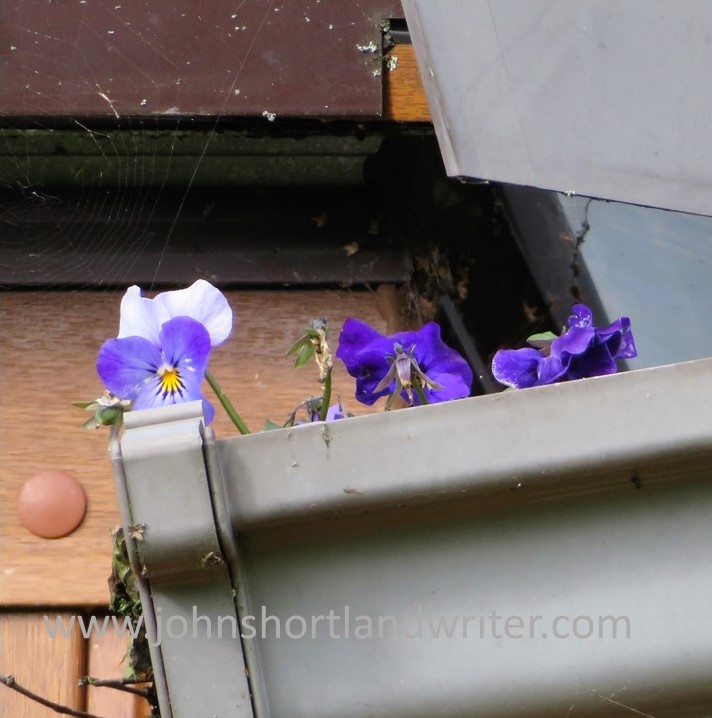
Look everywhere – self-sown violas peep out from overhead guttering!

At this time of year, more than any other season, there is much to see. Tight leaf buds unfurl into an explosion of vivid green foliage, iridescent wherever sunlight filters through; young ducklings tumbling into the park pond to take their first swim. But it isn’t just the natural world to be seen anew, there are other things too. Although it had been there for more than a hundred and forty years (and I’d walked past it very day for twenty) the date scratched into the stone on this wall had gone unnoticed.

Date stone watermark

Who scratched this date into the old stone wall and why?

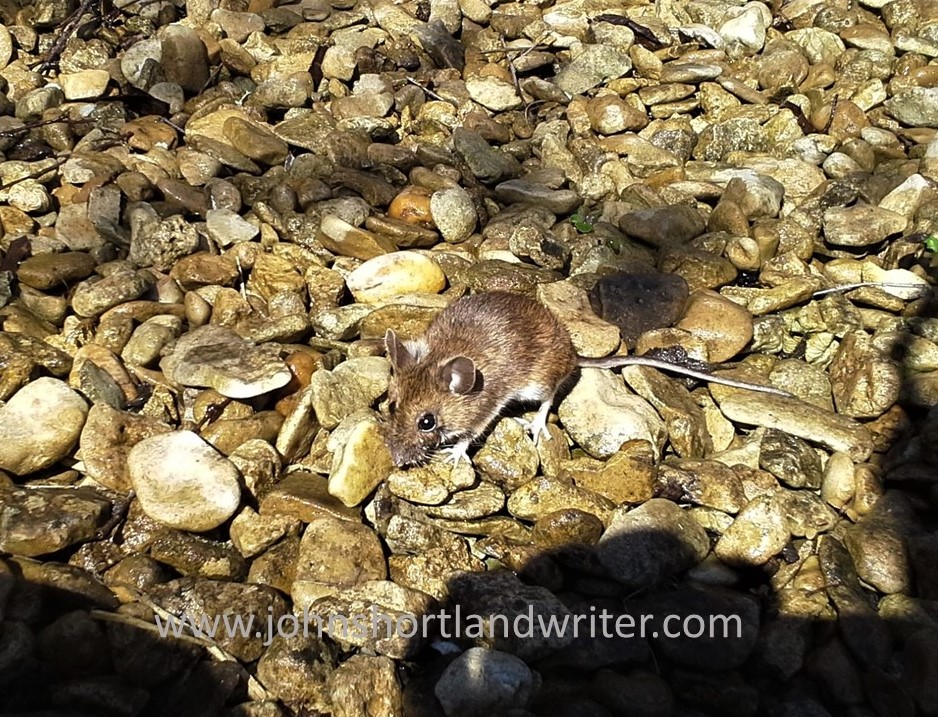
HEARING Along with sight the second most important sense we use on our daily amble. Apart from the glory of birdsong there are other sounds that bombard us when out walking. The wind flurry that makes the catkins tremble and shed their pollen, the stronger breeze that make the twigs and branches clatter gently against one another. Then there’s the rustle in the undergrowth. Stop and wait silently and with patience you may be rewarded by the sight of a little field mouse going about its daily chores or a rabbit venturing out to feed.

Field Mouse watermark

patience was rewarded when this little field mouse ventured into the open

Altamont Gardens (8) watermark

… and also this rabbit

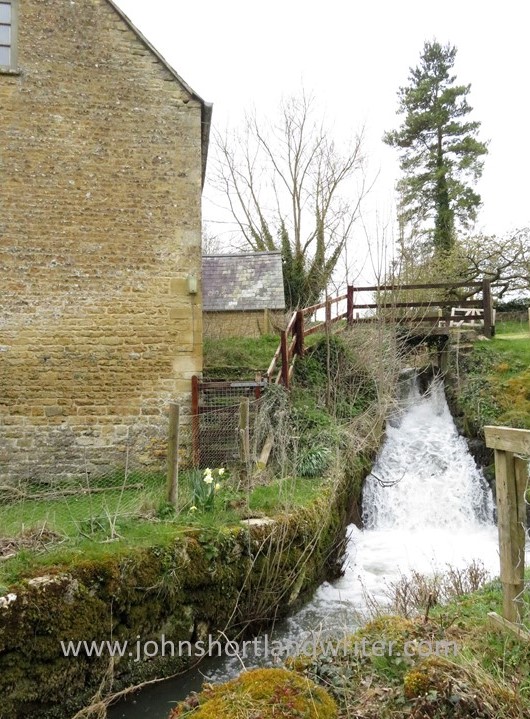
The sound of the river alters constantly. The smooth, barely audible glide of the water changes to a tinkling of soft musical sounds, its flow interrupted by a fallen branch. A few yards further downstream they rise to a crescendo as they crash and tumble over the old millrace before returning to silence as the flow stills in the calm of the millpond.

Radford Mill (1) watermark

The old millrace 

Radford Mill watermark

the calm of the millpond

TOUCH   In the present crisis we are sensibly being discouraged from touching things unnecessarily. Out on walks perhaps care may be advisable when opening gates or climbing stiles but, if you do, take a moment to think about what you feel. Heed the cold steel of the metal five-bar gate and the way it slowly warms beneath your hand; feel the rough timbers of a stile worn smooth from much use over the years. Of less concern health-wise – and all the more pleasurable for that – become aware of the softness of new horse chestnut leaves; later in the year they will become as harsh as sandpaper. Run your fingers across the twisted, grooved bark of the sweet chestnut tree and stroke the furry softness of the aptly named ‘Lamb’s Ears’, the favourite garden herbaceous plant Stachys byzantina.

Sweet Chestnut 4 watermark

The deeply grooved bark of the Sweet Chestnut tree

Stachys byzantina  Lamb’s Ears

SMELL   The scent of spring is everywhere at the moment and to be delighted in. However, the sense of smell is also a powerful trigger of long-forgotten memories. In a few weeks’ time the sweet scent of drying hay in the meadows may recall childhood farm holidays but for now there is the unique smell of new-mown lawns. Both start off as freshly cut grass yet their scent is so surprisingly different. Likewise, compare the subtly differing fragrance of apple and cherry blossom, both in their full-blown glory right now.

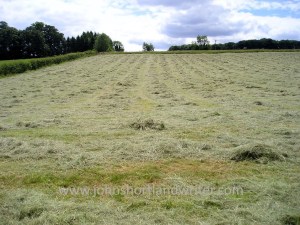
Drying hay before baling

The smell of freshly-mown grass…

Without even leaving home, squeeze the leaves of the herbs on the kitchen sill and notice their variation in scent, their colours and textures too. Early morn in the woodland, especially after warm rain, the delicate perfume of bluebells quickly disappears as the sun becomes stronger. Half-close your eyes and glory in their colour, in the silence and in their perfume and leave all cares behind you – if only for a while.

discover the different textures & scents of herbs

The vivid greens & blues of an English beechwood in spring

In town, the scents are also there just waiting to be noticed. Rain falling on roads and pavements or scorched by hot sun both produce delightfully tarry smells, one mild, the other strong. In the formal beds of the local park flowering bulbs stand in regimental rows; each have a unique scent which rises in the air to mingle with the vanilla fragrance of wallflowers. The wallflowers, their dull green foliage barely noticeable throughout the winter, now shout out the arrival of spring through the colours of their flowers of brick red, orange and yellow.

Tulips & wallflowers – a favourite park bedding combination

TASTE   In shaded places where the soil stays moist you may be greeted – even before you arrive – by the pungent scent of wild garlic. A prolific carpeter of the woodland floor its leaves and flowers make a useful ingredient to spring salads. Wild garlic or Ramsons to give it it’s country name, is fickle where it will grow. In some places that would seem suitable, not a single plant can be found. A less common member of the onion family to be found in the wild are the chives of our gardens, they grow along road edges and field boundaries locally. It is thought that they were spread by the old drovers of centuries ago so that they could harvest them along the way to liven up a bland meal. There is no doubting its identification, disturb the tubular green leaves and the familiar scent is immediately released.

Ramsons grow in damp, shaded places

It is not only the onion family that can be nibbled en route. Richard Mabey in his book Food for Free, published many years before foraging became a ‘craze’, suggests nibbling on the half-open buds of hawthorn. Many a country child has done so over countless generations and perhaps that is how they got their old name of Bread and Cheese. To me, they only have a slightly nutty taste and texture.

Hawthorn leaf buds are not really worth eating!

As a boy, brought up close to the River Thames, the hollow stems of the common reed were a regular source of pleasure for the soft pithy centre could be drawn out by pulling the stems through clenched teeth. Close to my present home there is also a small reedbed. These tall reeds have something to offer every one of the other senses too: sight – the pleasure of watching petrol-blue damsel-flies sunbathing on the stems; hearing – as they sway and rustle with the slightest breeze; touch – the coarseness of the leaves, a contrast to their smooth stems; smell – those of the river as it seeps around the roots, a heady mix of wet mud and wet greenery.

Only the male of the Beautiful Demoiselle damsel-fly has petrol-blue wings & body

So, within the bounds and restraints of the Covid-19 advice when out on your daily exercise, remove the earphones, place the phone in your pocket and use, really use, every one of your senses. Not only will you notice more, you will wonder how you never managed to notice them before. Stay safe, stay alert and take this unique opportunity to discover a new world on your doorstep.

Finally, one word of warning. Only try tasting wild plants if you are confident they have been identified correctly. If you decide to forage, do so responsibly and only pick a few leaves at a time. Make sure that all plants for consumption are free of pesticides and other contaminants, especially those growing in or near water.


Conceived on Exmoor?

There used to be a standing joke between my mother and I that I must have been conceived on Exmoor as it has such a magnetic hold on me.  My parents had honeymooned there, staying at Ye Olde Cottage Inne at Barbrook in the mid-1940s – the fact that I was born in the early 50s and had an older sibling we conveniently overlooked.
Mum & H wedding photo watermark

Wedding Day

When I first came across Exmoor, in the summer of ‘68, I thought I had stumbled into a paradise, if not unknown to others, certainly unknown to members of my family.   “Stumbled” is an accurate description. My intention had been to cycle further west into Cornwall before returning south to Exeter for the train journey home.  Poor map reading skills took me instead to the North Devon Coast at Westward Ho!.   During my final term at school we had studied the novel Lorna Doone and now seeing Doone Valley, Exmoor marked on the map it seemed logical to visit despite it being way off to the east.

Badgworthy Water watermark

Badgworthy Water, Doone Valley

Brought up in the Chiltern Hills, I was used to a hidden landscape of narrow lanes, high beech hedges and dense and extensive beech woodlands.  Rarely, was there an unbroken view of far-distant places and, almost as rarely, large expanses of sky and cloud.  Cycling across Exmoor with its open, rolling landscape ablaze with heather and gorse and views across the sea to the Welsh coast was unlike anything I’d ever experienced.  Sometimes the lanes would pass between high banked hedgerows or descend into well-wooded coombes reminding me of home.  I came across a farm where I pitched my tent intending to stay two days before leaving for Exeter.

Nr Fingest 2 watermark

A Chiltern lane winds its way through dense woodland


River Barle watermark

The open views of Exmoor

Helping on the farm, two days turned into weeks and then into months by which time I had moved into the farmhouse and embraced Exmoor life.  I occasionally telephoned my parents, or sent a postcard, always being evasive about where I was staying and only telling them I was working on a farm and being well cared for.  With the benefit of maturity, I sometimes wonder how they coped with their sixteen-year old son, on his first lone holiday, disappearing for so long in an era of no mobile phones or credit cards for them to track my progress.  They only succeeded in finding me after I foolishly reversed the telephone call charge and soon after arrived on the doorstep to drag me away, kicking and screaming.  It was time to get “a proper job” but Exmoor and the farm had completely changed my outlook on life as well as the direction it would ultimately take.  After twenty years of “a proper job” I finally escaped to agricultural college and a life of outdoor work.

Brendon Barton 1968 (4a) watermark

Brendon Barton 1968

Pruning watermark

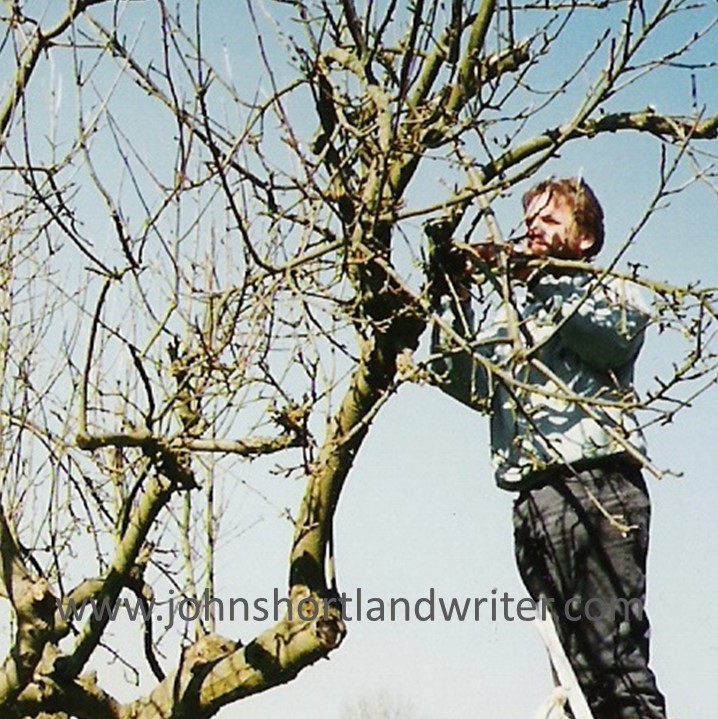
At agricultural college 1994

I had been surprised and a little disappointed when I first discovered my parents also knew Exmoor.  Despite not having been conceived there, my attachment to Exmoor has never waivered and more than fifty years later I regularly return.  Upon entering the moor the same emotion of discovery, as if seeing it for the first time, remains.  Many of the old friends that I made in those early years and their unique way of life that I was privileged to be part of, albeit in a small way, have gone but the landscape remains remarkably unchanged.  The heather and gorse are still a carpet of purple and gold, the sea (at least, on a fine, sunny day) still blue.

Countisbury (15) watermark

Countisbury Common, where the moor falls into the sea

Very recently, through researching my family history, I have found that an earlier cousin, at a similar age to myself, had also discovered Exmoor.  He too had never settled in school and life on Exmoor changed him.  He also chose to write about his time on the moor, something else we have in common. Although I was surprised to learn of his life and his book, this time I am delighted!

002

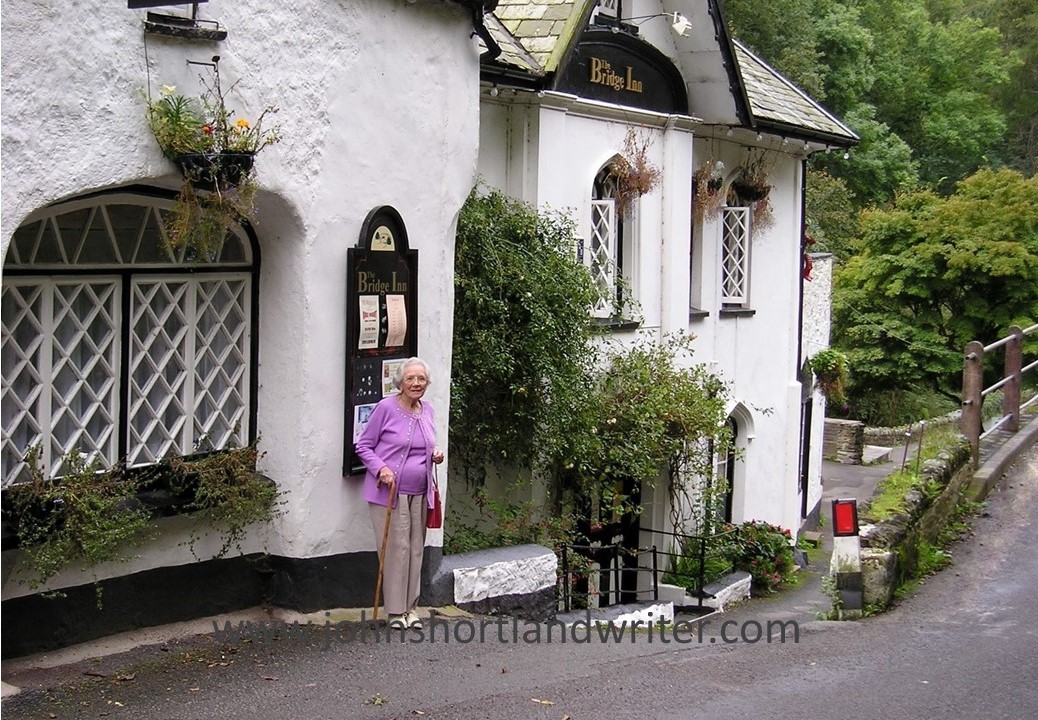
PostscriptJust a few years before she died at the age of 93, I spent a few days on Exmoor with my mother and took her to revisit the honeymoon hotel.  Long widowed, the day must have been a mix of emotions.

Honeymoon Hotel watermark

At Ye Olde Cottage Inne, renamed The Bridge Inn


Having a Blackthorn Winter?


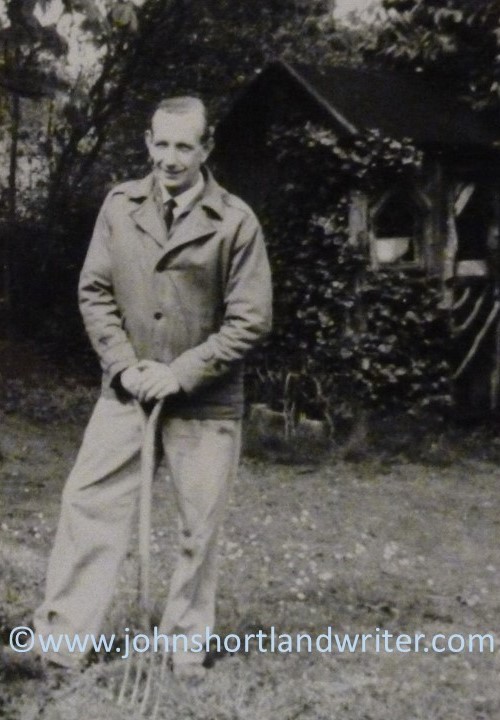
The first trees are beginning to bloom in the Cotswolds; in a few days’ they will be billowing clouds of white blossom.  My father, a countryman through and through, would always mark the occasion by repeating the old English warning of a coming “blackthorn winter” and “the cold blow” ahead.  But was he correct?

h-about-1964-2-copyright

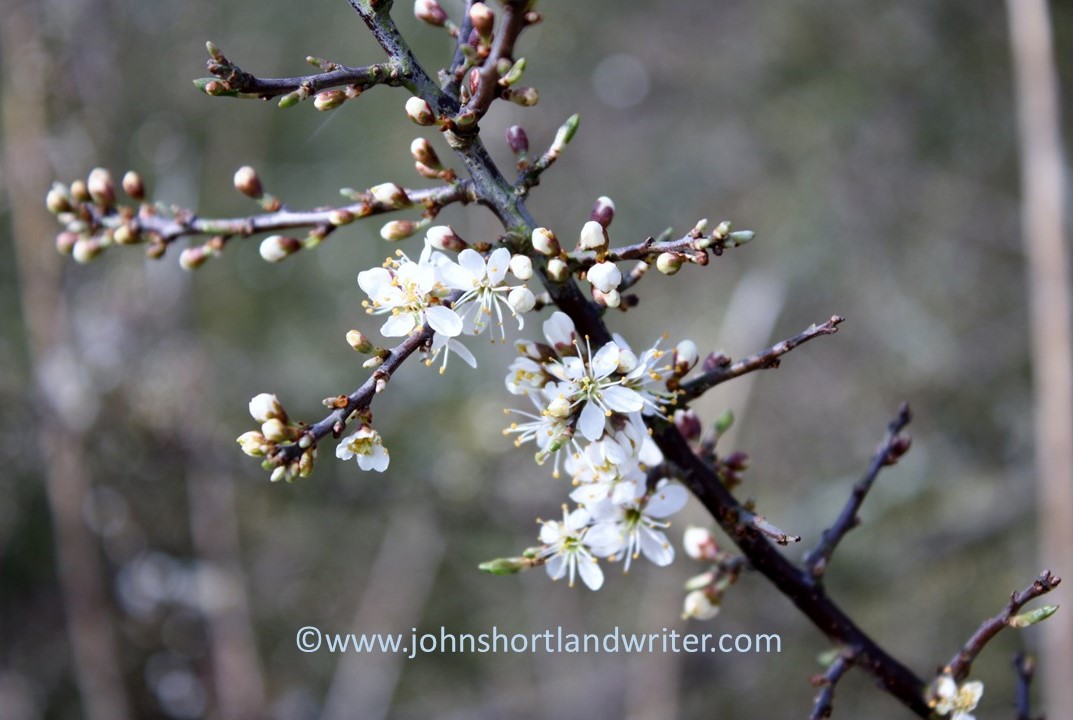
The blackthorn (Prunus spinosa), also commonly known as sloe, is frequently used as a hedging plant where its tangled and viciously thorny branches make an impenetrable, stock-proof barrier.  When left untrimmed it grows into a small tree.blackthorn-blossoms-crowd-an-old-cotswold-green-lane-copyright

I haven’t found a referral to the earliest date for a blackthorn winter but it almost certainly goes back centuries for the blackthorn is a ‘magick’ tree and often used in witchcraft.  But can it really dictate the weather?  Common sense says ‘no’ unless, of course you believe in magick.

blackthorn-3-copyright

Pretty flowers hide vicious thorns

There appears to be a problem with my father’s and others belief in the blackthorn winter.  The tree that blooms first and so often referred to is not blackthorn but the cherry plum, another Prunus – Prunus cerasifera.  Sometimes known as the Myrobalan Plum, it is also found in hedgerows and when allowed to grow to full height is often covered in red or golden cherry-sized, edible fruits.  It was introduced from southern Europe about three hundred years ago.

cherry-plum-copyright

Prunus cerasifera, the Cherry or Myrobalan Plum

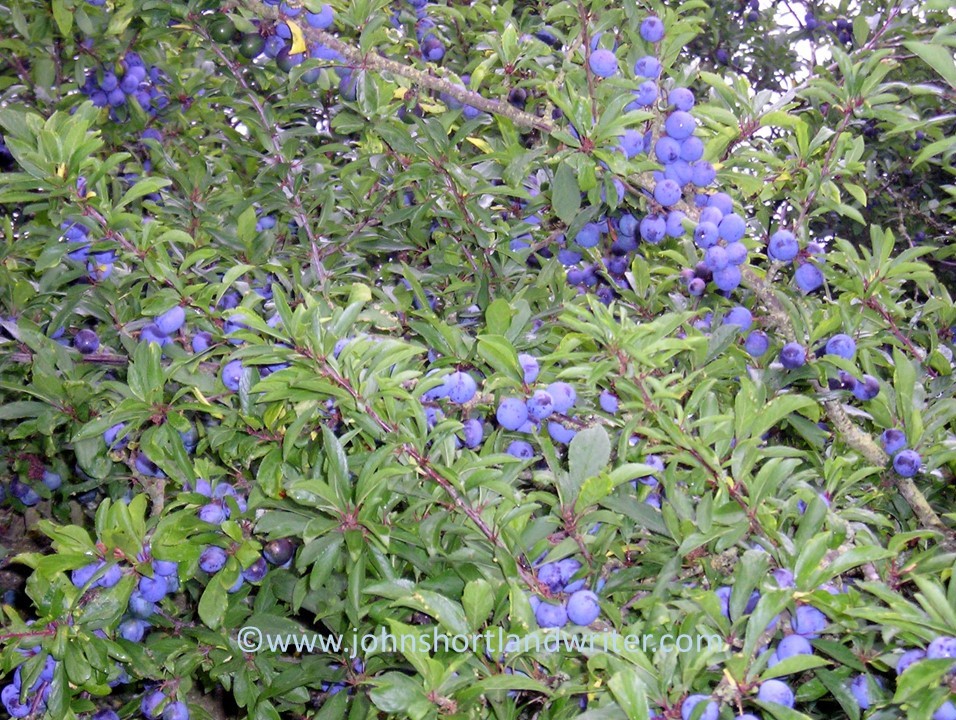
So, blackthorn or cherry plum?  For the time being we will be having a “cherry plum winter”.  The sloe will blossom in about three weeks’ time when we will probably have the blackthorn winter too for one thing is proven: in England, we are far more likely to have a spell of wintry weather now than we ever are in December.  Either way, let us hope that it is a good year for both trees for then we can look forward to cherry plum pies washed down with a nice glass of sloe gin.

cherry-plums-copyright

Cherry Plums

blackthorn-sloes-copyright

Sloe Berries

Footnote:  according to the British Meteorological Office, the term “blackthorn winter” originated in the Thames Valley, the birthplace of my father and where I was brought up.  It will be interesting to know many of you use the term and where in the world you are located.

The Year in Review: January – June 2016

As always the year has flown by to leave us with much uncertainty and sadness in the world.  Fortunately, life in the secret valley continues pretty much the same – it is easy to find relief from everyday stresses when surrounded by unspoilt countryside.  Rarely does a day pass when I don’t count my blessings for having had a rural upbringing and the opportunity to continue to live and work in such beautiful surroundings.frost-4-copyright

However, I am no hermit and I enjoy visiting other places – even cities!  One city I loved when I visited it some years ago was Stockholm, the capital of Sweden and I began the blogging year with a post about the Skansen open air museum.  Skansen was the first tomove and preserve traditional, threatened buildings; it was founded as early as 1873.  As well as buildings it also houses a zoo, concentrating on breeding native wildlife for reintroduction schemes including the European Bison which had become extinct in the wild.  To see more of the buildings click on the link here.8  Sweden. Skansen   copyright13 Sweden.  Skansen   copyright

Exmoor is a second home to me and features regularly on my blog.  In March, with some misgivings – for why would I want to share such a magical place – I took readers on my favourite walk, one that wouldn’t be found in any guide book.  The walk encompasses all that is best on Exmoor: open heather moorland, deep wooded combes, rushing streams and traditional pubs.  It also passed the door of the hill farm where I turned up as a lad looking for work after leaving school.  I was taken in and cared for – and made to work hard – and, well read the story by clicking on the link here.Above Brendon Barton (2)   copyrightLil @ Brendon Barton 1968   copyright

April saw me back on the Continent (as we Brits call Europe).  This time in the south of France visiting the ancient town of Lombez.  It is far from the tourist routes and we discovered it quite by chance.  With its ancient, timbered buildings and wonderful, brick built cathedral it deserved a longer visit than we were able to give it.  An excuse for a return trip, perhaps?  In the meantime, you can visit it by clicking on this link here.Lombez (22)   copyrightLombez (4)   copyright

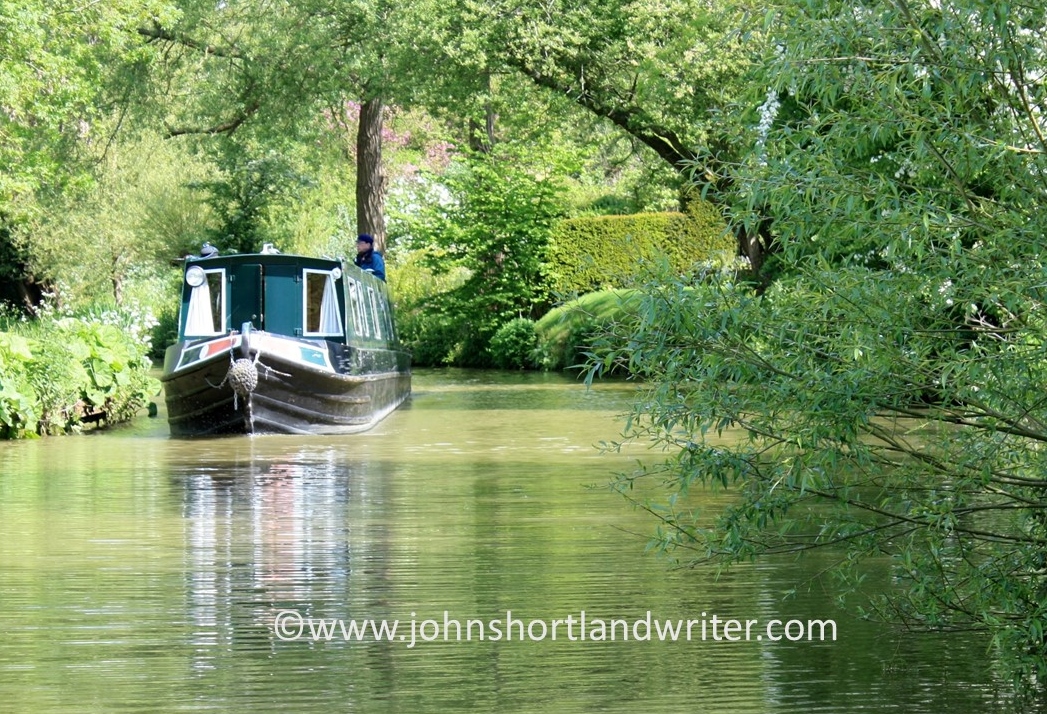
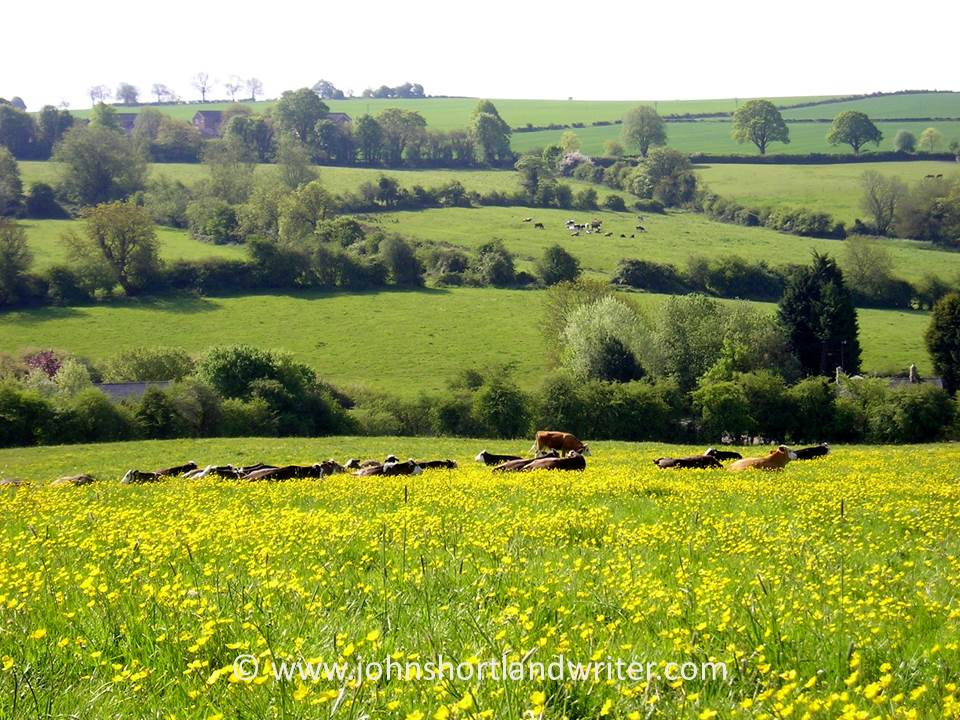
If April saw us travelling slowly through France, May saw us travel at an even slower pace – by longboat on the Oxford Canal.  Passing through traditional buttercup meadows – we were miles from the city of Oxford – and in glorious sunshine it was the perfect way to relax as well as to see the wildlife that seemed oblivious to our passing.    Click on the link here to see more.016   copyright076   copyright

Our native butterflies struggle to thrive but I have been fortunate in living in places where they prosper reasonably well.  As a gardener, (both my hobby and my profession), I probably see more than most and in June I wrote about the species that visit gardens.  See how many you can identify  in your own garden by clicking on the link here and don’t forget to record them with your local conservation trusts or online.Comma Butterfly (2)   copyright

2017 may well prove to be a year that none of us forget too easily.  Travel abroad or in the countryside – and the British countryside is second to none – always helps to refresh the spirits.  I have numerous plans for the year ahead and hope that you will be joining me month by month.  In the meantime, the review of the second half of this year will follow shortly and don’t forget that images of the Cotswolds and other places I visit are updated regularly on my Facebook page and on Flickr.  You can also find me on Twitter @johnshortlandwra typical Cotswold scene   copyright


A Tour of the Secret Valley

Ask people – both here at home or abroad – how they imagine Great Britain to be, the answer is often the same: an overcrowded island. We do, of course, have our fair share of big cities, motorways and densely populated housing estates but it often comes as a surprise just how much unspoilt, open countryside remains. A few of us are lucky enough to live in it.

m40-stokenchurch-copyright

The M40 motorway where it enters Oxfordshire

rollright-stones-9-copyright

Less than two hours drive from the centre of London, the secret valley, seems more like a million miles away rather than just the eighty odd miles that, in reality, it is. Tucked down an unclassified side road and not shown on a number of maps, only those ‘in the know’ tend to visit it. Time for a quick tour.

secret-valley-3-copyright

The Secret Valley

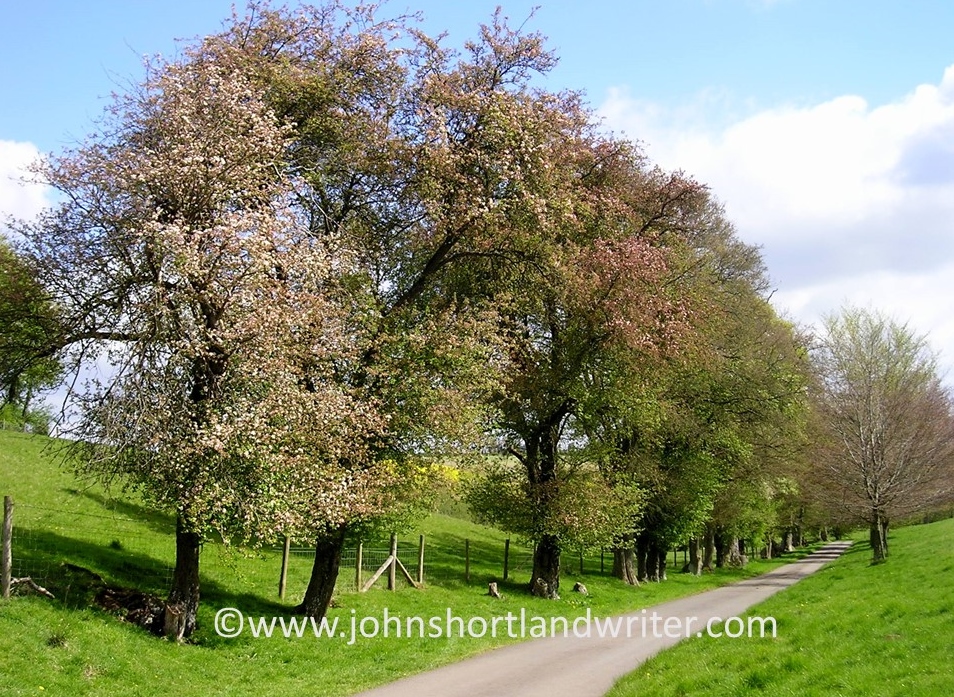
The approach to the secret valley gives little hint of what’s to come. Lined with crab apple trees, the lane gently descends between a fold in the hills where, on the steepest banks, wild thyme, orchids and other wild flowers grow.

secret-valley-2-copyright

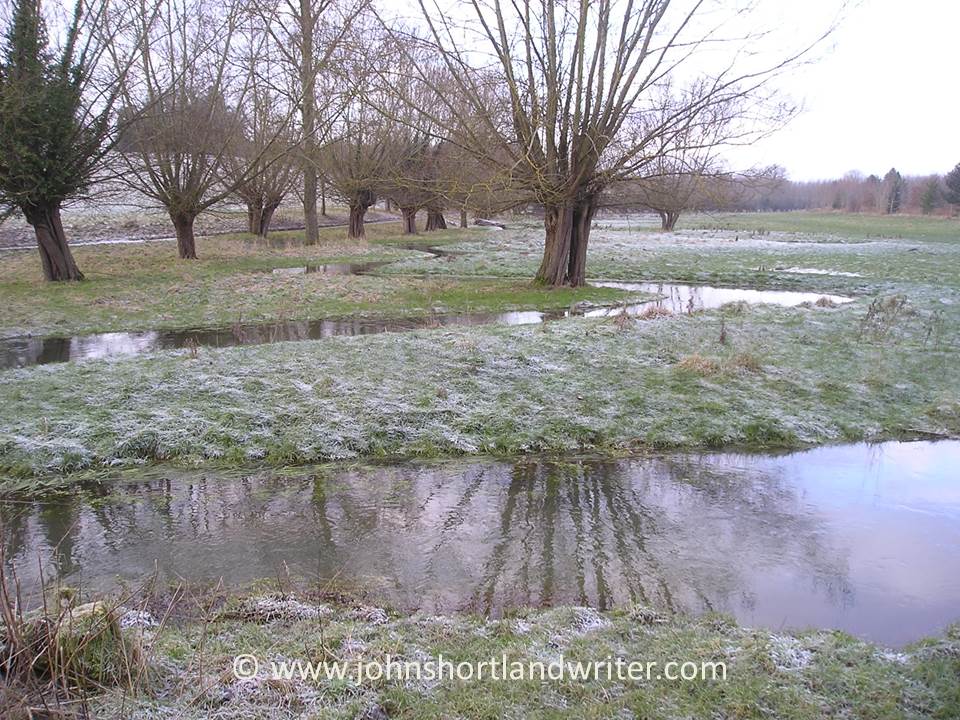
A bend in the road conceals the valley’s crowning glory: the most perfect, easily jumpable river (as can be seen in the header image of this blog page). Twisting and turning as it passes through meadows, in its shallows watercress grows where both trout and crayfish hide. By its banks willow pollards, now elderly and bent, wear garlands of wild roses; they grow from the tree crowns courtesy of seed dropped by birds generations ago.

willow-and-wild-rose-copyright

The lane, crossing the river, passes our tiny stone cottage and climbs towards the village – a cluster of nine houses, a farm and little else. Our home sits alone, down by the river bank, with just one other as companion. Here, the lane – barely wide enough for a combine harvester to pass – once was busy with drovers taking their cattle and sheep to the markets in Oxford.

combine-harvester-copyrightcotswold-traffic-jam-copyright

These days the drove road enters and leaves the secret valley by a different route, only its mid-section by our house is still in use. The ‘old road’, as it is known, can still be walked – its path clearly defined by the wild flowers and hedgerows that line it.

old-road-2-copyright

The river, too, has chosen a different route according to the earliest maps. Downstream from our house, it flows past wooded banks to widen into a small lake before passing through fields, these days marshy where the watermill’s sluice gates have decayed with age.

old-sluice-copyright

Further downstream still, where the sheep cannot graze, swathes of scented, moisture loving plants such as wild valerian – looking very different from the one grown in our gardens – provide nectar for insets and a hiding place for deer.

meadowsweet-valerian-copyright

a forest of Valerian & Meadowsweet

On the higher ground of the secret valley, the fields are cultivated with wheat, barley and oilseed rape. Even here, in the favoured places, wild flowers and birds of many types can be found: the diminutive hay rattle, a relic from the old farming days to ravens, buzzards and red kites, all now common again after centuries of persecution.

yellow-rattle-copyright

red-kite-6-copyright

Red Kite

Sounds idyllic? You’re quite right – it is!

rainbow-2-copyright